This report assesses obstacles and risks to the implementation of the 2005 Comprehensive Peace Agreement and outlines steps to be taken to avoid a return to conflict. The product of a seminar held by the Horn of Africa Group,…
RVI publishes books, research reports, research papers, briefings and meeting reports in a range of formats. Publications cover policy, research, arts, culture and local knowledge in the countries of eastern and central Africa. Research publications—books, reports and papers—are peer-reviewed. Some RVI publications are also available in French and/or Arabic.
The RVI is a signatory of the Budapest Open Access Initiative (2001); all publications are free for download in PDF format under Creative Commons licences. The views expressed in books and reports published by the RVI are those of the authors, not the Institute.
SEARCH
PUBLICATION TYPE
LANGUAGE
REGION
COUNTRY
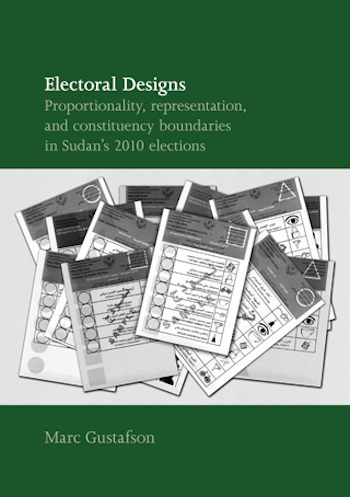
A guide to Sudan’s electoral system – one of the most complex in the world – and its effects on the distribution of power. The report analyses government documents to reveal errors and ambiguities in the demarcation of electoral…
A policy paper on Sudan’s political future analysing the critical events facing the country in the run up to the April 2010 elections and the 2011 referendum on self-determination for Southern Sudan. Copublished by RVI with Chatham House (the Royal Institute…
Abyei has proved to be the hardest part of Sudan’s Comprehensive Peace Agreement (CPA) to implement, harder, even, than the determination of the rest of the North-South boundary, or the division of oil revenues. In this personal commentary Douglas…
This Usalama Project report sketches the historical background to the proliferation of armed groups that have emerged in the North Kivu province of the DRC over the past two decades. It serves primarily to demystify the numerous factions and…
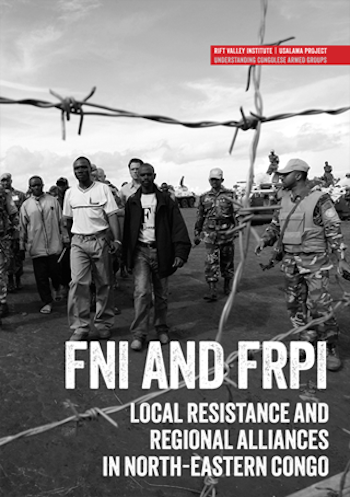
This report by Henning Tamm examines the precipitous decline in armed violence in Ituri, a district that manifests all of the Congo’s main challenges to stabilization. The report focuses on the Front des nationalistes intégrationnistes (FNI, Front of Integrationist Nationalists) and the Force…
This Usalama Project report describes the origins, rapid evolution, expansion and activities of this diverse force. The group began as a local response to rampant insecurity but profited from flaws in the various peace deals in the eastern DRC,…
This report by Henning Tamm examines the convergence of factors that helped create and then broke apart the Union des patriotes congolais (UPC, Union of Congolese Patriots), one of Ituri’s most powerful armed groups. Created in the context of Ugandan occupation,…
This Usalama report by Dan Fahey sets out the background to the years of conflict in Ituri district of the north-eastern DRC. The particularly vicious nature of war in Ituri––including large-scale massacres, widespread sexual violence, and the use of…
This Usalama Project report explores the 2012-2013 M23 rebellion in the eastern DRC. It also discusses the implications of the rebellion for the DRC’s eastern neighbours, Rwanda and Uganda, who have been accused of aiding and abetting the M23. ‘Despite…
Recent Publications

The Political Economy of Coffee in the Sidama–Gedeo–Guji Belt, Southern Ethiopia
September 4, 2026
This report is part of a wider research project on the political economy of coffee in Ethiopia in the context of the political transition since 2018. It focuses on the Sidama–Gedeo–Guji coffee belt in southern Ethiopia, aiming to understand the

SHECONF 2026: International Conference on Social Sciences and Humanities
July 9, 2026
Event report On 26 March 2026, researchers, practitioners and academics gathered in Addis Ababa for SHECONF 2026, an International Conference on Social Sciences and Humanities in Ethiopia, the first of its kind convened by the Ethiopian Women Researchers Network (EWNET).

State Capture in Africa: How elite networks undermine democracy, development and security
June 24, 2026
Key points State capture has been increasingly recognized as a major governance challenge due to the way it helps to drive many of the most pressing problems facing contemporary states, including democratic erosion, corruption, economic exclusion, insecurity and declining trust