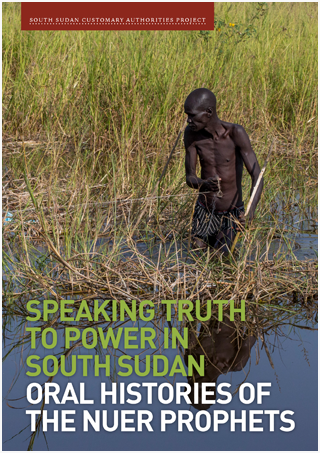
Prophets—those recognised as having been ‘seized’ by a divinity—have played an important role in the history of South Sudan, particularly that of the Nuer people. They were seen as being powerful political actors and, alongside chiefs, important intermediaries for…
RVI publishes books, research reports, research papers, briefings and meeting reports in a range of formats. Publications cover policy, research, arts, culture and local knowledge in the countries of eastern and central Africa. Research publications—books, reports and papers—are peer-reviewed. Some RVI publications are also available in French and/or Arabic.
The RVI is a signatory of the Budapest Open Access Initiative (2001); all publications are free for download in PDF format under Creative Commons licences. The views expressed in books and reports published by the RVI are those of the authors, not the Institute.
SEARCH
PUBLICATION TYPE
LANGUAGE
REGION
COUNTRY
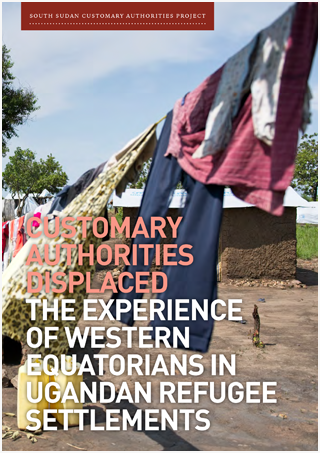
South Sudan’s violent conflicts continue to plague its people. An estimated four million South Sudanese have been forcibly displaced since December 2013, and more than a million have sought refuge in Uganda where communities have largely reassembled without their…
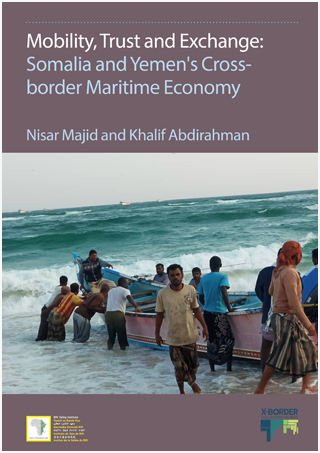
The legacy of Somali piracy, the threat of terrorists transiting between Yemen and Somalia, and the deepening conflict in Yemen, mean international actors tend to view the Gulf of Aden through a security lens. This report outlines the local…
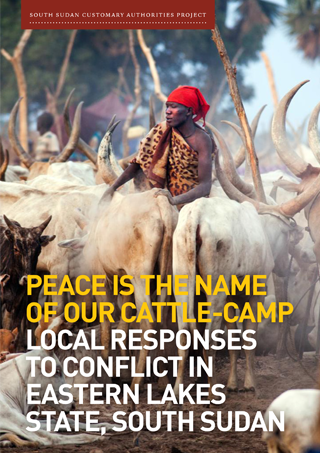
Following the 2005 Comprehensive Peace Agreement (CPA) and the subsequent independence of South Sudan in 2011, many agro-pastoralist and pastoralist areas of the country have experienced an upsurge of livestock raiding, counter raiding and cycles of revenge killing. Eastern…
Northern Bahr el-Ghazal, like much of South Sudan, is in a protracted state of social and economic crisis, rooted in generations of armed conflict, forced resettlements, and a shift towards a cash and market economy. Since the 1980s, family…
Fifty years ago, most households in South Sudan produced the grain they ate, organizing agricultural labour and distributing small surpluses mostly through kinship and other social networks. Now, the majority of households buy most of their food. This transition…
A System of Insecurity: Understanding Urban Violence and Crime in Bukavu examines the role of state and non-state actors in the provision of security, and citizens’ perceptions of, experiences with and responses to insecurity in Bukavu, the capital of…
- By Maarten Hendriks, Karen Büscher
- Download
Depuis le début de 2019, une série de meurtres, de vols qualifiés avec violence et d’enlèvements frappe les quartiers périphériques de Goma. L’aggravation rapide de cette criminalité violente a alarmé les habitants de la ville et les a poussés…
Since the start of 2019, a series of murders, violent robberies and kidnappings have taken place in peripheral neighbourhoods of Goma. The rapid rise in violent crime has alarmed city residents and led to calls for the local government…
Un système d’insécurité: Comprendre la violence et la criminalité urbaines à Bukavu examine le rôle des rôle des acteurs étatiques et non étatiques dans la mise à disposition d’outils pour la sécurité, ainsi qu’à la façon dont les citoyens…
Recent Publications

SHECONF 2026: International Conference on Social Sciences and Humanities
July 9, 2026
Event report On 26 March 2026, researchers, practitioners and academics gathered in Addis Ababa for SHECONF 2026, an International Conference on Social Sciences and Humanities in Ethiopia, the first of its kind convened by the Ethiopian Women Researchers Network (EWNET).

State Capture in Africa: How elite networks undermine democracy, development and security
June 24, 2026
Key points State capture has been increasingly recognized as a major governance challenge due to the way it helps to drive many of the most pressing problems facing contemporary states, including democratic erosion, corruption, economic exclusion, insecurity and declining trust

The New Geopolitics of Eastern Africa
June 17, 2026
On 20 May, the British Institute of Eastern Africa (BIEA), Chatham House, and the Rift Valley Institute (RVI) convened a group of experts to discuss the ‘The New Geopolitics of Eastern Africa’. The closed-door roundtable considered the ongoing transformation of