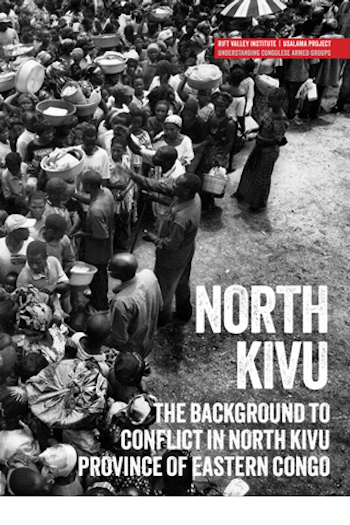
This Usalama Project report sketches the historical background to the proliferation of armed groups that have emerged in the North Kivu province of the DRC over the past two decades. It serves primarily to demystify the numerous factions and…
RVI publishes books, research reports, research papers, briefings and meeting reports in a range of formats. Publications cover policy, research, arts, culture and local knowledge in the countries of eastern and central Africa. Research publications—books, reports and papers—are peer-reviewed. Some RVI publications are also available in French and/or Arabic.
The RVI is a signatory of the Budapest Open Access Initiative (2001); all publications are free for download in PDF format under Creative Commons licences. The views expressed in books and reports published by the RVI are those of the authors, not the Institute.
SEARCH
PUBLICATION TYPE
LANGUAGE
REGION
COUNTRY
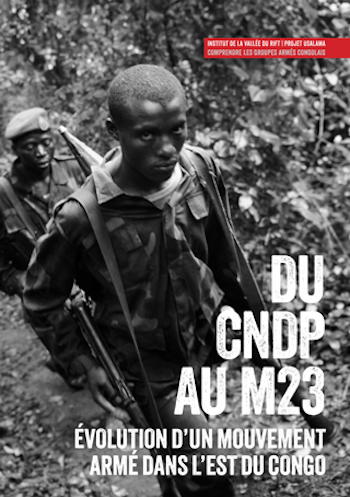
This Usalama Project report describes the origins, rapid evolution, expansion and activities of this diverse force. The group began as a local response to rampant insecurity but profited from flaws in the various peace deals in the eastern DRC,…
About this publication This Usalama Project Briefing presents a profile of one of the M23’s most important commanders, General Bosco Ntaganda. Despite his indictment by the International Criminal Court on charges of recruiting child soldiers, murder, rape, and sexual…
This Usalama Project briefing presents a concise biography of the M23’s senior commander, Sultani Makenga, in the eastern Democratic Republic of the Congo (DRC). It describes his rise through the ranks, his earlier membership of the Rassemblement congolais pour la…
This Usalama Project report explores the 2012-2013 M23 rebellion in the eastern DRC. It also discusses the implications of the rebellion for the DRC’s eastern neighbours, Rwanda and Uganda, who have been accused of aiding and abetting the M23. ‘Despite…
Ce briefing du Projet Usalama présente une biographie concise du commandant en chef du M23, Sultani Makenga. Il décrit son ascension dans les rangs, son adhésion précédente au Rassemblement congolais pour la démocratie (RCD) et au Congrès national pour…
Ce rapport du Projet Usalama explore les racines de la plus récente rébellion dans l’est de la RDC. Il discute aussi les implications de la rébellion sur les voisins à l’est de la RDC, le Rwanda et l’Ouganda, qui…
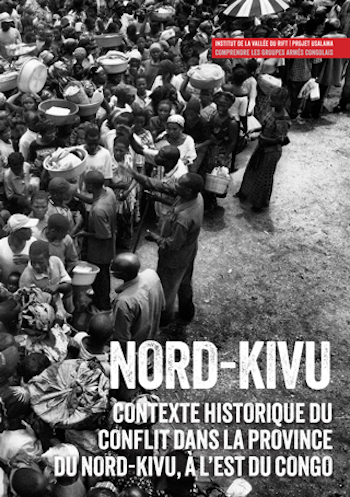
Ce rapport du Projet Usalama résume le contexte historique de la profusion des groupes armés qui ont surgit dans les deux dernières décennies dans la province du Nord-Kivu en RDC. Le rapport sert à démystifier les nombreux factions armées…
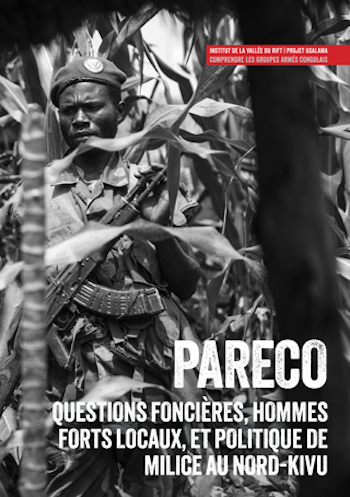
Ce rapport du Projet Usalama traite des origines et activités de la PARECO, la Coalition des patriotes congolais résistants, une faction qui a surgit de griefs locales au sujet de questions foncières, devenait puissant comme réponse au CNDP et qui…
Ce briefing du Projet Usalama présente un profil de l’un des commandants les plus importants du M23, le général Bosco Ntaganda. Malgré son inculpation par la Cour pénale internationale sur des accusations d’enrôlement et utilisation d’enfants soldats, de meurtre,…
Recent Publications

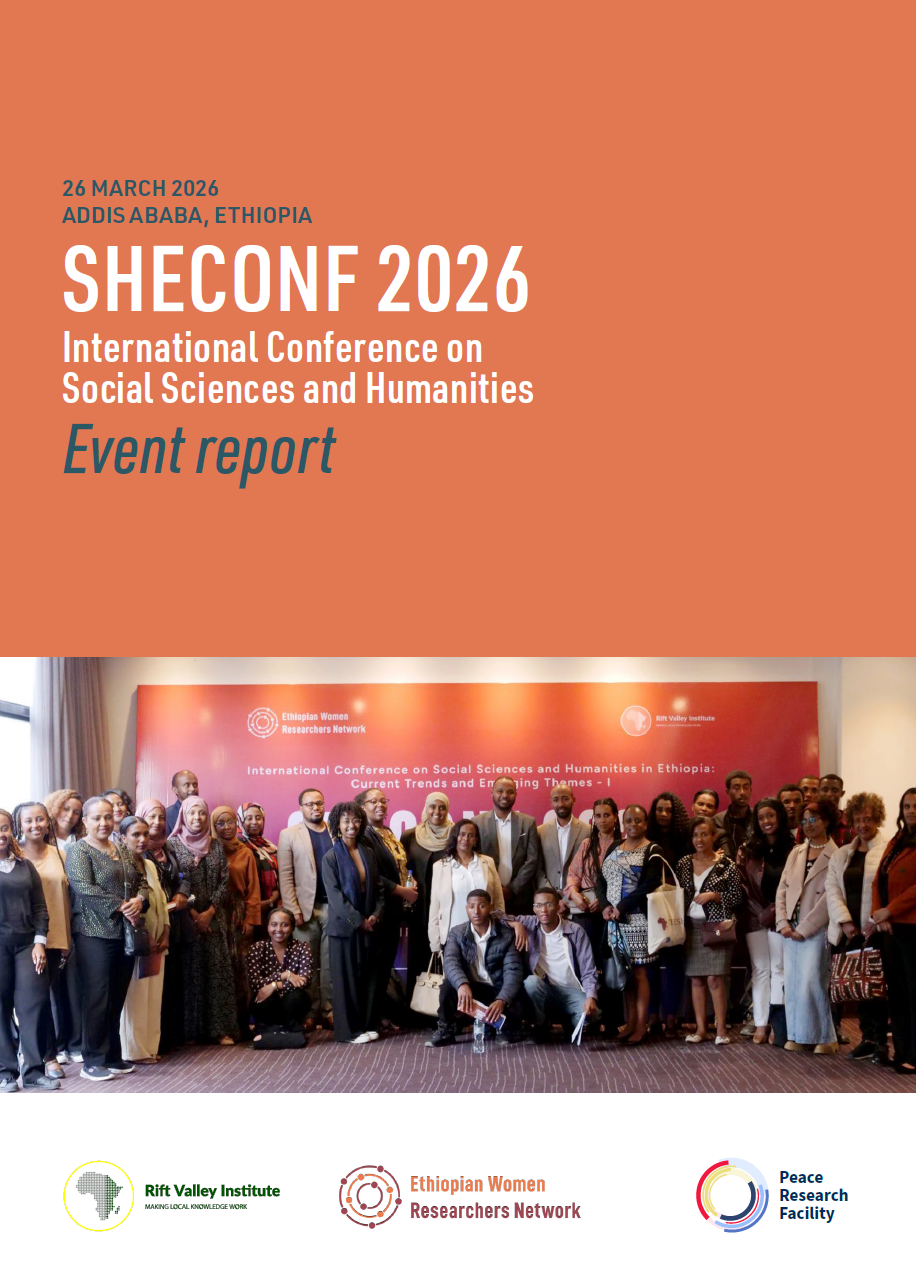
SHECONF 2026: International Conference on Social Sciences and Humanities
July 9, 2026
Event report On 26 March 2026, researchers, practitioners and academics gathered in Addis Ababa for SHECONF 2026, an International Conference on Social Sciences and Humanities in Ethiopia, the first of its kind convened by the Ethiopian Women Researchers Network (EWNET).
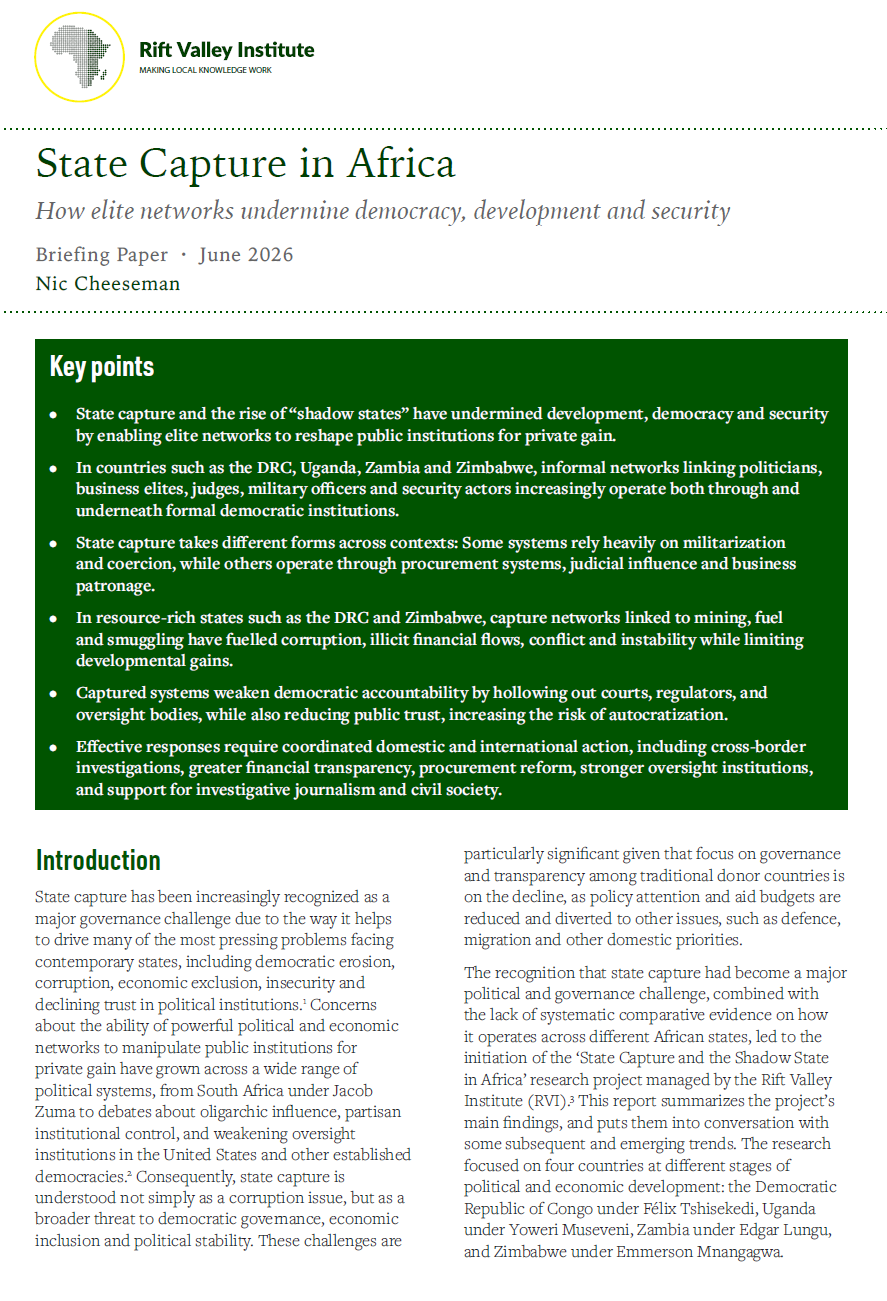
State Capture in Africa: How elite networks undermine democracy, development and security
June 24, 2026
Key points State capture has been increasingly recognized as a major governance challenge due to the way it helps to drive many of the most pressing problems facing contemporary states, including democratic erosion, corruption, economic exclusion, insecurity and declining trust

The New Geopolitics of Eastern Africa
June 17, 2026
On 20 May, the British Institute of Eastern Africa (BIEA), Chatham House, and the Rift Valley Institute (RVI) convened a group of experts to discuss the ‘The New Geopolitics of Eastern Africa’. The closed-door roundtable considered the ongoing transformation of