‘An enlightening exposé of the motives and societal pressures that spur irregular migration, in this particular case, from Somaliland and Puntland. This study could not be timelier given that people smugglers and migrant traffickers have proven themselves to be…
RVI publishes books, research reports, research papers, briefings and meeting reports in a range of formats. Publications cover policy, research, arts, culture and local knowledge in the countries of eastern and central Africa. Research publications—books, reports and papers—are peer-reviewed. Some RVI publications are also available in French and/or Arabic.
The RVI is a signatory of the Budapest Open Access Initiative (2001); all publications are free for download in PDF format under Creative Commons licences. The views expressed in books and reports published by the RVI are those of the authors, not the Institute.
SEARCH
PUBLICATION TYPE
LANGUAGE
REGION
COUNTRY
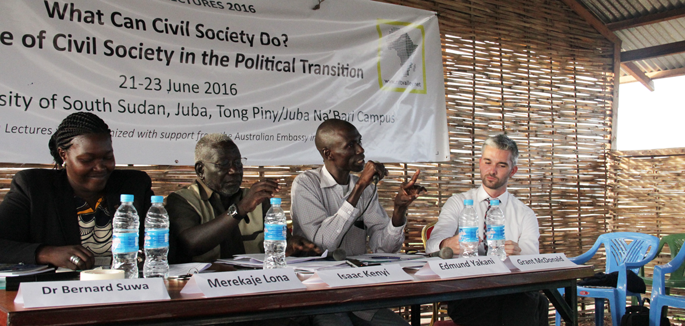
With the formation of a Transitional Government of National Unity (TGoNU) and the subsequent outbreak of violence in Juba in July 2016, the role of civil society in South Sudan is more vital than ever. Can a civil society,…
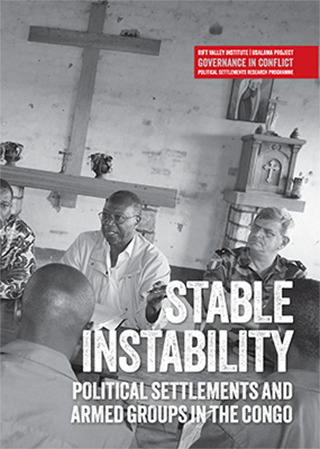
After more than two decades of ongoing violent conflict, armed groups—however fleeting their existence—have become an integral feature of the eastern Congo’s social-political order. They are not a temporary aberration in what is otherwise a normal society. They are…
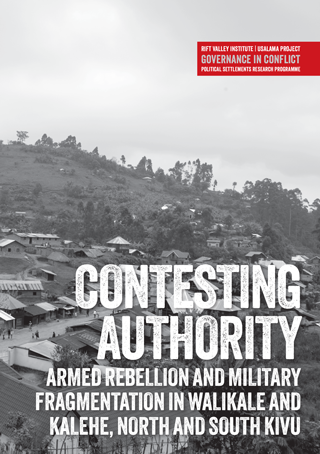
For more than 20 years, Kalehe and Walikale, two territories connecting the provinces of North and South Kivu, have been characterized by a proliferation of armed groups. The first of these groups emerged during the Masisi war in North…
- By Koen Vlassenroot, Emery Mudinga, Kasper Hoffmann
- Download
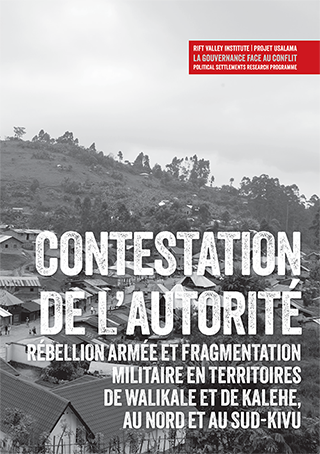
Cela fait plus de vingt ans que les territoires de Kalehe et de Walikale, où se rejoignent les provinces du Nord et du Sud-Kivu, subissent une prolifération de groupes armés. Le premier de ces groupes est apparu pendant la…
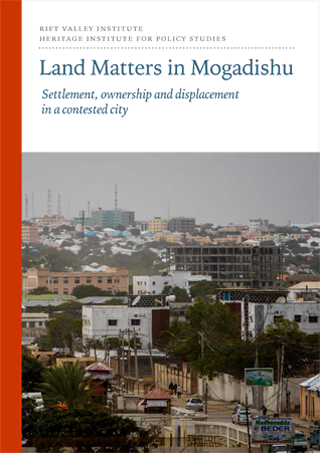
Mogadishu has for more than two decades been one of the most highly contested cities in the world. Since the collapse of President Siyad Barre’s government in early 1991, it has been the object of both military and political…
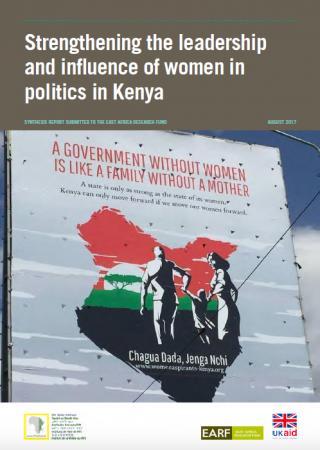
Kenya’s 2010 Constitution introduced a quota system designed to increase the representation of women in elective and appointive bodies of government. Article 27(8)—known as the Gender Principle—states that ‘not more than two thirds of the members of elective bodies…
The Rift Valley Institute’s Rural to urban mobility project aims to better understand the dynamics of rural to urban migration and the ways in which this phenomenon impacts the social and infrastructural fabric of cities in East Africa. It is conducted…
South Sudan’s civil war has spread across the country, fuelling economic collapse and food shortages, and sending millions of residents fleeing across its borders. Although the former Northern Bahr el-Ghazal State has escaped the worst excesses of the current…
Recent Publications

The Political Economy of Coffee in the Sidama–Gedeo–Guji Belt, Southern Ethiopia
September 4, 2026
This report is part of a wider research project on the political economy of coffee in Ethiopia in the context of the political transition since 2018. It focuses on the Sidama–Gedeo–Guji coffee belt in southern Ethiopia, aiming to understand the

SHECONF 2026: International Conference on Social Sciences and Humanities
July 9, 2026
Event report On 26 March 2026, researchers, practitioners and academics gathered in Addis Ababa for SHECONF 2026, an International Conference on Social Sciences and Humanities in Ethiopia, the first of its kind convened by the Ethiopian Women Researchers Network (EWNET).

State Capture in Africa: How elite networks undermine democracy, development and security
June 24, 2026
Key points State capture has been increasingly recognized as a major governance challenge due to the way it helps to drive many of the most pressing problems facing contemporary states, including democratic erosion, corruption, economic exclusion, insecurity and declining trust