On 20 May, the British Institute of Eastern Africa (BIEA), Chatham House, and the Rift Valley Institute (RVI) convened a group of experts to discuss the ‘The New Geopolitics of Eastern Africa’. The closed-door roundtable considered the ongoing transformation…
RVI publishes books, research reports, research papers, briefings and meeting reports in a range of formats. Publications cover policy, research, arts, culture and local knowledge in the countries of eastern and central Africa. Research publications—books, reports and papers—are peer-reviewed. Some RVI publications are also available in French and/or Arabic.
The RVI is a signatory of the Budapest Open Access Initiative (2001); all publications are free for download in PDF format under Creative Commons licences. The views expressed in books and reports published by the RVI are those of the authors, not the Institute.
SEARCH
PUBLICATION TYPE
LANGUAGE
REGION
COUNTRY
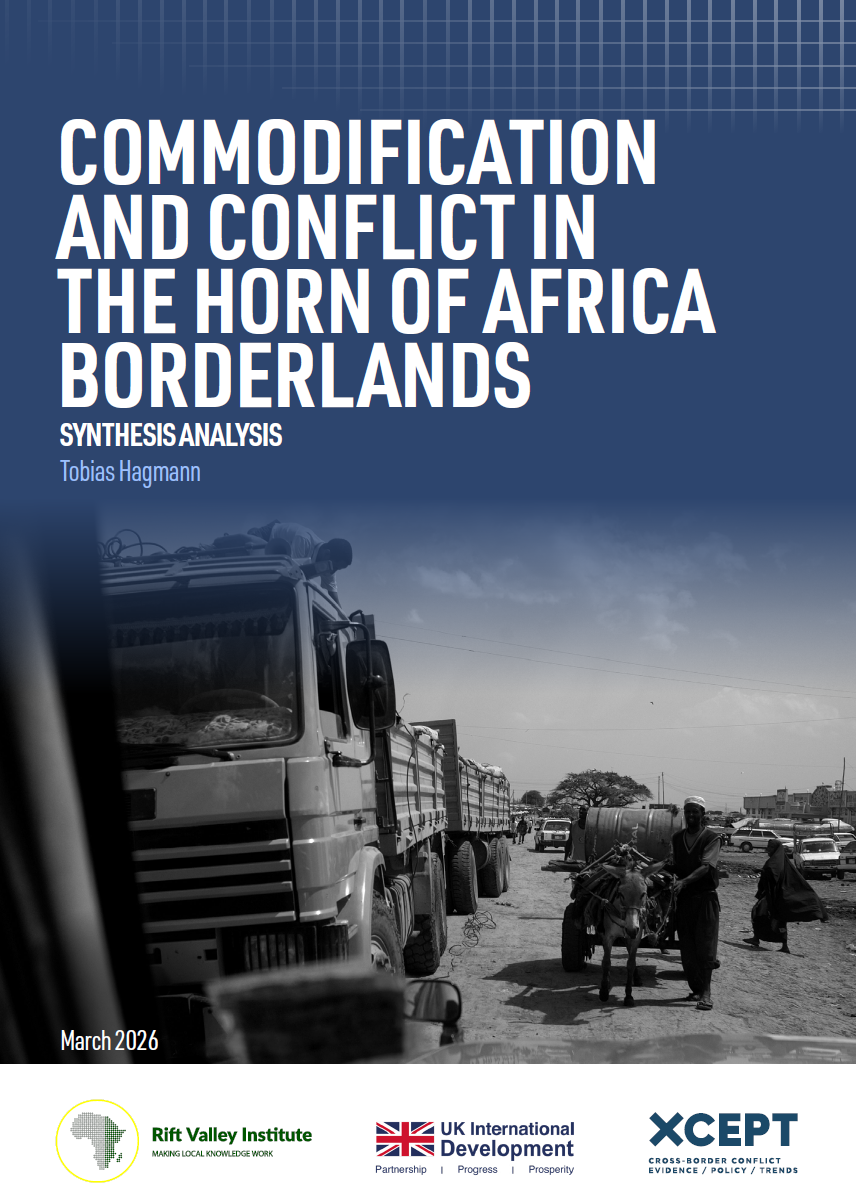
This report synthesizes findings from the Rift Valley Institute’s X-Border Local Research Network (2019–2025). In the surveyed studies, 25 leading local and international area specialists conducted extensive qualitative fieldwork across borderlands in South Sudan, Sudan, Ethiopia, Kenya and the…
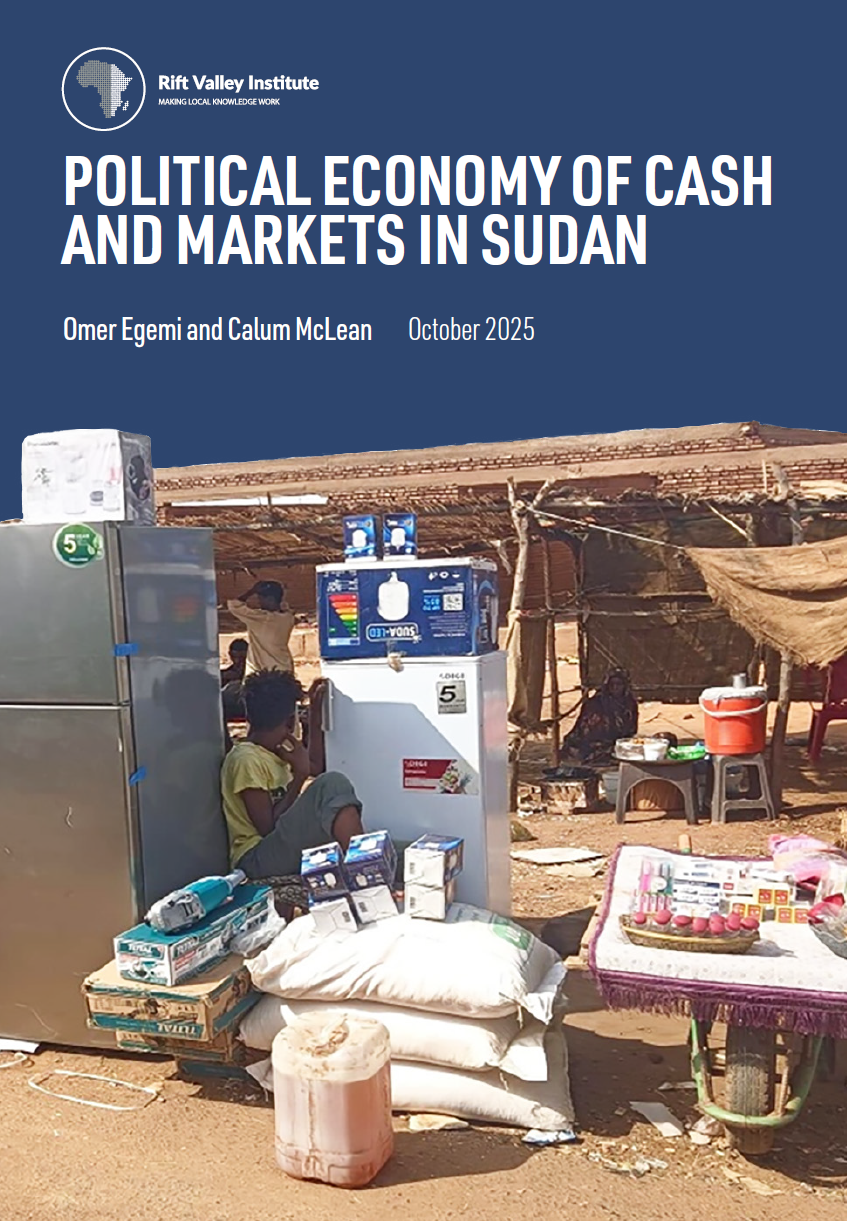
The research provides a snapshot of the war in Sudan in the period from February to April 2025. However, the war is dynamic, with political alliances and territorial control changing. The April 2023 conflict between the Sudan Armed Forces…
The 2025 Year in Review provides an overview of the Rift Valley Institute’s work over the past year across eastern and central Africa. The report highlights RVI’s research and publication outputs, education and training activities, and public forums and…
The brief draws on a joint convening held in Kampala, Uganda, in November 2025, which brought together more than 45 Sudanese and South Sudanese participants representing more than 30 grassroots organizations and international NGOs. Its primary objective is to…
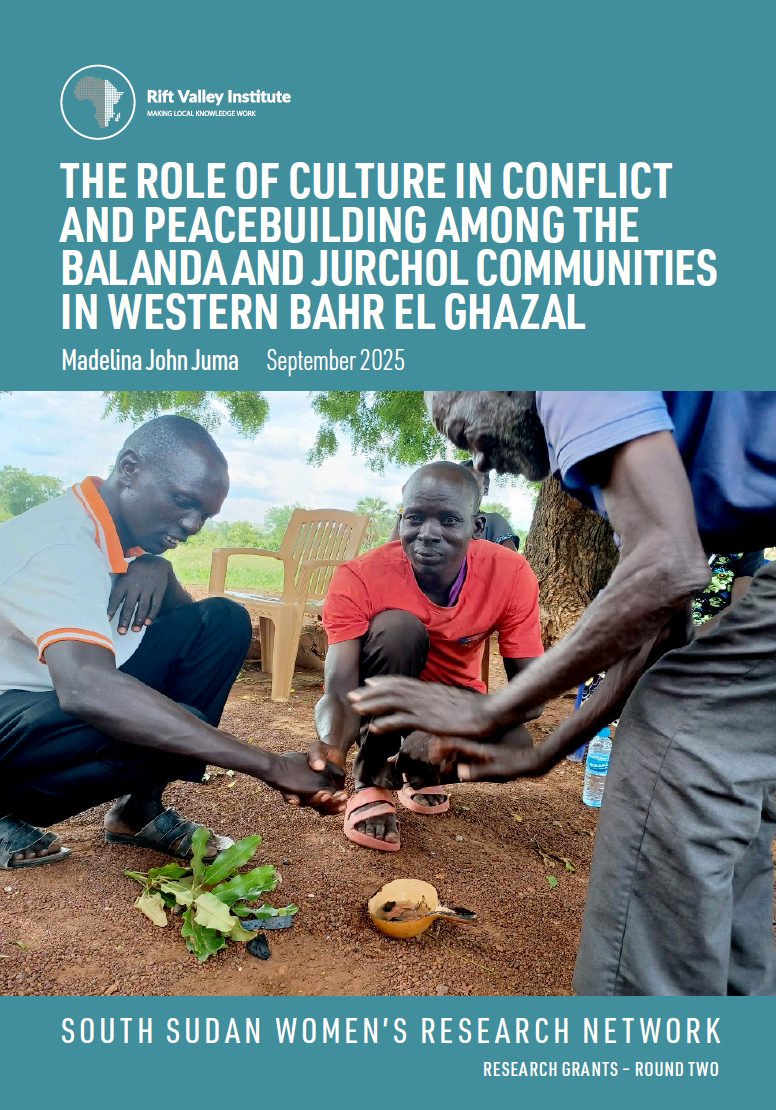
The aim of this ethnographic study is to explore the role played by cultural expressions in conflict and peacebuilding in South Sudan, with specific reference to song, dance and beadwork. This study aims to understand how symbolic communication is…
With the purpose of charting a course for social protection in Sudan that will bridge the gap between research and policy, facilitate dialogue among key stakeholders and contribute to developing a shared vision for social protection in Sudan, this…
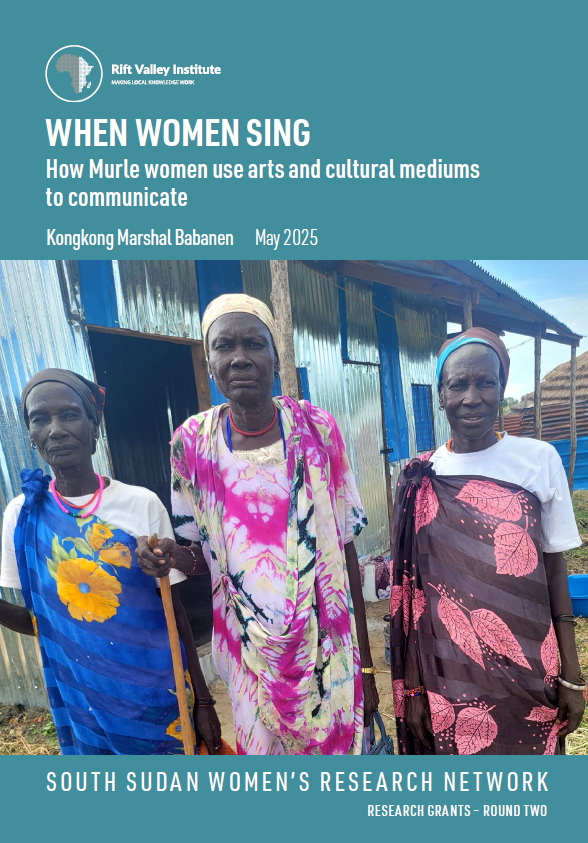
This research explores how Murle women in the Greater Pibor area of central eastern South Sudan use not just songs but dance, hairstyles, body marks and beads to express themselves. Its objective is to draw attention to the ways…
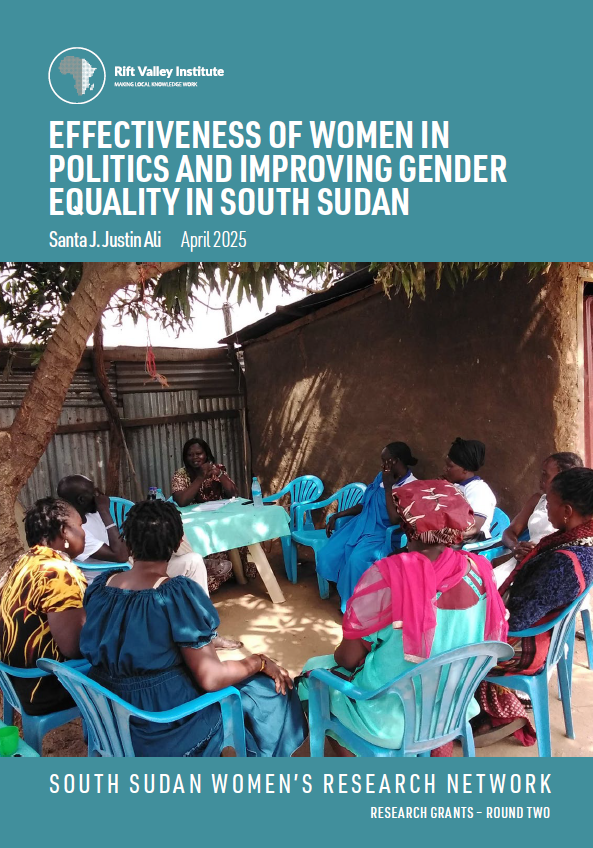
This report argues that, in order to improve women’s participation in politics and promote gender-responsive policies in the country, there is a need to enlarge government capacity for women’s leadership by introducing equal gender quotas for decision-making positions. Summary…
Do the ways in which policymakers and national governments view borderlands reflect how the communities living there experience them? Building on this, can a better understanding of the characteristics of borderlands help in promoting development, improving governance and making…
Recent Publications

SHECONF 2026: International Conference on Social Sciences and Humanities
July 9, 2026
Event report On 26 March 2026, researchers, practitioners and academics gathered in Addis Ababa for SHECONF 2026, an International Conference on Social Sciences and Humanities in Ethiopia, the first of its kind convened by the Ethiopian Women Researchers Network (EWNET).

State Capture in Africa: How elite networks undermine democracy, development and security
June 24, 2026
Key points State capture has been increasingly recognized as a major governance challenge due to the way it helps to drive many of the most pressing problems facing contemporary states, including democratic erosion, corruption, economic exclusion, insecurity and declining trust

The New Geopolitics of Eastern Africa
June 17, 2026
On 20 May, the British Institute of Eastern Africa (BIEA), Chatham House, and the Rift Valley Institute (RVI) convened a group of experts to discuss the ‘The New Geopolitics of Eastern Africa’. The closed-door roundtable considered the ongoing transformation of