Key points The LAPSSET project has transformative potential for the neglected north of Kenya and for East African regional integration. A major challenge is safeguarding the environment, and the rights and livelihoods of those whose lands the project will…
RVI publishes books, research reports, research papers, briefings and meeting reports in a range of formats. Publications cover policy, research, arts, culture and local knowledge in the countries of eastern and central Africa. Research publications—books, reports and papers—are peer-reviewed. Some RVI publications are also available in French and/or Arabic.
The RVI is a signatory of the Budapest Open Access Initiative (2001); all publications are free for download in PDF format under Creative Commons licences. The views expressed in books and reports published by the RVI are those of the authors, not the Institute.
SEARCH
PUBLICATION TYPE
LANGUAGE
REGION
COUNTRY
- By Michel Thill
- Download
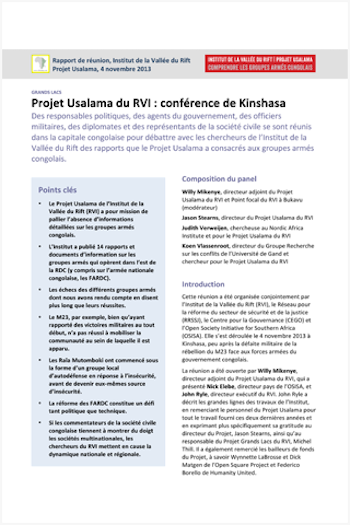
Points clés Le Projet Usalama de l’Institut de la Vallée du Rift (RVI) a pour mission de pallier l’absence d’informations détaillées sur les groupes armés congolais. L’Institut a publié 14 rapports et documents d’information sur les groupes armés qui opèrent…
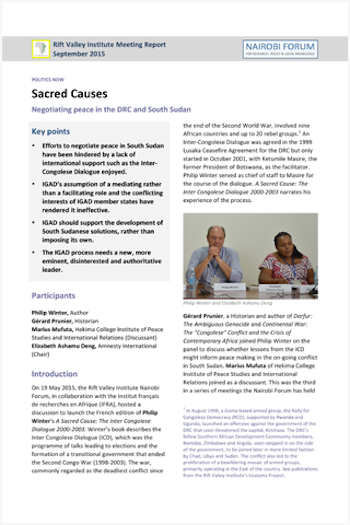
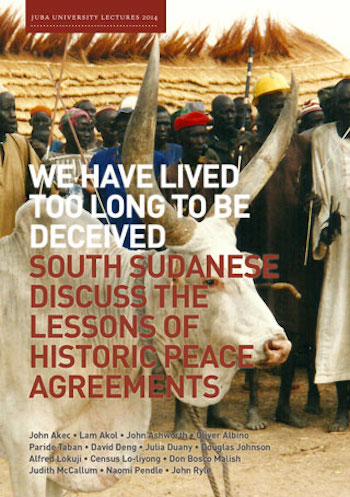
Key points • Efforts to negotiate peace in South Sudan have been hindered by the lack of a coherent international approach such as the Inter-Congolese Dialogue eventually enjoyed. • IGAD’s assumption of a mediating rather than a facilitating role…
- By Nanjala Nyabola
- Download
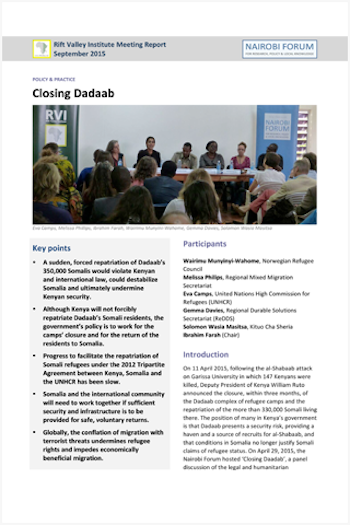
Key points • A sudden, forced repatriation of Dadaab’s 350,000 Somalis would violate Kenyan and international law, could destabilize Somalia and ultimately undermine Kenyan security. • Although Kenya will not forcibly repatriate Dadaab’s Somali residents, the government’s policy is…
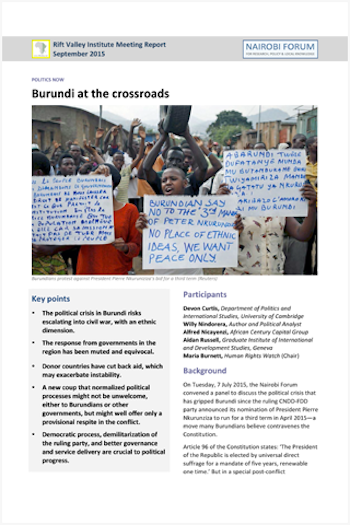
Key points • The political crisis in Burundi risks escalating into civil war, with an ethnic dimension. • The response from governments in the region has been muted and equivocal. • Donor countries have cut back aid, which may…
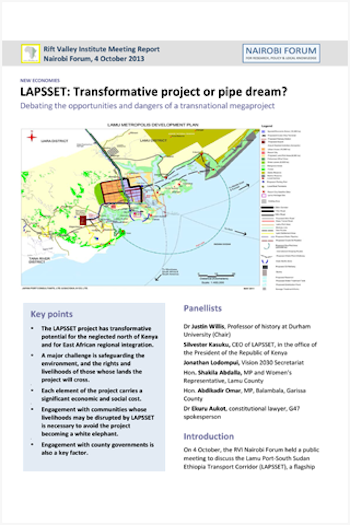
In December 2013, South Sudan descended into conflict. Peace initiatives over the following eighteen months culminated in an agreement between government and armed opposition, signed in August 2015. While the agreement came into effect in late 2015, many uncertainties…
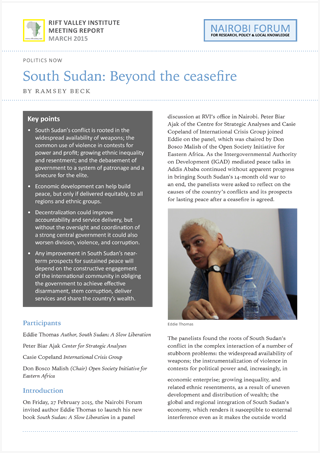
On Friday, 27 February 2015, the Nairobi Forum invited author Eddie Thomas to launch his new book South Sudan: A Slow Liberation in a panel discussion at RVI’s office in Nairobi. Peter Biar Ajak of the Centre for Strategic…
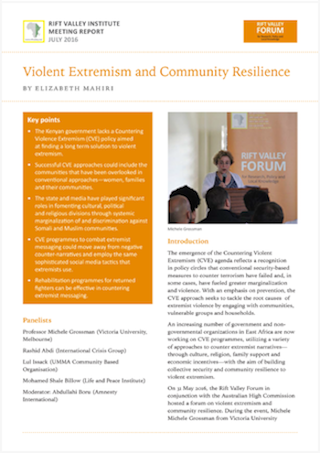
By Liz Mahiri Key points Panelists Professor Michele Grossman (Victoria University, Melbourne) Rashid Abdi (International Crisis Group) Lul Issack (UMMA Community Based Organisation) Mohamed Shale Billow (Life and Peace Institute) Moderator: Abdullahi Boru (Amnesty International) Introduction The emergence…
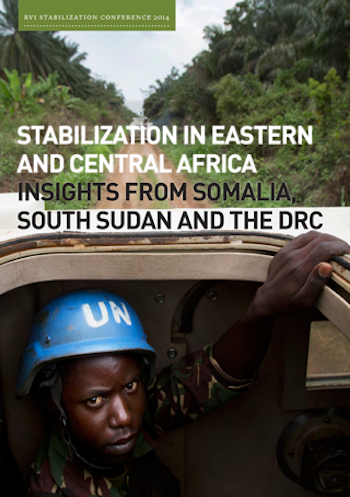
‘The conference has put into perspective what stabilization means in South Sudan as opposed to what it means in Somalia and in the DRC. And putting my own insights on stabilization alongside those of the speakers here has given…
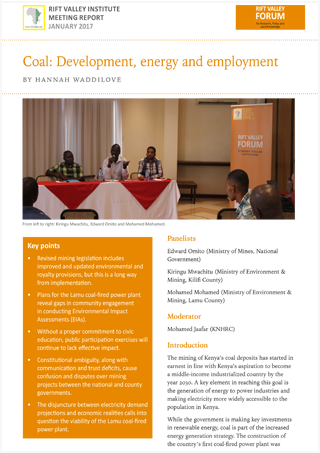
The mining of Kenya’s coal deposits has started in earnest in line with Kenya’s aspiration to become a middle-income industrialized country by the year 2030. A key element in reaching this goal is the generation of energy to power…
Recent Publications

Writing Ethiopia into the World, Writing the World from Ethiopia
October 7, 2026
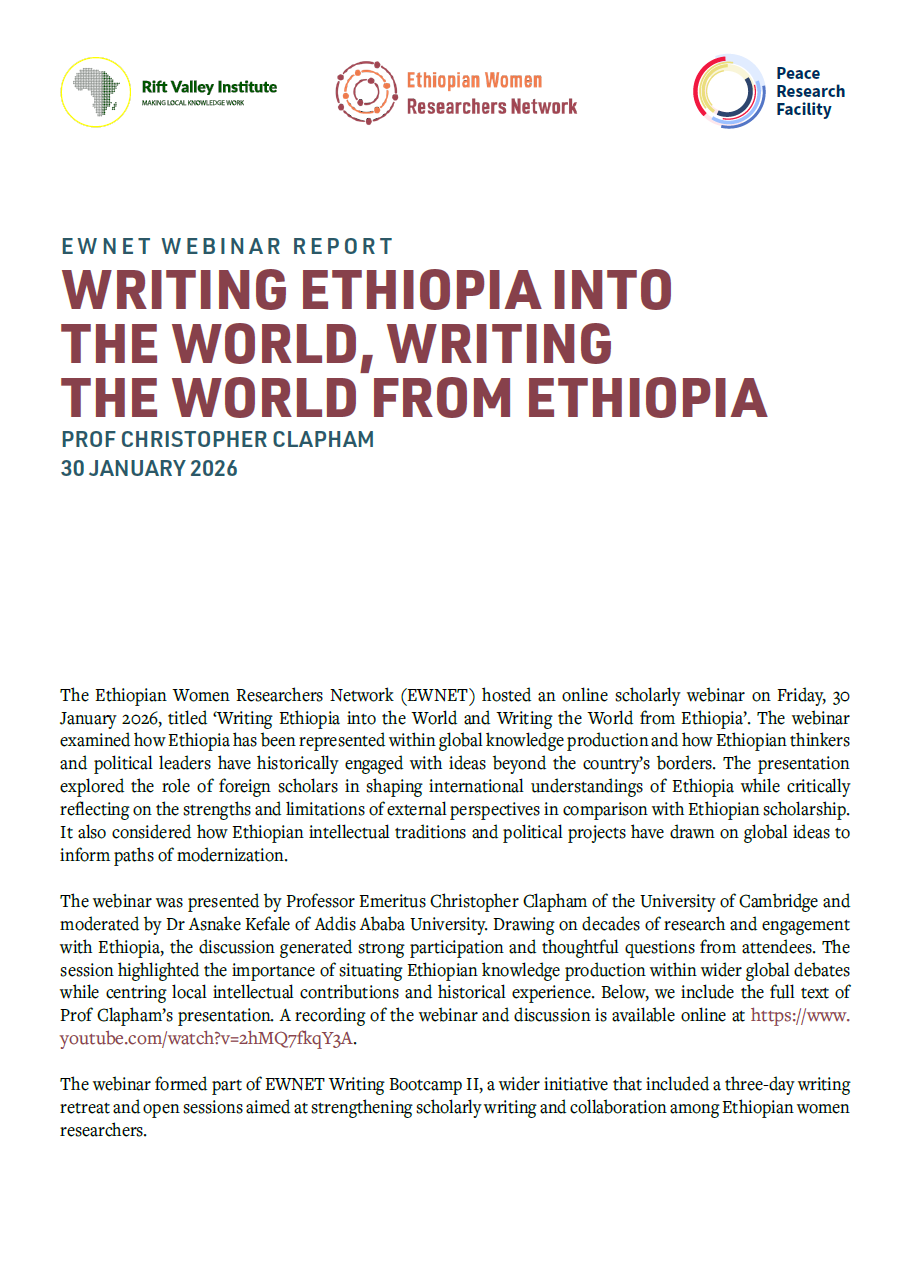
The Ethiopian Women Researchers Network (EWNET) hosted an online scholarly webinar on Friday, 30 January 2026, titled ‘Writing Ethiopia into the World and Writing the World from Ethiopia’. The webinar examined how Ethiopia has been represented within global knowledge production
The Political Economy of Coffee in the Kaffa–Bench-Sheko–Sheka Belt, Southwest Ethiopia Region
October 6, 2026
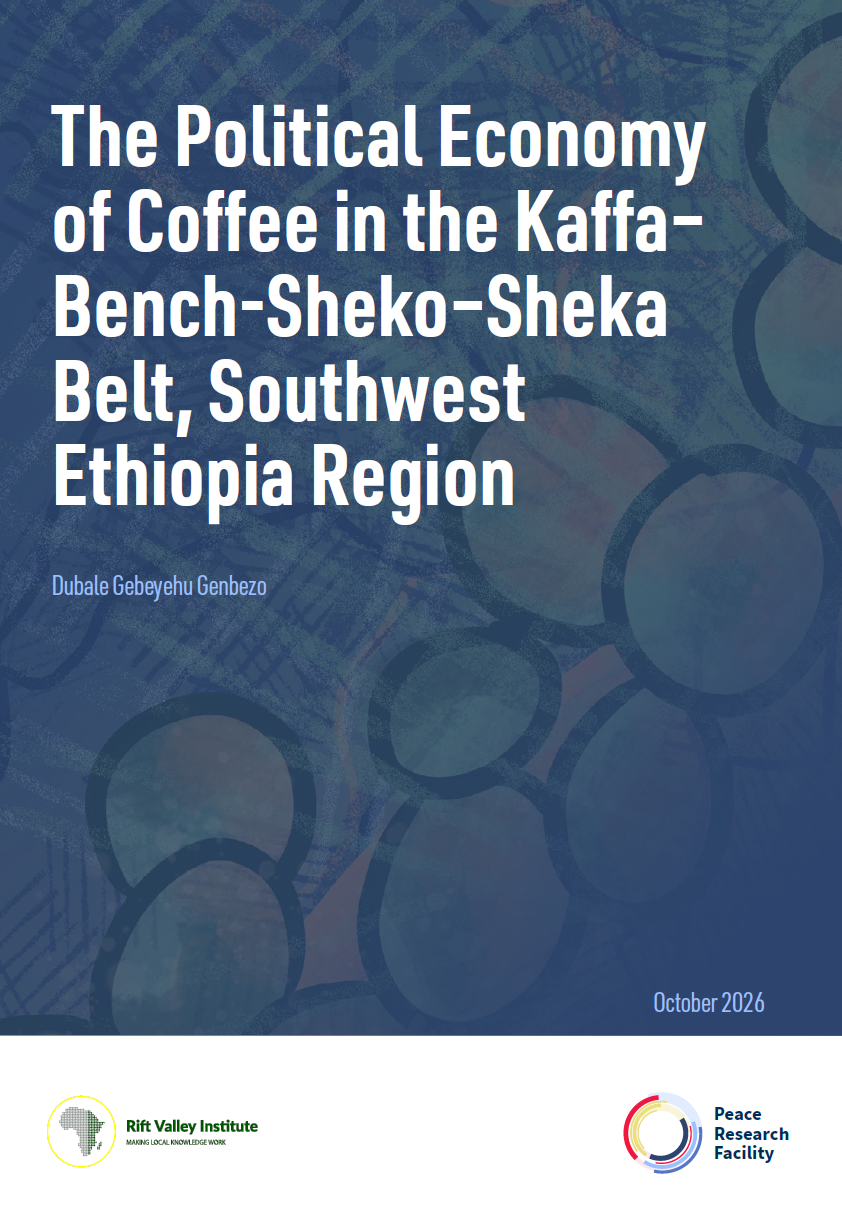
This study provides a critical political economy analysis of the coffee sector in the Kaffa–Bench-Sheko–Sheka belt in Southwest Ethiopia Peoples’ Regional State, the genetic and cultural heartland of Arabica coffee (Coffea arabica). Based on 47 key respondent interviews, the study
The Political Economy of Coffee in the Jimma–Ilu Aba Bora–Buno Bedele Belt, Oromia Region
October 5, 2026
The findings of this study reveal a number of critical insights about the political economy of coffee in the Jimma–Ilu Aba Bora–Buno Bedele coffee belt. The coffee economy is shaped by a small number of influential actors, including state institutions,