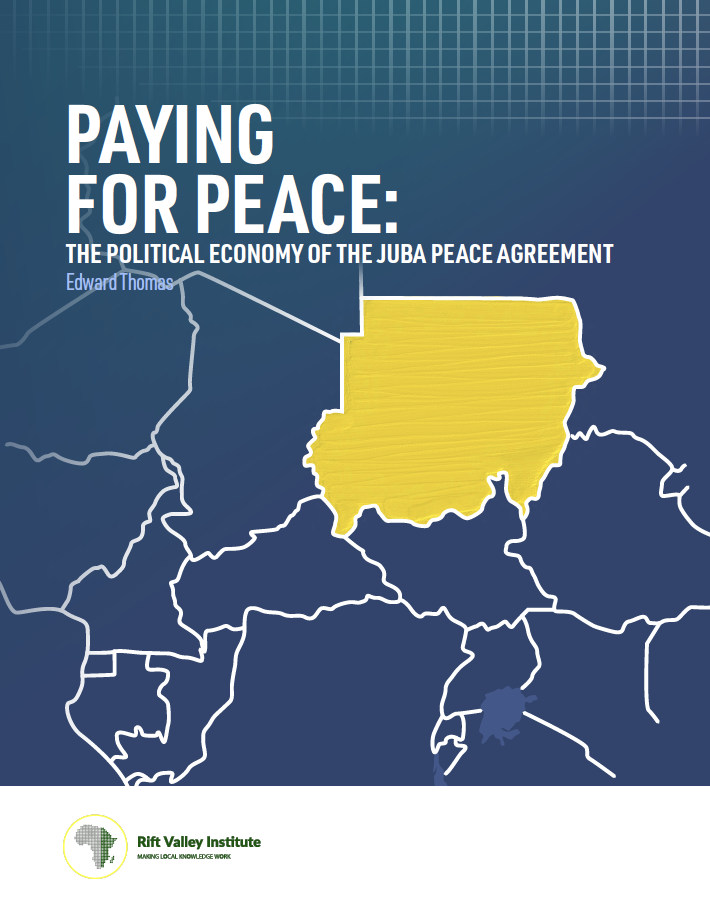
SUMMARY Sudan’s economy is based on resources that have been exploited via violence rather than through peaceful, sustainable means. As a result, those who have benefited are those who control the means of violence. Furthermore, the inequalities in wealth,…
RVI publishes books, research reports, research papers, briefings and meeting reports in a range of formats. Publications cover policy, research, arts, culture and local knowledge in the countries of eastern and central Africa. Research publications—books, reports and papers—are peer-reviewed. Some RVI publications are also available in French and/or Arabic.
The RVI is a signatory of the Budapest Open Access Initiative (2001); all publications are free for download in PDF format under Creative Commons licences. The views expressed in books and reports published by the RVI are those of the authors, not the Institute.
SEARCH
PUBLICATION TYPE
LANGUAGE
REGION
COUNTRY
In Sudan, the revolutionary upsurge of 2018/2019 signalled the implosion of the country’s postcolonial political order. The political parties of old have seen their social bases wither away and their ideological hold over the Sudanese people corrode under the…
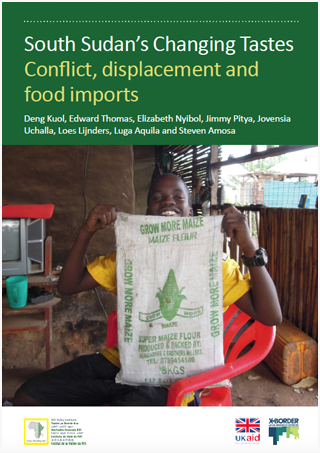
South Sudan’s long wars have forced millions of people to leave their own homes, farms and pastures and move to unfamiliar new areas of the countryside, to refugee camps and cities. In the process, they have changed the way…
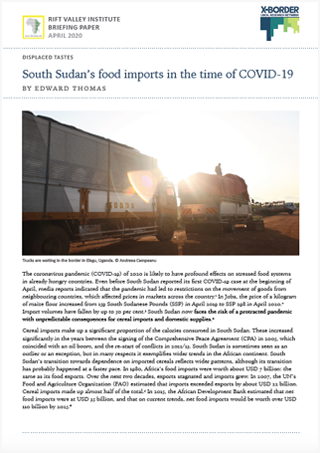
The coronavirus pandemic (COVID-19) of 2020 is likely to have profound effects on stressed food systems in already hungry countries. Even before South Sudan reported its first COVID-19 case at the beginning of April, media reports indicated that the…
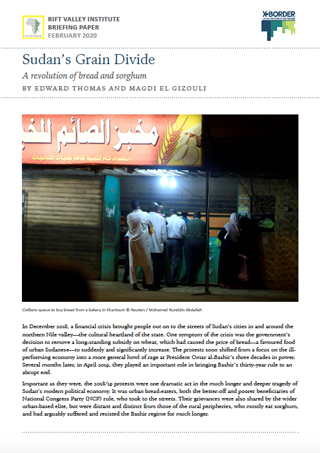
This briefing unpacks the connected political and economic crisis that reached a climax in early 2019 through the contrasting but connected worlds of Sudan’s bread and sorghum eaters. Its conclusion presents the limited options available to the as…
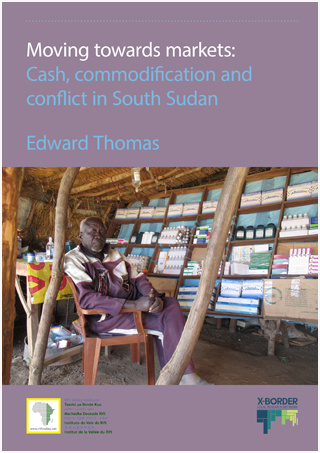
Fifty years ago, most households in South Sudan produced the grain they ate, organizing agricultural labour and distributing small surpluses mostly through kinship and other social networks. Now, the majority of households buy most of their food. This transition…
A policy paper on Sudan’s political future analysing the critical events facing the country in the run up to the April 2010 elections and the 2011 referendum on self-determination for Southern Sudan. Copublished by RVI with Chatham House (the Royal Institute…
When South Sudan became a separate state in 2011, its northern boundary with the Republic of Sudan became an international border, the longest and most contentious in the region. At the westernmost extremity of Sudan, Kafia Kingi is a…
تُعتبر كفيا قنجي الواقع على الطرف الغربي الأقصى للسودان نقطة إلتقاء رئيسية بين دارفور وجنوب البلاد؛ وتخضع هذه المنطقة الغنية بالمعادن حالياً لإدارة جنوب دارفور، لكن من المتوقع إعادتها إلى مقاطعة راجا في جنوب السودان بموجب بنود اتفاقية السلام…
Recent Publications

Rethinking Aid in Sudan and South Sudan
January 28, 2026
The brief draws on a joint convening held in Kampala, Uganda, in November 2025, which brought together more than 45 Sudanese and South Sudanese participants representing more than 30 grassroots organizations and international NGOs. Its primary objective is to amplify

EWNET Writes: Writing Workshop Session I
December 18, 2025
The Ethiopian Women Researchers Network (EWNET) inaugural writing workshop series aims to not only provide women researchers with uninterrupted time for their scholarly projects, but also build a supportive academic community. The first session, entitled ‘EWNET Writes: Writing Workshop Session

SSC-Khaatumo: Perspectives on the significance and implications of its formation
December 12, 2025
On 15 April 2025, during a visit to the city of Las Anod in Sool, Prime Minister Hassan Abdi Barre officially declared the federal government’s recognition of SSC-Khaatumo (SSC-K hereafter) as a federal member state, marking an important milestone in