Summary The sustained movement of people, goods and ideas across the African Red Sea Region has been and continues to be so intense that it binds together communities throughout the region in a unified multifaceted socio-economic system that transcends…
RVI publishes books, research reports, research papers, briefings and meeting reports in a range of formats. Publications cover policy, research, arts, culture and local knowledge in the countries of eastern and central Africa. Research publications—books, reports and papers—are peer-reviewed. Some RVI publications are also available in French and/or Arabic.
The RVI is a signatory of the Budapest Open Access Initiative (2001); all publications are free for download in PDF format under Creative Commons licences. The views expressed in books and reports published by the RVI are those of the authors, not the Institute.
SEARCH
PUBLICATION TYPE
LANGUAGE
REGION
COUNTRY
In South Sudan, access to energy is crucial for survival, recovery and resilience in what is an extremely challenging economic and security environment. Fuelling Poverty—a product of the Energy on the Move project—examines the challenges of meeting everyday energy…
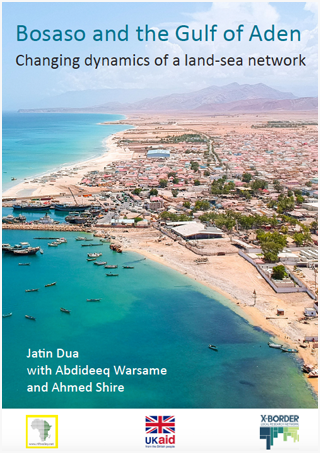
Bosaso and the Gulf of Aden: Changing dynamics of a land-sea network is the second report in a series looking at the relationship between modern-day Puntland, a semi-autonomous region of north-east Somalia, Yemen and the wider Gulf region. It…
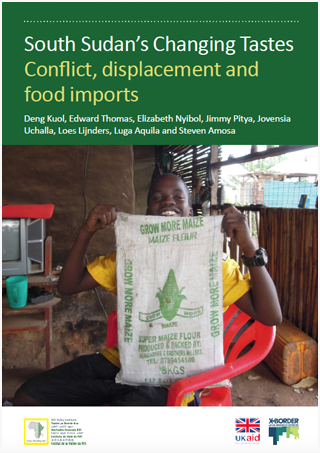
South Sudan’s long wars have forced millions of people to leave their own homes, farms and pastures and move to unfamiliar new areas of the countryside, to refugee camps and cities. In the process, they have changed the way…
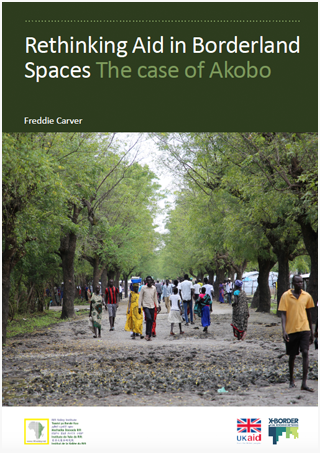
Taking the Ethiopia-South Sudan borderlands as a case study, Rethinking Aid in Borderland Spaces: The case of Akobo argues that the traditional modalities of the aid industry are not fit for purpose in a world where transnationalism is a daily…
Over the last 50 years, the various conflicts afflicting South Sudan have caused massive displacements of people. Latest estimates suggest there are more than 1.5 million internally displaced people (IDPs) within the country’s borders, with another 2.2 million refugees…
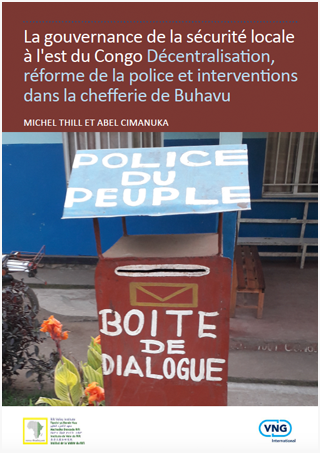
En 2019, le gouvernement congolais s’est engagé à relancer la réforme de la police après l’arrêt d’un programme pilote en 2014 en raison de violations des droits de l’homme commises par la Police Nationale Congolaise. Pendant ce temps, le…
In 2019, the Congolese government pledged to reinvigorate police reform after a pilot programme was shut down in 2014 due to human rights abuses committed by the Congolese National Police. Meanwhile, the government in South Kivu called for the…
- Download
Après plus de deux décennies de conflit violent permanent, les groupes armés—quel que soit le caractère plus ou moins fugace de leur existence—sont devenus une caractéristique incontournable de l’ordre socio-politique au Congo oriental. Ils n’y sont pas une aberration…
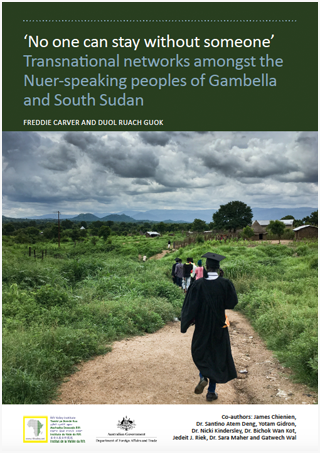
During war, geographies of economic and political power are often recast by shifting patterns of trade and population movements. This can present an opportunity for local leaders to reshape legal and moral logics to attract trade and people to…
Recent Publications

The Political Economy of Coffee in the Sidama–Gedeo–Guji Belt, Southern Ethiopia
September 4, 2026
This report is part of a wider research project on the political economy of coffee in Ethiopia in the context of the political transition since 2018. It focuses on the Sidama–Gedeo–Guji coffee belt in southern Ethiopia, aiming to understand the

SHECONF 2026: International Conference on Social Sciences and Humanities
July 9, 2026
Event report On 26 March 2026, researchers, practitioners and academics gathered in Addis Ababa for SHECONF 2026, an International Conference on Social Sciences and Humanities in Ethiopia, the first of its kind convened by the Ethiopian Women Researchers Network (EWNET).

State Capture in Africa: How elite networks undermine democracy, development and security
June 24, 2026
Key points State capture has been increasingly recognized as a major governance challenge due to the way it helps to drive many of the most pressing problems facing contemporary states, including democratic erosion, corruption, economic exclusion, insecurity and declining trust