
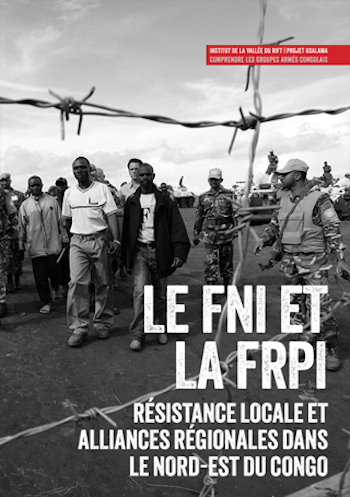
Ce rapport par Henning Tamm examine la chute rapide de la violence armée en Ituri, un district où se manifeste tous les principaux défis du Congo à la stabilisation. Le rapport met l’accent sur le Front des nationalistes intégrationnistes (FNI) et…
RVI publishes books, research reports, research papers, briefings and meeting reports in a range of formats. Publications cover policy, research, arts, culture and local knowledge in the countries of eastern and central Africa. Research publications—books, reports and papers—are peer-reviewed. Some RVI publications are also available in French and/or Arabic.
The RVI is a signatory of the Budapest Open Access Initiative (2001); all publications are free for download in PDF format under Creative Commons licences. The views expressed in books and reports published by the RVI are those of the authors, not the Institute.
SEARCH
PUBLICATION TYPE
LANGUAGE
REGION
COUNTRY
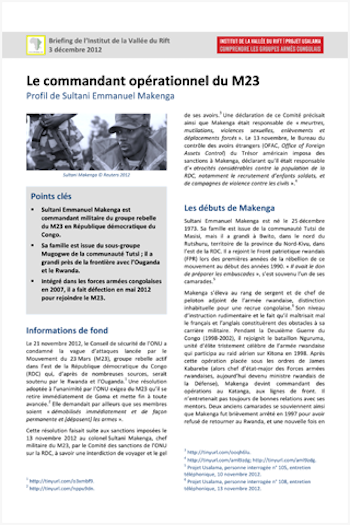
Ce briefing du Projet Usalama présente une biographie concise du commandant en chef du M23, Sultani Makenga. Il décrit son ascension dans les rangs, son adhésion précédente au Rassemblement congolais pour la démocratie (RCD) et au Congrès national pour…
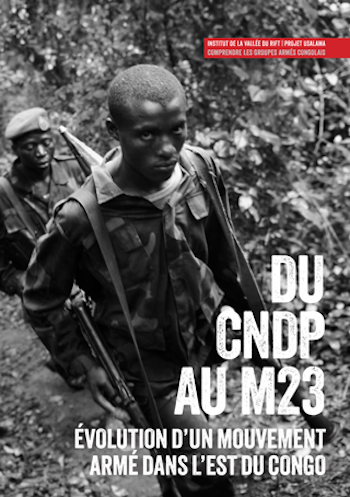
Ce rapport du Projet Usalama explore les racines de la plus récente rébellion dans l’est de la RDC. Il discute aussi les implications de la rébellion sur les voisins à l’est de la RDC, le Rwanda et l’Ouganda, qui…
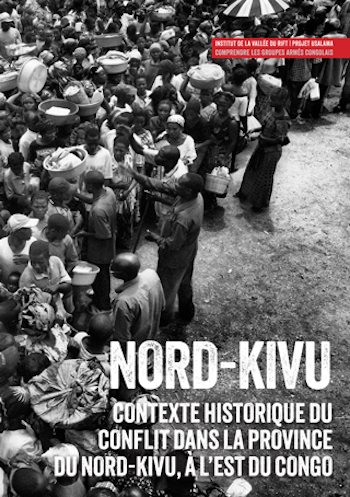
Ce rapport du Projet Usalama résume le contexte historique de la profusion des groupes armés qui ont surgit dans les deux dernières décennies dans la province du Nord-Kivu en RDC. Le rapport sert à démystifier les nombreux factions armées…
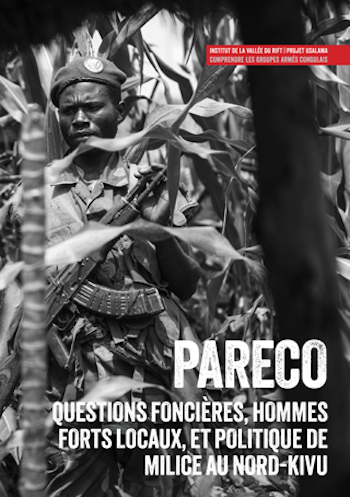
Ce rapport du Projet Usalama traite des origines et activités de la PARECO, la Coalition des patriotes congolais résistants, une faction qui a surgit de griefs locales au sujet de questions foncières, devenait puissant comme réponse au CNDP et qui…
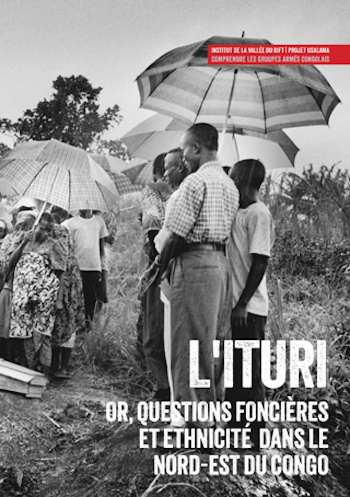
Ce rapport par Dan Fahey fournit le contexte historique des années de conflit dans le district de l’Ituri dans le nord-est du Congo. La nature particulièrement violente de la guerre qui sévit en Ituri––massacres à grande échelle, violences sexuelles…
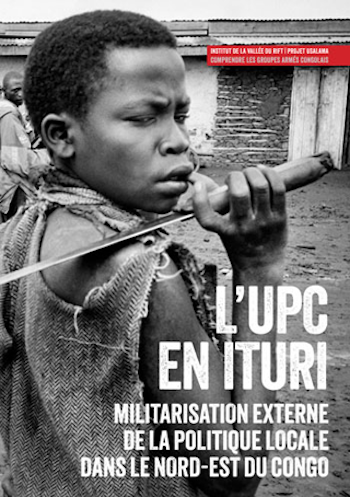
Ce rapport Usalama par Henning Tamm étudie la convergence des facteurs qui ont contribué à la formation puis à la dislocation de l’Union des patriotes congolais (UPC), l’un des groupes armés les plus puissants de l’Ituri. Créée dans le contexte…
Ce briefing du Projet Usalama présente un profil de l’un des commandants les plus importants du M23, le général Bosco Ntaganda. Malgré son inculpation par la Cour pénale internationale sur des accusations d’enrôlement et utilisation d’enfants soldats, de meurtre,…
- By Emily Paddon
- Download
Ce briefing du Projet Usalama expose l’histoire de la participation de l’ONU dans l’est de la RDC et analyse les défis qui continuent de faire face à la mission, même au moment où elle se prépare à déployer une…
- By Jason Stearns
- Download
Ce rapport du Projet Usalama décrit les origines, l’évolution rapide, l’expansion et les activités de cette force diverse. Le groupe débuta comme une réponse locale à l’insécurité endémique, mais profita des déficiences dans les différents processus de paix à…
Recent Publications

Writing Ethiopia into the World, Writing the World from Ethiopia
October 7, 2026
The Ethiopian Women Researchers Network (EWNET) hosted an online scholarly webinar on Friday, 30 January 2026, titled ‘Writing Ethiopia into the World and Writing the World from Ethiopia’. The webinar examined how Ethiopia has been represented within global knowledge production
The Political Economy of Coffee in the Kaffa–Bench-Sheko–Sheka Belt, Southwest Ethiopia Region
October 6, 2026
This study provides a critical political economy analysis of the coffee sector in the Kaffa–Bench-Sheko–Sheka belt in Southwest Ethiopia Peoples’ Regional State, the genetic and cultural heartland of Arabica coffee (Coffea arabica). Based on 47 key respondent interviews, the study
The Political Economy of Coffee in the Jimma–Ilu Aba Bora–Buno Bedele Belt, Oromia Region
October 5, 2026
The findings of this study reveal a number of critical insights about the political economy of coffee in the Jimma–Ilu Aba Bora–Buno Bedele coffee belt. The coffee economy is shaped by a small number of influential actors, including state institutions,