Key points The impact of war on Somali men is poorly understood in Somali society and among international policy makers and aid organizations. The prevalence of rape in Somalia is indicative of the profound impact of war, the collapse…
RVI publishes books, research reports, research papers, briefings and meeting reports in a range of formats. Publications cover policy, research, arts, culture and local knowledge in the countries of eastern and central Africa. Research publications—books, reports and papers—are peer-reviewed. Some RVI publications are also available in French and/or Arabic.
The RVI is a signatory of the Budapest Open Access Initiative (2001); all publications are free for download in PDF format under Creative Commons licences. The views expressed in books and reports published by the RVI are those of the authors, not the Institute.
SEARCH
PUBLICATION TYPE
LANGUAGE
REGION
COUNTRY
Key points The upcoming conference is different from any previous conferences on Somalia in that it will be represented by a legitimate, non-transitional Federal Government of Somalia with an agenda set by Somalis. With regional governments, including Somaliland and…
Key points Few people document their family’s experiences as vividly as Nadifa Mohamed did while writing her first novel, a process in which she describes herself as being her father’s griot, or praise-singer. While it is critics who put…
Key points The stakes for the November 2012 local council elections were exceedingly high, with the winning three parties eligible to contest the parliamentary and presidential elections for the next ten years. The results were highly contested but mostly…
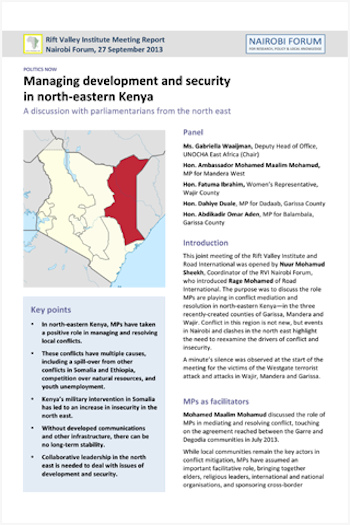
Key points In north-eastern Kenya, MPs have taken a positive role in managing and resolving local conflicts. These conflicts have multiple causes, including a spill-over from other conflicts in Somalia and Ethiopia, competition over natural resources, and youth unemployment….
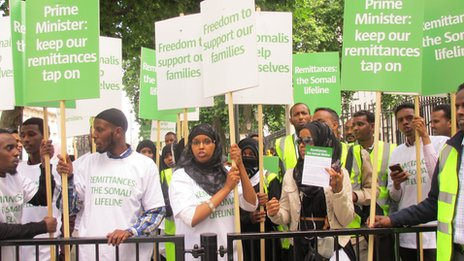
Key points Remittances from abroad are a vital lifeline for households in Somalia. 40% rely on them to meet food security needs. The majority of remittances to Somalia, Puntland and Somaliland are through licensed money transfer operators (MTOs) rather…
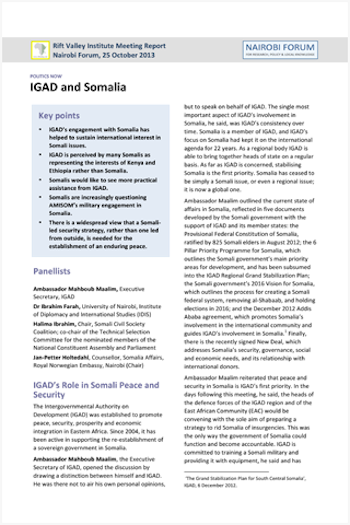
Key points IGAD’s engagement with Somalia has helped to sustain international interest in Somali issues. IGAD is perceived by many Somalis as representing the interests of Kenya and Ethiopia rather than Somalia. Somalis would like to see more practical…
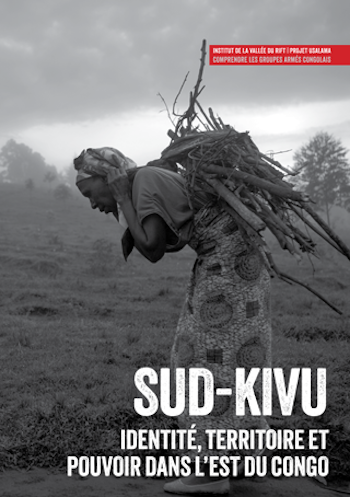
Ce rapport Usalama par Koen Vlassenroot décrit la dynamique historique à l’origine des mouvements armés au Sud-Kivu, en mettant plus précisément l’accent sur la période située avant la Première Guerre du Congo. La province du Sud-Kivu se trouve au…
- By Jason Stearns, Anonymous
- Download
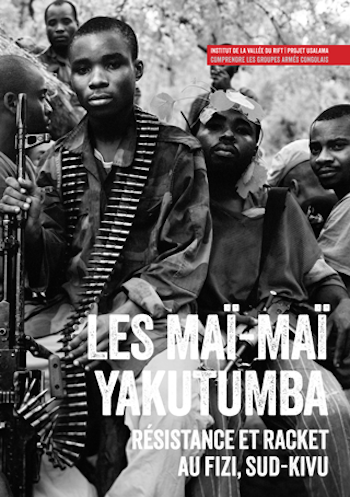
Ce rapport du Projet Usalama examine les Maï-Maï de William Amuri Yakutumba, un groupe qui, initialement, ont été démobilisé après la Deuxième Guerre du Congo (1998-2003). Cependant, après avoir peiné de trouver d’autres moyens de subsistance, ils ont remobilisé,…
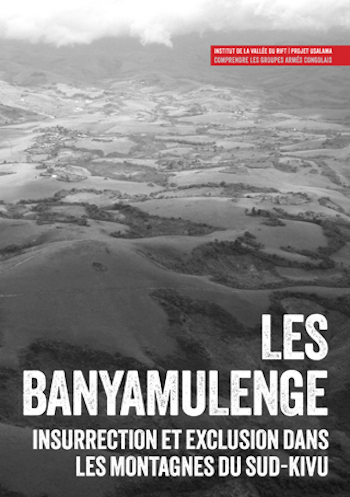
Ce rapport Usalama par Jason Stearns et al. examine les Banyamulenge, une communauté Tutsi vivant dans l’est de la RDC qui s’est trouvée au coeur des multiples conflits qui sévissent de manière intermittente dans l’est de la RDC depuis…
Recent Publications

Writing Ethiopia into the World, Writing the World from Ethiopia
October 7, 2026
The Ethiopian Women Researchers Network (EWNET) hosted an online scholarly webinar on Friday, 30 January 2026, titled ‘Writing Ethiopia into the World and Writing the World from Ethiopia’. The webinar examined how Ethiopia has been represented within global knowledge production
The Political Economy of Coffee in the Kaffa–Bench-Sheko–Sheka Belt, Southwest Ethiopia Region
October 6, 2026
This study provides a critical political economy analysis of the coffee sector in the Kaffa–Bench-Sheko–Sheka belt in Southwest Ethiopia Peoples’ Regional State, the genetic and cultural heartland of Arabica coffee (Coffea arabica). Based on 47 key respondent interviews, the study
The Political Economy of Coffee in the Jimma–Ilu Aba Bora–Buno Bedele Belt, Oromia Region
October 5, 2026
The findings of this study reveal a number of critical insights about the political economy of coffee in the Jimma–Ilu Aba Bora–Buno Bedele coffee belt. The coffee economy is shaped by a small number of influential actors, including state institutions,