‘In South Sudan there is no system of governance so popular—yet so little understood—as the federal system. Historically the demand for federation with North Sudan was seen as the way to keep Sudan united, and the absence of such…
RVI publishes books, research reports, research papers, briefings and meeting reports in a range of formats. Publications cover policy, research, arts, culture and local knowledge in the countries of eastern and central Africa. Research publications—books, reports and papers—are peer-reviewed. Some RVI publications are also available in French and/or Arabic.
The RVI is a signatory of the Budapest Open Access Initiative (2001); all publications are free for download in PDF format under Creative Commons licences. The views expressed in books and reports published by the RVI are those of the authors, not the Institute.
SEARCH
PUBLICATION TYPE
LANGUAGE
REGION
COUNTRY
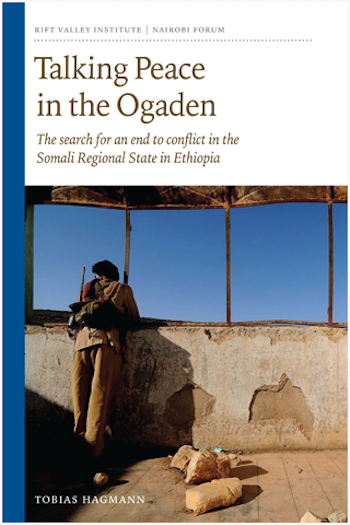
‘Objective, analytical and balanced.’ IBRAHIM FARAH, UNIVERSITY OF NAIROBI Summary Talking Peace in the Ogaden outlines the modern history of ethnic Somalis in relation to the Ethiopian state from the late 19th century to the present day, and assesses…
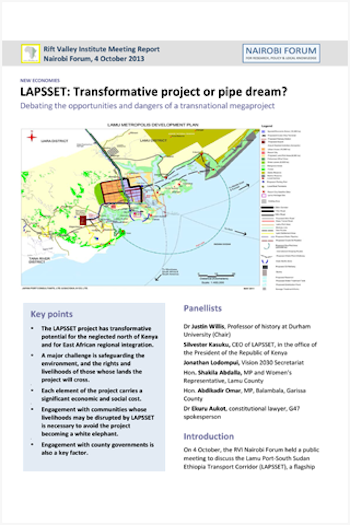
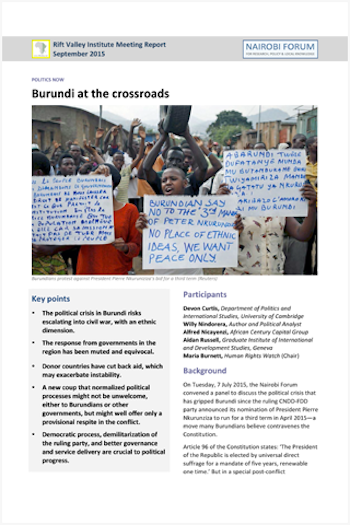
Key points The LAPSSET project has transformative potential for the neglected north of Kenya and for East African regional integration. A major challenge is safeguarding the environment, and the rights and livelihoods of those whose lands the project will…
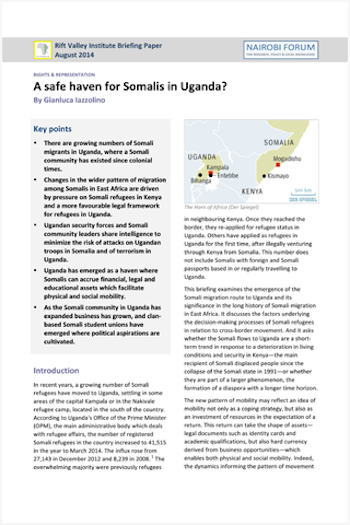
This briefing examines the emergence of the Somali migration route to Uganda and its significance in the long history of Somali migration in East Africa. It discusses the factors underlying the decision-making processes of Somali refugees in relation to…
- By Michel Thill
- Download
Points clés Le Projet Usalama de l’Institut de la Vallée du Rift (RVI) a pour mission de pallier l’absence d’informations détaillées sur les groupes armés congolais. L’Institut a publié 14 rapports et documents d’information sur les groupes armés qui opèrent…
تُعتبر كفيا قنجي الواقع على الطرف الغربي الأقصى للسودان نقطة إلتقاء رئيسية بين دارفور وجنوب البلاد؛ وتخضع هذه المنطقة الغنية بالمعادن حالياً لإدارة جنوب دارفور، لكن من المتوقع إعادتها إلى مقاطعة راجا في جنوب السودان بموجب بنود اتفاقية السلام…
‘In Somalia, land issues are particularly complex. Those involved in both policy and practice need to understand this complexity better if durable political solutions are to be identified and property rights for individuals and communities secured. Lee Cassanelli explains…
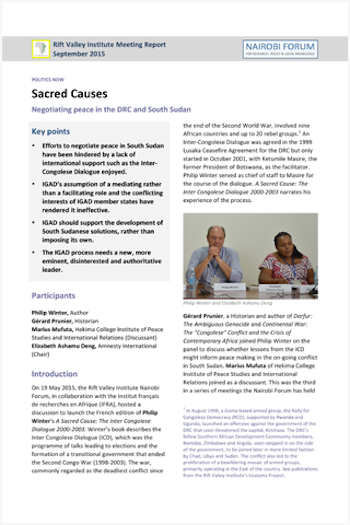
Key points • Efforts to negotiate peace in South Sudan have been hindered by the lack of a coherent international approach such as the Inter-Congolese Dialogue eventually enjoyed. • IGAD’s assumption of a mediating rather than a facilitating role…
- By Nanjala Nyabola
- Download
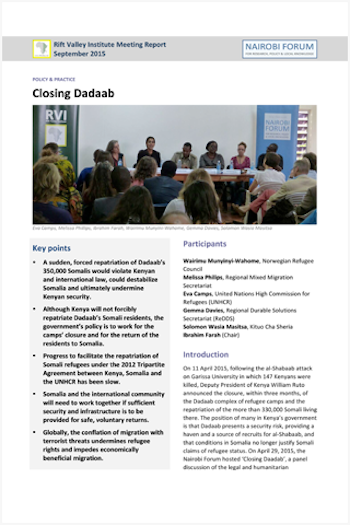
Key points • A sudden, forced repatriation of Dadaab’s 350,000 Somalis would violate Kenyan and international law, could destabilize Somalia and ultimately undermine Kenyan security. • Although Kenya will not forcibly repatriate Dadaab’s Somali residents, the government’s policy is…
In South Sudan delays in the making of the national constitution have led to public concern. My Mother Will Not Come to Juba: South Sudanese debate the constitution is the record of three evenings of public lectures at the University of…
Recent Publications

The Political Economy of Coffee in the Sidama–Gedeo–Guji Belt, Southern Ethiopia
September 4, 2026
This report is part of a wider research project on the political economy of coffee in Ethiopia in the context of the political transition since 2018. It focuses on the Sidama–Gedeo–Guji coffee belt in southern Ethiopia, aiming to understand the

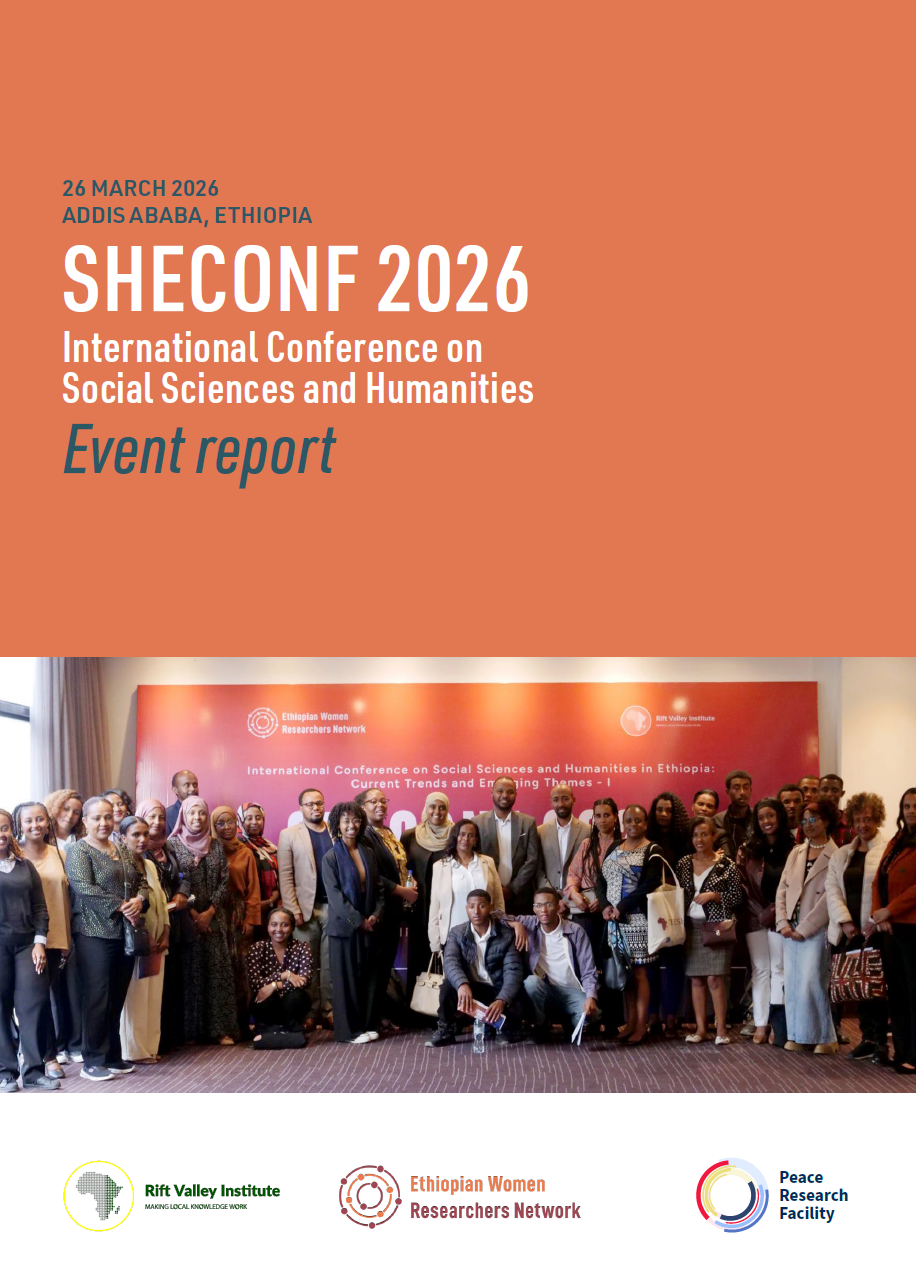
SHECONF 2026: International Conference on Social Sciences and Humanities
July 9, 2026
Event report On 26 March 2026, researchers, practitioners and academics gathered in Addis Ababa for SHECONF 2026, an International Conference on Social Sciences and Humanities in Ethiopia, the first of its kind convened by the Ethiopian Women Researchers Network (EWNET).
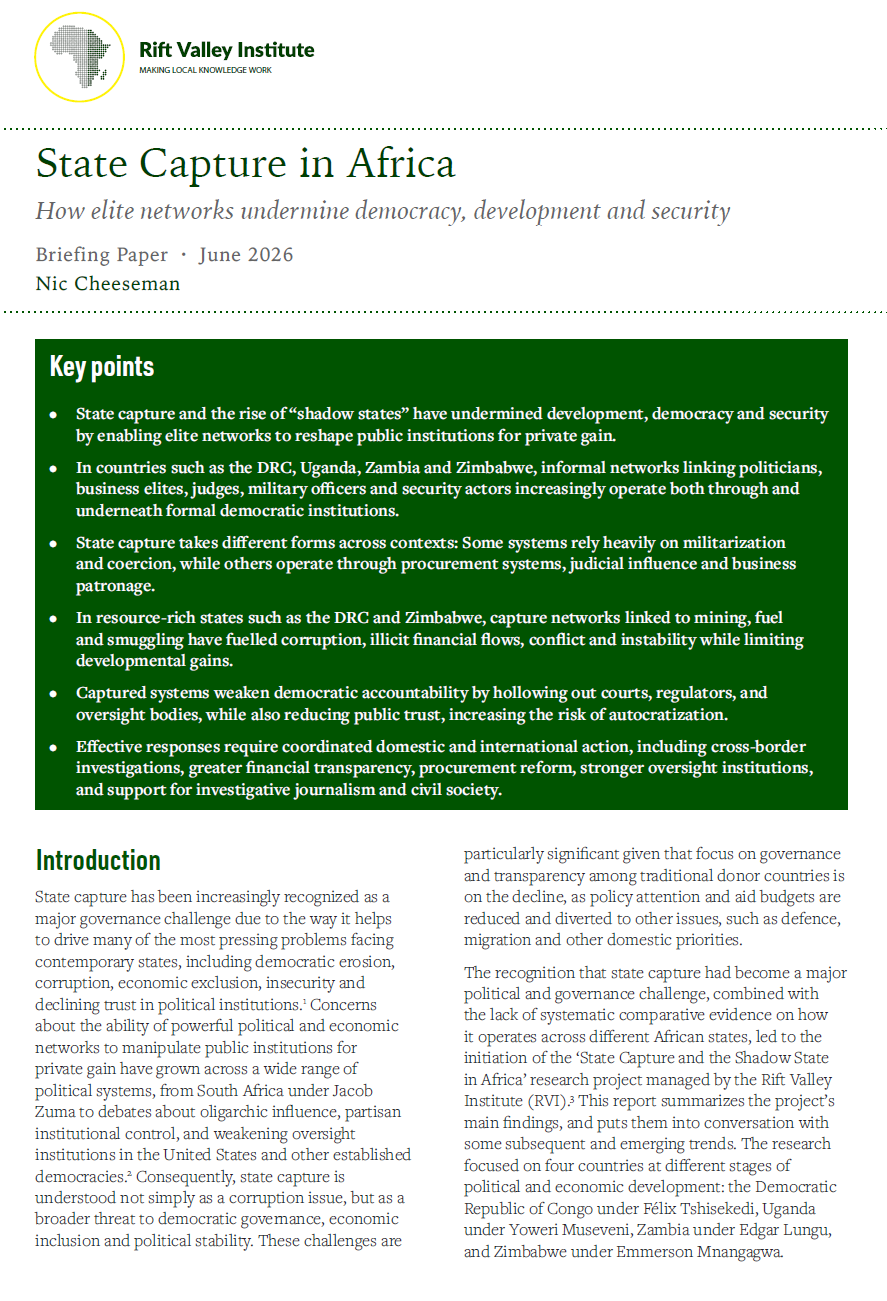
State Capture in Africa: How elite networks undermine democracy, development and security
June 24, 2026
Key points State capture has been increasingly recognized as a major governance challenge due to the way it helps to drive many of the most pressing problems facing contemporary states, including democratic erosion, corruption, economic exclusion, insecurity and declining trust