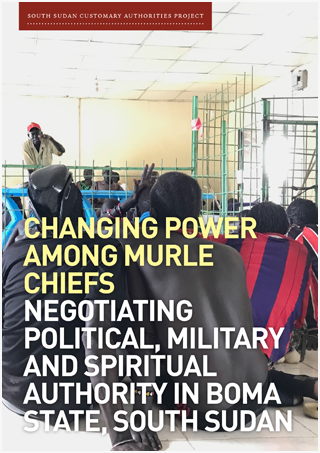
International, national and local political discourses often portray the Murle community as principal aggressors and the source of much of the instability affecting former Jonglei State in South Sudan. Although such negative stereotypes are partially driven by actual events,…
RVI publishes books, research reports, research papers, briefings and meeting reports in a range of formats. Publications cover policy, research, arts, culture and local knowledge in the countries of eastern and central Africa. Research publications—books, reports and papers—are peer-reviewed. Some RVI publications are also available in French and/or Arabic.
The RVI is a signatory of the Budapest Open Access Initiative (2001); all publications are free for download in PDF format under Creative Commons licences. The views expressed in books and reports published by the RVI are those of the authors, not the Institute.
SEARCH
PUBLICATION TYPE
LANGUAGE
REGION
COUNTRY
The Revitalised Agreement on the Resolution of Conflict in South Sudan (R-ARCSS) signed on 12 September 2018, not only allows for a new government and security arrangements, it also provides for two new commissions to decide the number of…
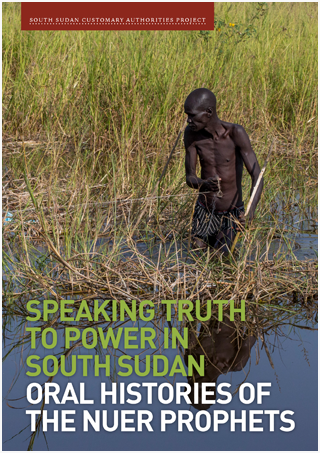
Prophets—those recognised as having been ‘seized’ by a divinity—have played an important role in the history of South Sudan, particularly that of the Nuer people. They were seen as being powerful political actors and, alongside chiefs, important intermediaries for…
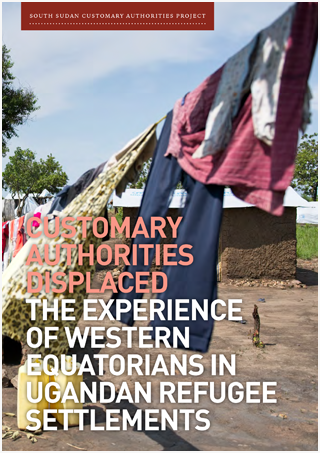
South Sudan’s violent conflicts continue to plague its people. An estimated four million South Sudanese have been forcibly displaced since December 2013, and more than a million have sought refuge in Uganda where communities have largely reassembled without their…
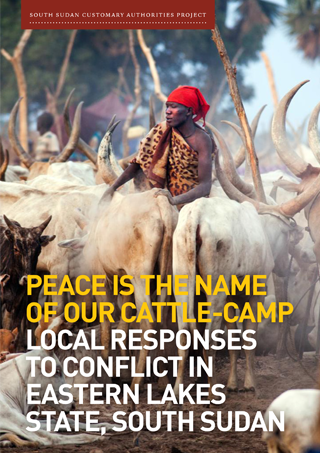
Following the 2005 Comprehensive Peace Agreement (CPA) and the subsequent independence of South Sudan in 2011, many agro-pastoralist and pastoralist areas of the country have experienced an upsurge of livestock raiding, counter raiding and cycles of revenge killing. Eastern…
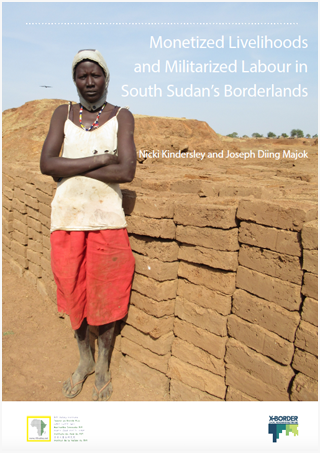
Northern Bahr el-Ghazal, like much of South Sudan, is in a protracted state of social and economic crisis, rooted in generations of armed conflict, forced resettlements, and a shift towards a cash and market economy. Since the 1980s, family…
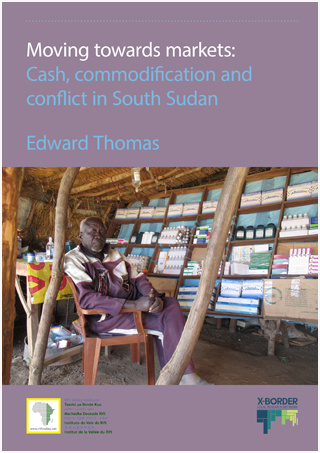
Fifty years ago, most households in South Sudan produced the grain they ate, organizing agricultural labour and distributing small surpluses mostly through kinship and other social networks. Now, the majority of households buy most of their food. This transition…
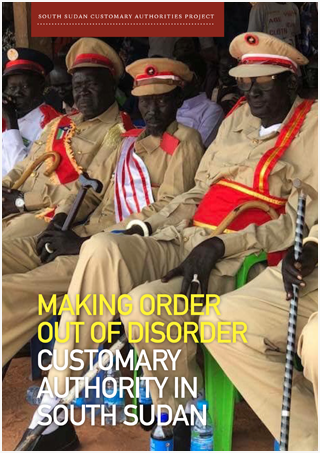
South Sudan’s customary authorities play an important role in local government, justice, and as intermediaries or brokers between local communities and the government. While significant attention was paid to the role of customary authorities in South Sudan’s statebuilding project…
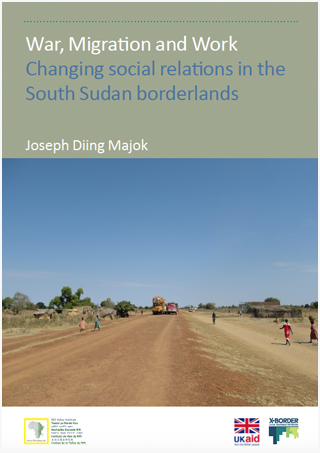
War, Migration and Work outlines how the changing economy has affected social relations in the Northern Bahr el-Ghazal borderlands, particularly between the old and the young, and men and women. The result is a fraying social system, where intra-family…
Recent Publications

State Capture in Africa: How elite networks undermine democracy, development and security
June 24, 2026
Key points State capture has been increasingly recognized as a major governance challenge due to the way it helps to drive many of the most pressing problems facing contemporary states, including democratic erosion, corruption, economic exclusion, insecurity and declining trust

The New Geopolitics of Eastern Africa
June 17, 2026
On 20 May, the British Institute of Eastern Africa (BIEA), Chatham House, and the Rift Valley Institute (RVI) convened a group of experts to discuss the ‘The New Geopolitics of Eastern Africa’. The closed-door roundtable considered the ongoing transformation of

Commodification and Conflict in the Horn of Africa Borderlands
April 1, 2026
This report synthesizes findings from the Rift Valley Institute’s X-Border Local Research Network (2019–2025). In the surveyed studies, 25 leading local and international area specialists conducted extensive qualitative fieldwork across borderlands in South Sudan, Sudan, Ethiopia, Kenya and the Somali