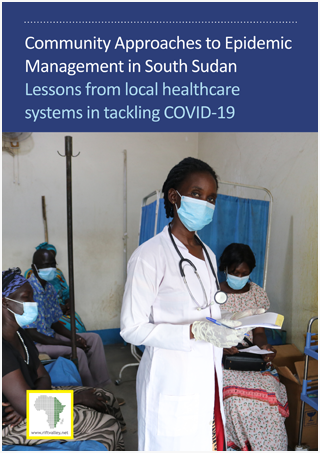
South Sudanese people have extensive knowledge of infectious diseases and experience of organizing responses to epidemics during wars and other crises. There are multiple, locally-specific methods used by communities for interrupting infection transmission and managing epidemics. This report documents…
RVI publishes books, research reports, research papers, briefings and meeting reports in a range of formats. Publications cover policy, research, arts, culture and local knowledge in the countries of eastern and central Africa. Research publications—books, reports and papers—are peer-reviewed. Some RVI publications are also available in French and/or Arabic.
The RVI is a signatory of the Budapest Open Access Initiative (2001); all publications are free for download in PDF format under Creative Commons licences. The views expressed in books and reports published by the RVI are those of the authors, not the Institute.
SEARCH
PUBLICATION TYPE
LANGUAGE
REGION
COUNTRY
This briefing summarizes findings from the Rift Valley Institute’s research project, Community Approaches to Epidemic Management in South Sudan (CAEMSS), which started in August 2020. The project, which began in response to the global coronavirus pandemic, was designed to document how…
In February 2020 Sudan’s president, Salva Kiir, appointed Hussein Abdel Bagi—head of the South Sudan Opposition Alliance—as one of his five vice-presidents. Abdel Bagi is a member of the Malual Dinka community from Madhol, on the Northern Bahr el-Ghazal…
Key points • Hussein Abdel Bagi’s appointment as the third Vice-President of South Sudan is an important building block for the Transitional Government of National Unity (TGoNU), particularly its relations with Khartoum. Hussein’s long experience of Sudanese politics, and…
Breaking Out of the Borderlands is the second report by Dr Nicki Kindersley and Joseph Diing Majok on South Sudan’s changing borderland economy. The first report in the series—Monetized Livelihoods and militarized Labour in South Sudan’s Borderlands—described the protracted…
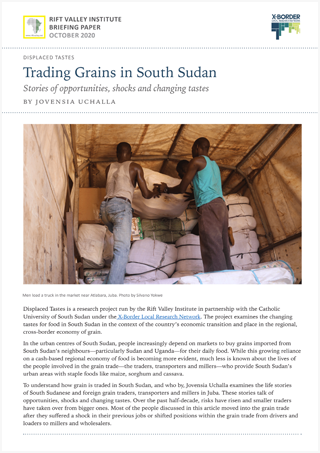
Displaced Tastes is a research project run by the Rift Valley Institute in partnership with the Catholic University of South Sudan under the X-Border Local Research Network. The project examines the changing tastes for food in South Sudan in…
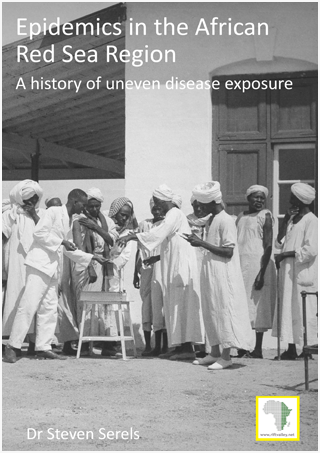
Summary The sustained movement of people, goods and ideas across the African Red Sea Region has been and continues to be so intense that it binds together communities throughout the region in a unified multifaceted socio-economic system that transcends…
This briefing summarizes findings from the mid-point of the Community Approaches to Epidemic Management in South Sudan research project. The project is run by the Rift Valley Institute (RVI) and funded by the UK Foreign Commonwealth and Development Office…
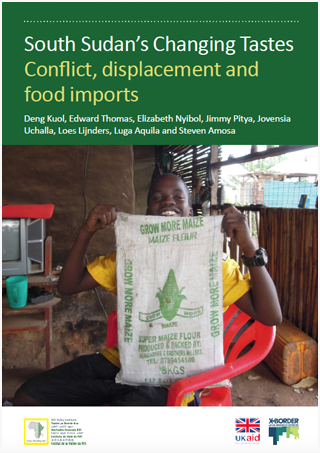
South Sudan’s long wars have forced millions of people to leave their own homes, farms and pastures and move to unfamiliar new areas of the countryside, to refugee camps and cities. In the process, they have changed the way…
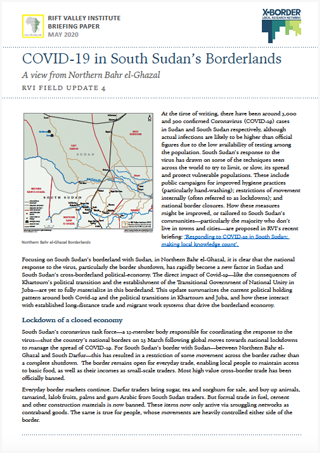
Focusing on South Sudan’s borderland with Sudan, in Northern Bahr el-Ghazal, it is clear that the national response to the virus, particularly the border shutdown, has rapidly become a new factor in Sudan and South Sudan’s cross-border political economy….
Recent Publications

Writing Ethiopia into the World, Writing the World from Ethiopia
October 7, 2026
The Ethiopian Women Researchers Network (EWNET) hosted an online scholarly webinar on Friday, 30 January 2026, titled ‘Writing Ethiopia into the World and Writing the World from Ethiopia’. The webinar examined how Ethiopia has been represented within global knowledge production
The Political Economy of Coffee in the Kaffa–Bench-Sheko–Sheka Belt, Southwest Ethiopia Region
October 6, 2026
This study provides a critical political economy analysis of the coffee sector in the Kaffa–Bench-Sheko–Sheka belt in Southwest Ethiopia Peoples’ Regional State, the genetic and cultural heartland of Arabica coffee (Coffea arabica). Based on 47 key respondent interviews, the study
The Political Economy of Coffee in the Jimma–Ilu Aba Bora–Buno Bedele Belt, Oromia Region
October 5, 2026
The findings of this study reveal a number of critical insights about the political economy of coffee in the Jimma–Ilu Aba Bora–Buno Bedele coffee belt. The coffee economy is shaped by a small number of influential actors, including state institutions,