On 20 May, the British Institute of Eastern Africa (BIEA), Chatham House, and the Rift Valley Institute (RVI) convened a group of experts to discuss the ‘The New Geopolitics of Eastern Africa’. The closed-door roundtable considered the ongoing transformation…
RVI publishes books, research reports, research papers, briefings and meeting reports in a range of formats. Publications cover policy, research, arts, culture and local knowledge in the countries of eastern and central Africa. Research publications—books, reports and papers—are peer-reviewed. Some RVI publications are also available in French and/or Arabic.
The RVI is a signatory of the Budapest Open Access Initiative (2001); all publications are free for download in PDF format under Creative Commons licences. The views expressed in books and reports published by the RVI are those of the authors, not the Institute.
SEARCH
PUBLICATION TYPE
LANGUAGE
REGION
COUNTRY
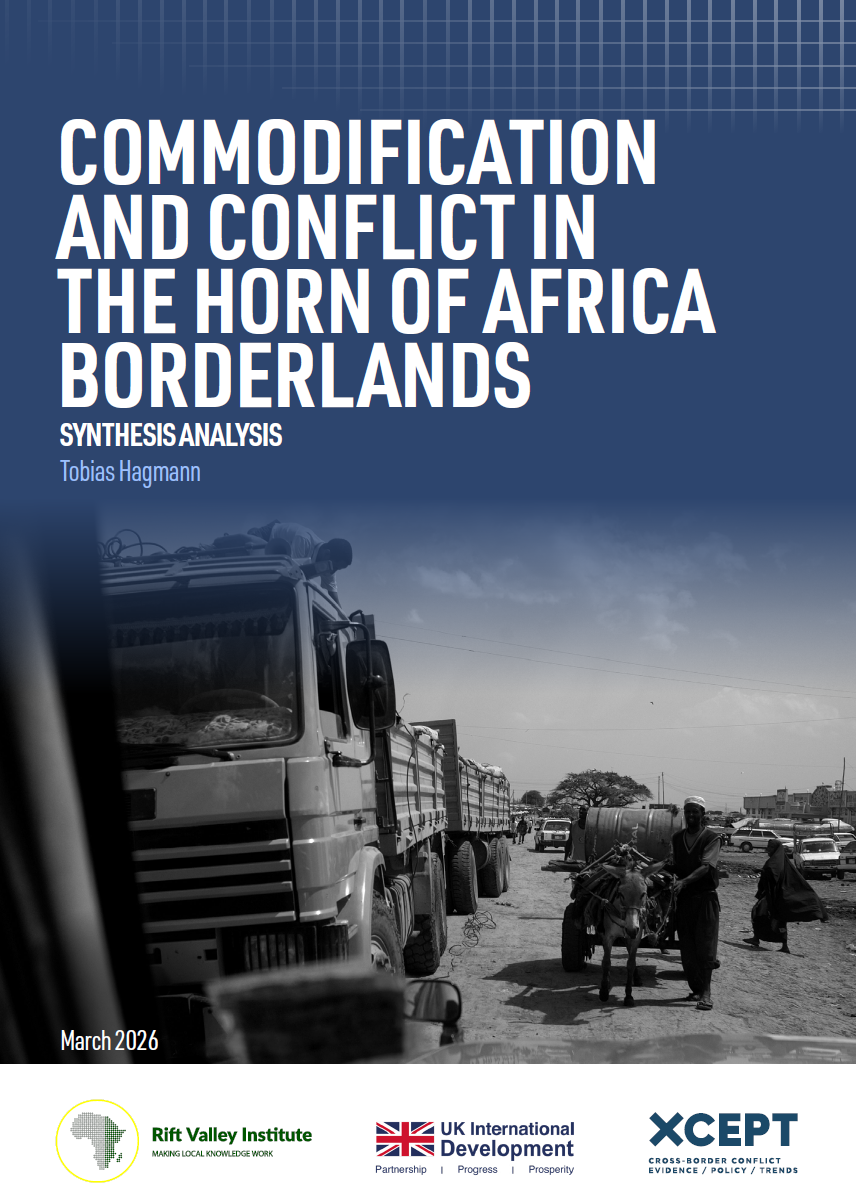
This report synthesizes findings from the Rift Valley Institute’s X-Border Local Research Network (2019–2025). In the surveyed studies, 25 leading local and international area specialists conducted extensive qualitative fieldwork across borderlands in South Sudan, Sudan, Ethiopia, Kenya and the…
The 2025 Year in Review provides an overview of the Rift Valley Institute’s work over the past year across eastern and central Africa. The report highlights RVI’s research and publication outputs, education and training activities, and public forums and…
The brief draws on a joint convening held in Kampala, Uganda, in November 2025, which brought together more than 45 Sudanese and South Sudanese participants representing more than 30 grassroots organizations and international NGOs. Its primary objective is to…
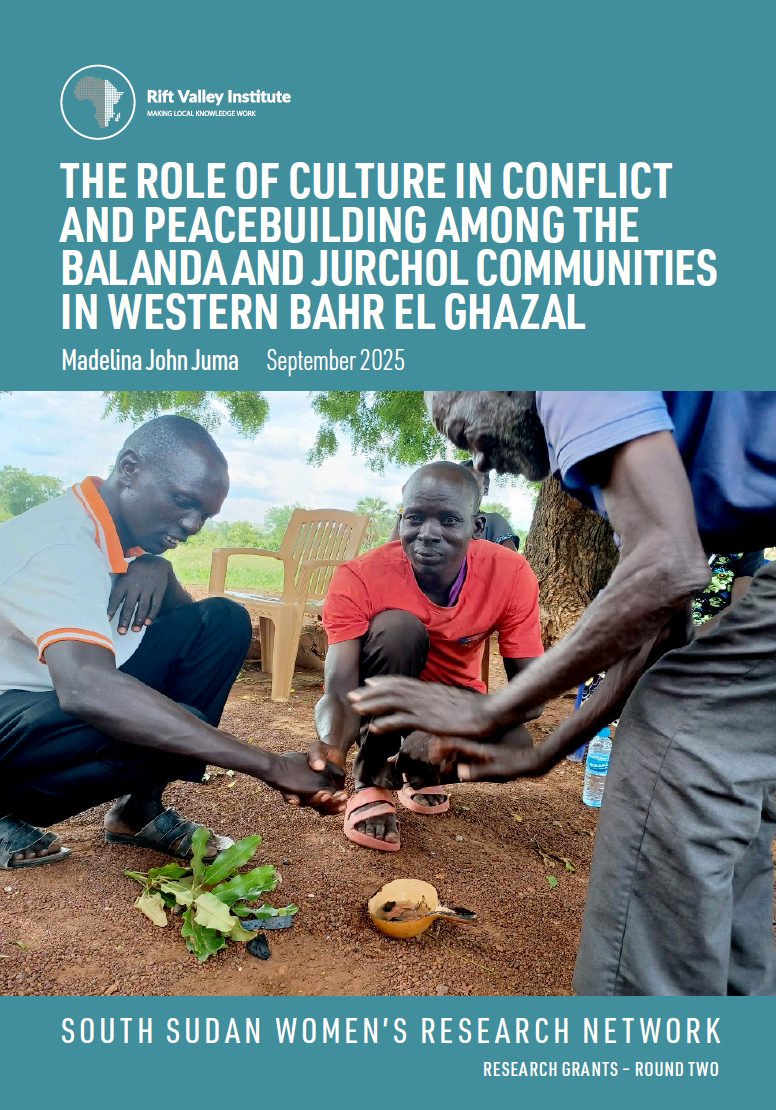
The aim of this ethnographic study is to explore the role played by cultural expressions in conflict and peacebuilding in South Sudan, with specific reference to song, dance and beadwork. This study aims to understand how symbolic communication is…
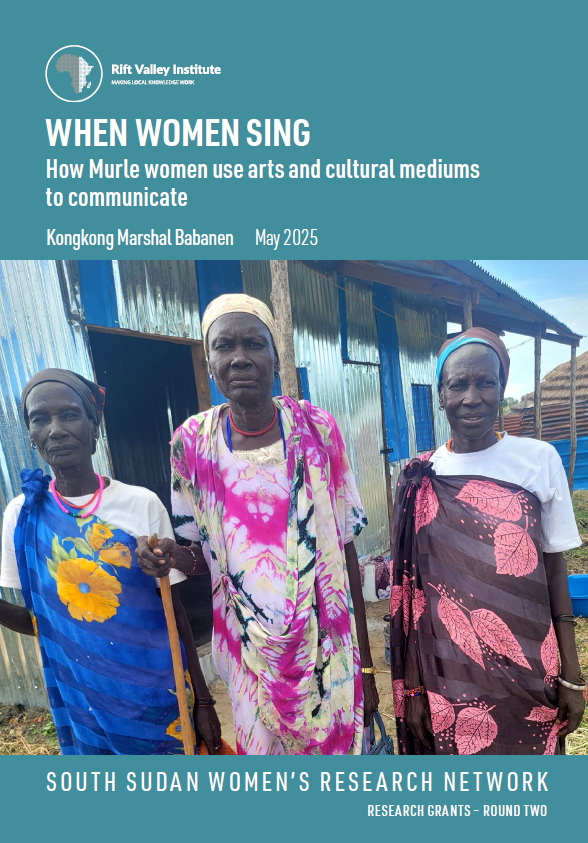
This research explores how Murle women in the Greater Pibor area of central eastern South Sudan use not just songs but dance, hairstyles, body marks and beads to express themselves. Its objective is to draw attention to the ways…
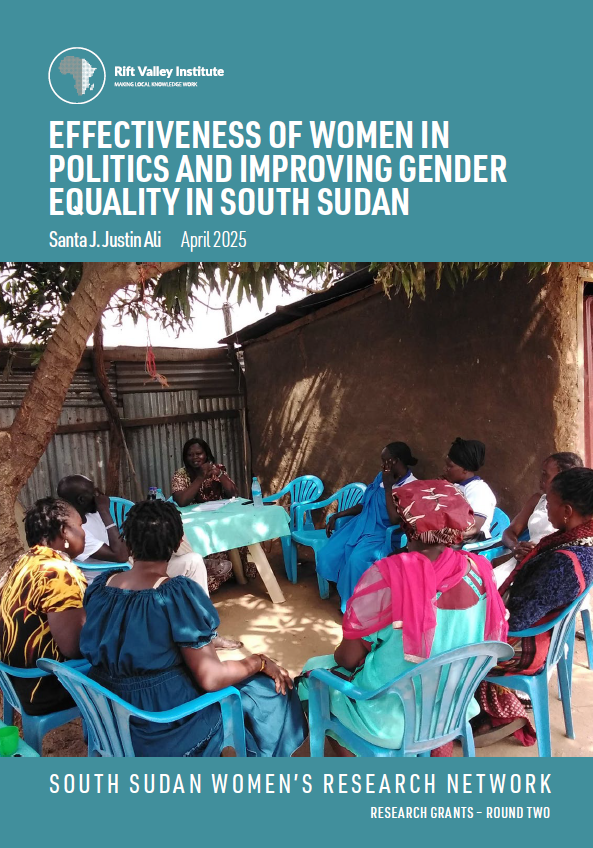
This report argues that, in order to improve women’s participation in politics and promote gender-responsive policies in the country, there is a need to enlarge government capacity for women’s leadership by introducing equal gender quotas for decision-making positions. Summary…
Do the ways in which policymakers and national governments view borderlands reflect how the communities living there experience them? Building on this, can a better understanding of the characteristics of borderlands help in promoting development, improving governance and making…
This think piece is an extract of a longer paper taking stock of the roughly 40 X-Border studies carried out between 2019 and 2025 under the auspices of the Rift Valley Institute’s XCEPT programme. If we are to fully…
- By Elizabeth Nyibol Malou
- Download
I became involved in the Cross-border Conflict Evidence, Policy, and Trends (XCEPT) programme’s Local Research Network (LRN) at its inception in 2018. During the following years, the network introduced me to a wider community of researchers who share a similar…
Recent Publications

Writing Ethiopia into the World, Writing the World from Ethiopia
October 7, 2026
The Ethiopian Women Researchers Network (EWNET) hosted an online scholarly webinar on Friday, 30 January 2026, titled ‘Writing Ethiopia into the World and Writing the World from Ethiopia’. The webinar examined how Ethiopia has been represented within global knowledge production
The Political Economy of Coffee in the Kaffa–Bench-Sheko–Sheka Belt, Southwest Ethiopia Region
October 6, 2026
This study provides a critical political economy analysis of the coffee sector in the Kaffa–Bench-Sheko–Sheka belt in Southwest Ethiopia Peoples’ Regional State, the genetic and cultural heartland of Arabica coffee (Coffea arabica). Based on 47 key respondent interviews, the study
The Political Economy of Coffee in the Jimma–Ilu Aba Bora–Buno Bedele Belt, Oromia Region
October 5, 2026
The findings of this study reveal a number of critical insights about the political economy of coffee in the Jimma–Ilu Aba Bora–Buno Bedele coffee belt. The coffee economy is shaped by a small number of influential actors, including state institutions,