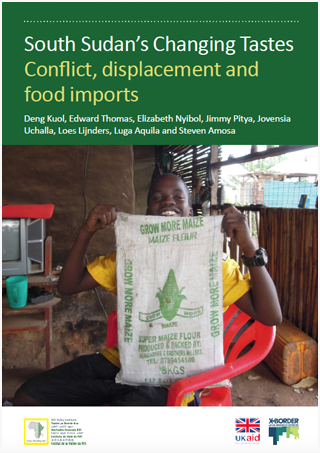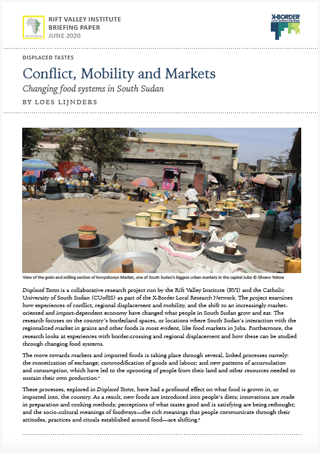
Displaced Tastes is a collaborative research project run by the Rift Valley Institute (RVI) and the Catholic University of South Sudan (CUofSS) as part of the X-Border Local Research Network. The project examines how experiences of conflict, regional displacement…
RVI publishes books, research reports, research papers, briefings and meeting reports in a range of formats. Publications cover policy, research, arts, culture and local knowledge in the countries of eastern and central Africa. Research publications—books, reports and papers—are peer-reviewed. Some RVI publications are also available in French and/or Arabic.
The RVI is a signatory of the Budapest Open Access Initiative (2001); all publications are free for download in PDF format under Creative Commons licences. The views expressed in books and reports published by the RVI are those of the authors, not the Institute.
SEARCH
PUBLICATION TYPE
LANGUAGE
REGION
COUNTRY
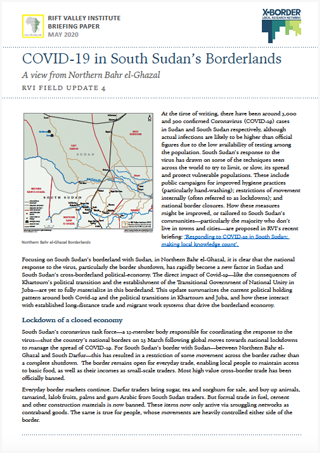
Focusing on South Sudan’s borderland with Sudan, in Northern Bahr el-Ghazal, it is clear that the national response to the virus, particularly the border shutdown, has rapidly become a new factor in Sudan and South Sudan’s cross-border political economy….
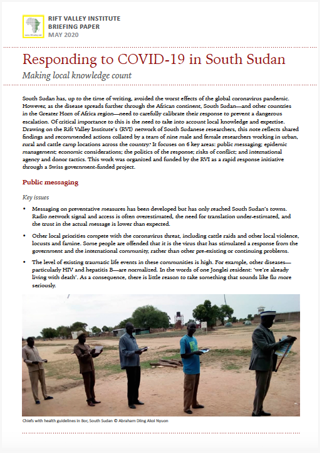
South Sudan has, up to the time of writing, avoided the worst effects of the global coronavirus pandemic. However, as the disease spreads further through the African continent, South Sudan—and other countries in the Greater Horn of Africa region—need…
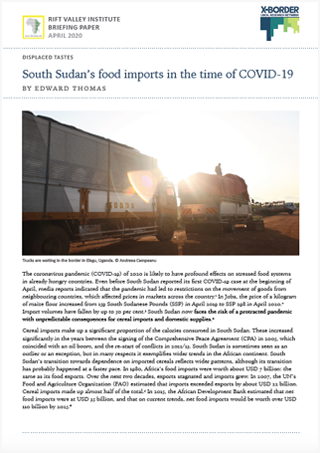
The coronavirus pandemic (COVID-19) of 2020 is likely to have profound effects on stressed food systems in already hungry countries. Even before South Sudan reported its first COVID-19 case at the beginning of April, media reports indicated that the…
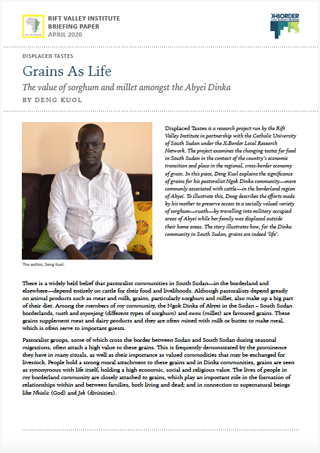
Displaced Tastes is a research project run by the Rift Valley Institute in partnership with the Catholic University of South Sudan under the X-Border Local Research Network. The project examines the changing tastes for food in South Sudan in…
Mounting peace agreements and numerous ceasefire violations have resulted in sustained international pressure on South Sudan’s leaders to end a civil war that has displaced some 4 million people and created a severe humanitarian crisis. In an effort to…
Displaced Tastes is a research project run by the Rift Valley Institute in partnership with the Catholic University of South Sudan under the X-Border Local Research Network. The project examines the changing tastes for food in South Sudan in…
Sudan’s Blue Nile state, which borders Ethiopia’s Benishangul-Gumuz region on its eastern side, and South Sudan’s Upper Nile region on its south-west frontier, has a long history of small-scale artisanal gold mining. Gold is found in the region’s hills…
Taking the Ethiopia-South Sudan borderlands as a case study, Rethinking Aid in Borderland Spaces: The case of Akobo argues that the traditional modalities of the aid industry are not fit for purpose in a world where transnationalism is a daily…
Recent Publications

Rethinking Aid in Sudan and South Sudan
January 28, 2026
The brief draws on a joint convening held in Kampala, Uganda, in November 2025, which brought together more than 45 Sudanese and South Sudanese participants representing more than 30 grassroots organizations and international NGOs. Its primary objective is to amplify

EWNET Writes: Writing Workshop Session I
December 18, 2025
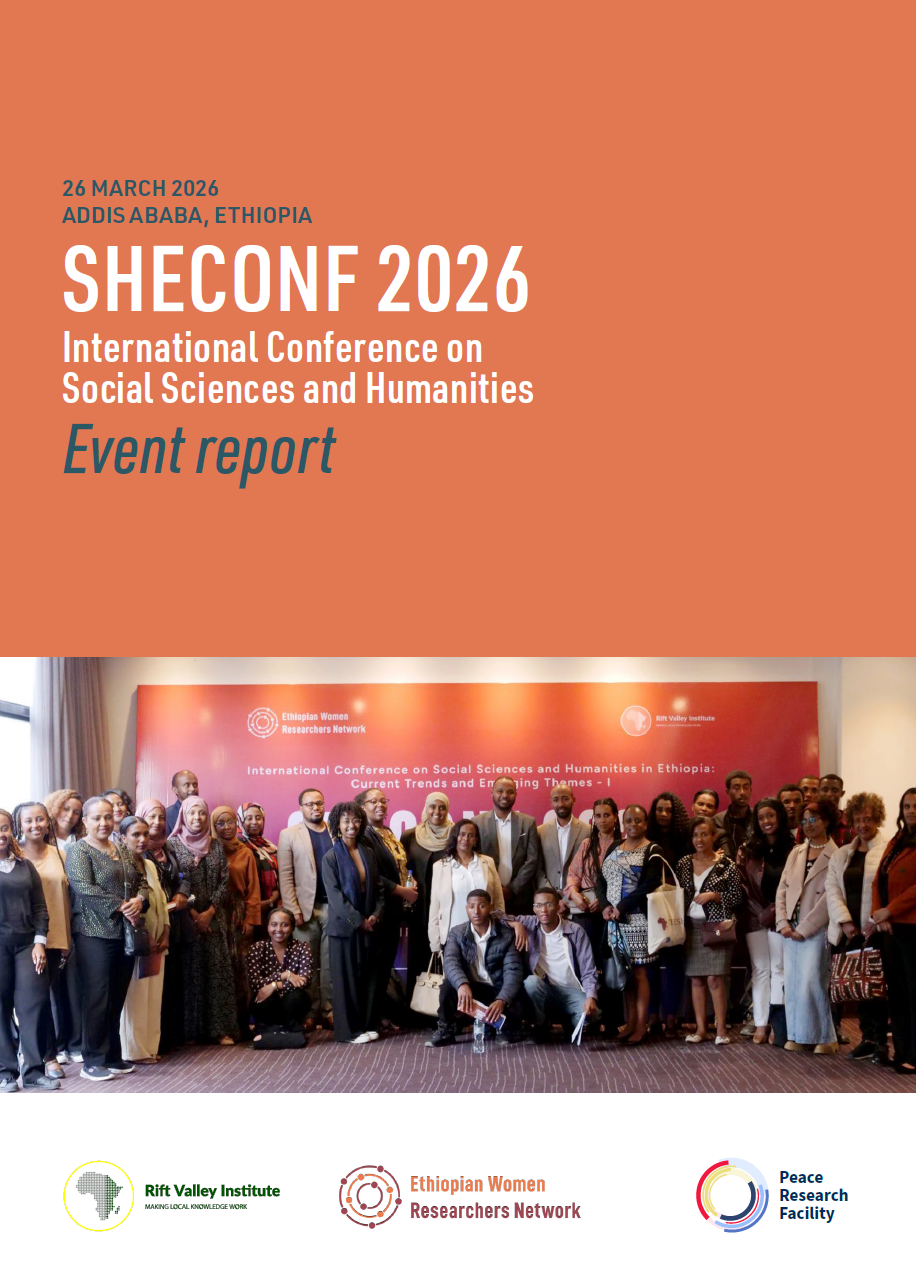
The Ethiopian Women Researchers Network (EWNET) inaugural writing workshop series aims to not only provide women researchers with uninterrupted time for their scholarly projects, but also build a supportive academic community. The first session, entitled ‘EWNET Writes: Writing Workshop Session

SSC-Khaatumo: Perspectives on the significance and implications of its formation
December 12, 2025
On 15 April 2025, during a visit to the city of Las Anod in Sool, Prime Minister Hassan Abdi Barre officially declared the federal government’s recognition of SSC-Khaatumo (SSC-K hereafter) as a federal member state, marking an important milestone in