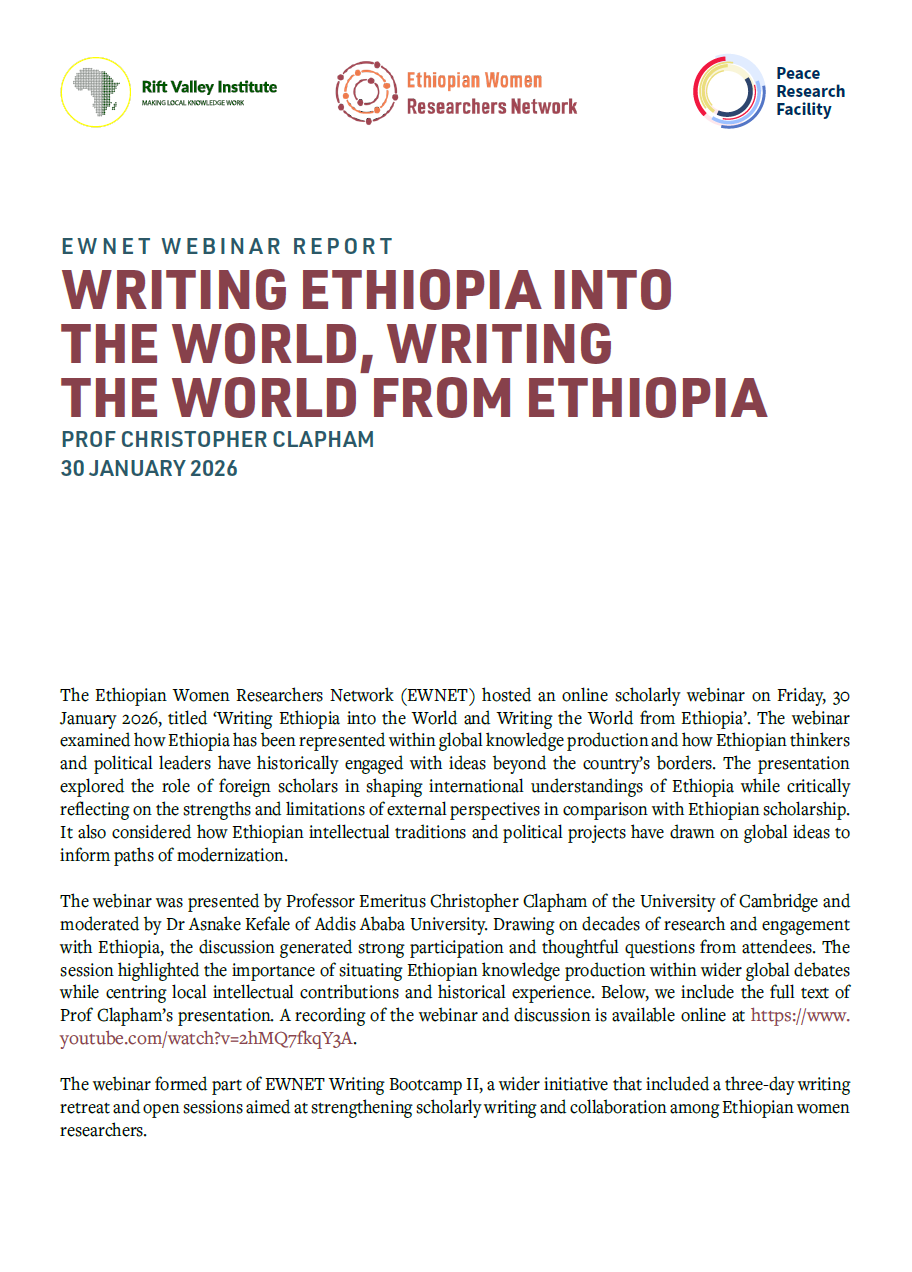
Key points In numerous cities in the eastern Congo, youth groups are involved in urban policing, operating in the space between state and non-state actors and formal and informal governance. While some youth policing groups are responsible for improvements…
RVI publishes books, research reports, research papers, briefings and meeting reports in a range of formats. Publications cover policy, research, arts, culture and local knowledge in the countries of eastern and central Africa. Research publications—books, reports and papers—are peer-reviewed. Some RVI publications are also available in French and/or Arabic.
The RVI is a signatory of the Budapest Open Access Initiative (2001); all publications are free for download in PDF format under Creative Commons licences. The views expressed in books and reports published by the RVI are those of the authors, not the Institute.
SEARCH
PUBLICATION TYPE
LANGUAGE
REGION
COUNTRY
Points clés Dans de nombreuses villes de l’est de la République démocratique du Congo, des groupes de jeunes sont impliqués dans le maintien de l’ordre en milieu urbain, opérant dans un espace se situant à la fois entre les…
Key Points Despite focusing the bulk of their operations on rural areas, armed groups in the eastern Congo have long-standing connections with urban centres. Technological progress, such as mobile communication, and enhanced movement, especially through motorcycle taxis, have intensified…
Key Points International investment in Somaliland’s strategically located Berbera port may turn it into a new logistical gateway to East Africa and boost economic development in the self-declared republic. Berbera port has played a key role in the formation…
Points saillants Bien que la majorité de leurs opérations se déroulent en zone rurale, les groupes armés de l’est du Congo ont des liens de longue date avec les centres urbains. Ces liens se sont intensifiés du fait du…
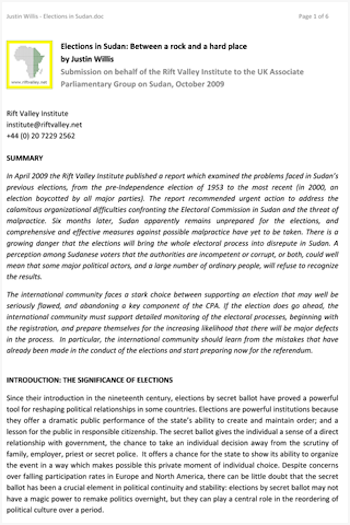
This briefing paper, submitted to the UK Associate Parliamentary Group on Sudan, discusses some of the challenges facing the international community in the lead-up to the April 2010 elections in Sudan. The paper follows up issues raised by an…
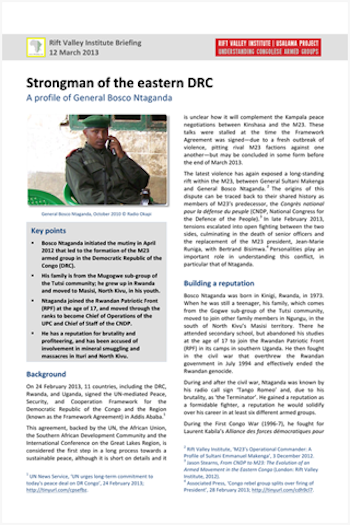
About this publication This Usalama Project Briefing presents a profile of one of the M23’s most important commanders, General Bosco Ntaganda. Despite his indictment by the International Criminal Court on charges of recruiting child soldiers, murder, rape, and sexual…
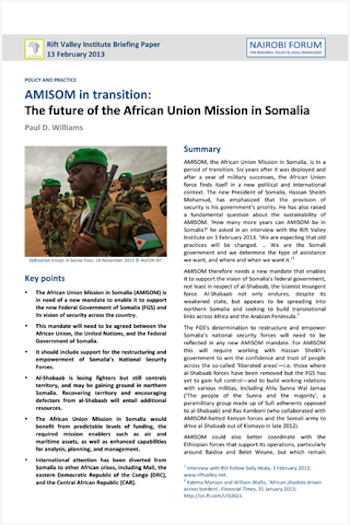
The African Union Mission in Somalia (AMISOM) is in a period of transition. After a year of military successes it needs a new mandate to support the new Federal Government of Somalia, which has identified provision of security across…
This Usalama Project briefing presents a concise biography of the M23’s senior commander, Sultani Makenga, in the eastern Democratic Republic of the Congo (DRC). It describes his rise through the ranks, his earlier membership of the Rassemblement congolais pour la…
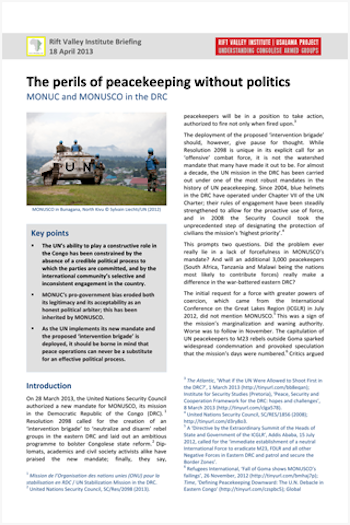
This Usalama Briefing Paper sets out the history of UN involvement in the eastern DRC and analyses the challenges that continue to face the mission, even as it prepares to deploy a new intervention brigade, charged with neutralizing and…
Recent Publications

Writing Ethiopia into the World, Writing the World from Ethiopia
October 7, 2026
The Ethiopian Women Researchers Network (EWNET) hosted an online scholarly webinar on Friday, 30 January 2026, titled ‘Writing Ethiopia into the World and Writing the World from Ethiopia’. The webinar examined how Ethiopia has been represented within global knowledge production
The Political Economy of Coffee in the Kaffa–Bench-Sheko–Sheka Belt, Southwest Ethiopia Region
October 6, 2026
This study provides a critical political economy analysis of the coffee sector in the Kaffa–Bench-Sheko–Sheka belt in Southwest Ethiopia Peoples’ Regional State, the genetic and cultural heartland of Arabica coffee (Coffea arabica). Based on 47 key respondent interviews, the study
The Political Economy of Coffee in the Jimma–Ilu Aba Bora–Buno Bedele Belt, Oromia Region
October 5, 2026
The findings of this study reveal a number of critical insights about the political economy of coffee in the Jimma–Ilu Aba Bora–Buno Bedele coffee belt. The coffee economy is shaped by a small number of influential actors, including state institutions,