In Sudan, the revolutionary upsurge of 2018/2019 signalled the implosion of the country’s postcolonial political order. The political parties of old have seen their social bases wither away and their ideological hold over the Sudanese people corrode under the…
RVI publishes books, research reports, research papers, briefings and meeting reports in a range of formats. Publications cover policy, research, arts, culture and local knowledge in the countries of eastern and central Africa. Research publications—books, reports and papers—are peer-reviewed. Some RVI publications are also available in French and/or Arabic.
The RVI is a signatory of the Budapest Open Access Initiative (2001); all publications are free for download in PDF format under Creative Commons licences. The views expressed in books and reports published by the RVI are those of the authors, not the Institute.
SEARCH
PUBLICATION TYPE
LANGUAGE
REGION
COUNTRY
This briefing considers the changing political situation in Sudan with a particular focus on the future of the Juba Peace Agreement ( JPA). It explores how the relationship between two key factions in the conflict has complicated the ongoing discussions…
As part of a wider attempt to increase export revenues amidst weak economic performance, Ethiopian authorities doubled the price of khat for exports to Somaliland and Djibouti in April 2022. Following much controversy, the decision was reversed a few…
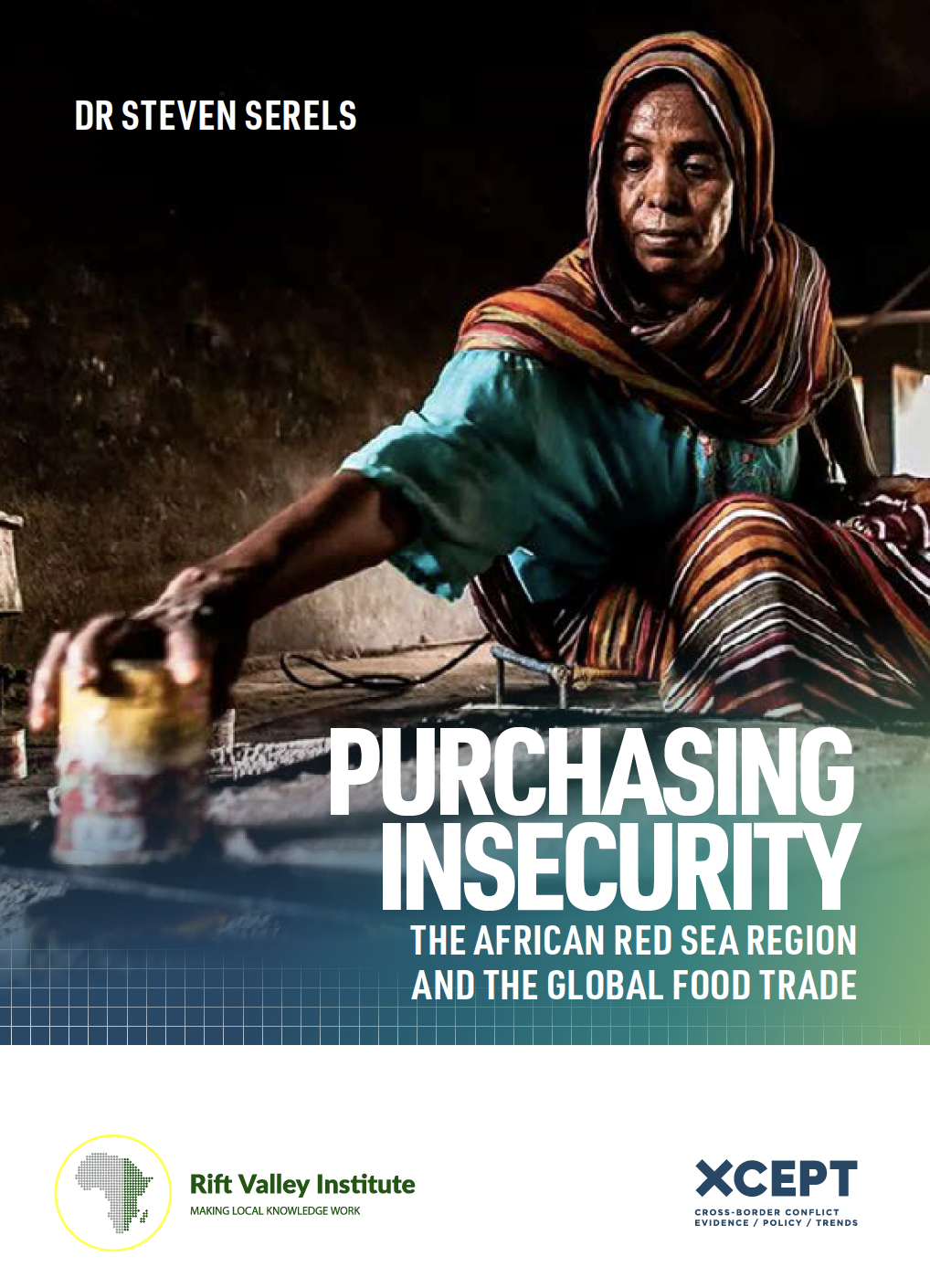
The African Red Sea Region does not produce enough food to feed its own population. Sudan, Eritrea, Ethiopia, Djibouti and Somaliland (Somalia) are each reliant on imports to make up for domestic production shortfalls. This presents unresolved challenges to…
This is the first paper in a series considering the future of Sudan’s Juba Peace Agreement (JPA) and peace-making after the fall of Omar al-Bashir in 2019. It was commissioned by the Rift Valley Institute for the UK government’s…
This briefing considers the changing political situation in Sudan with a particular focus on the future of the Juba Peace Agreement (JPA) and the evolving political and security dynamics in the east of the country. It considers the role…
War, Migration and Work examines the history of labour migration and labour relations in present day South Sudan’s Baher El-Ghazal borderlands with Darfur and Kordofan (regions of present day Sudan). Beginning in the nineteenth century, the report charts the evolution…
- By Mustafe M. Abdi
- Download
This blog is the third in a series published by the Rift Valley Institute to help understand the causes of the drought-related crisis in the Somali regions of the Horn of Africa. It is a product of the UK government’s XCEPT…
This briefing considers the changing political situation in Sudan with a particular focus on the future of the Juba Peace Agreement (JPA) and the evolving political and security dynamics in the Two Areas. It is the third in a…
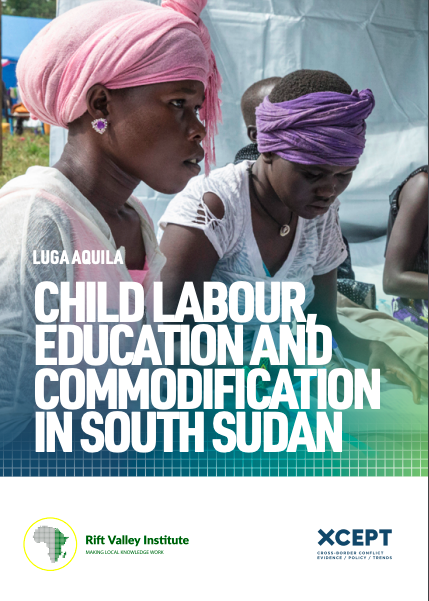
Until the latter part of the twentieth century, South Sudanese boys and girls grew food on household farms for their families to eat. Under this system, children’s work and education were hard to distinguish. Today, however, many boys and…
Recent Publications

Writing Ethiopia into the World, Writing the World from Ethiopia
October 7, 2026
The Ethiopian Women Researchers Network (EWNET) hosted an online scholarly webinar on Friday, 30 January 2026, titled ‘Writing Ethiopia into the World and Writing the World from Ethiopia’. The webinar examined how Ethiopia has been represented within global knowledge production
The Political Economy of Coffee in the Kaffa–Bench-Sheko–Sheka Belt, Southwest Ethiopia Region
October 6, 2026
This study provides a critical political economy analysis of the coffee sector in the Kaffa–Bench-Sheko–Sheka belt in Southwest Ethiopia Peoples’ Regional State, the genetic and cultural heartland of Arabica coffee (Coffea arabica). Based on 47 key respondent interviews, the study
The Political Economy of Coffee in the Jimma–Ilu Aba Bora–Buno Bedele Belt, Oromia Region
October 5, 2026
The findings of this study reveal a number of critical insights about the political economy of coffee in the Jimma–Ilu Aba Bora–Buno Bedele coffee belt. The coffee economy is shaped by a small number of influential actors, including state institutions,