The political landscape in Ethiopia since 2018 exemplifies how historical interpretations rooted in collective memory can shape political alignments. Prime Minister Abiy Ahmed Ali’s initial embrace of great tradition narratives clashed with the historical perspectives of his core constituency,…
RVI publishes books, research reports, research papers, briefings and meeting reports in a range of formats. Publications cover policy, research, arts, culture and local knowledge in the countries of eastern and central Africa. Research publications—books, reports and papers—are peer-reviewed. Some RVI publications are also available in French and/or Arabic.
The RVI is a signatory of the Budapest Open Access Initiative (2001); all publications are free for download in PDF format under Creative Commons licences. The views expressed in books and reports published by the RVI are those of the authors, not the Institute.
SEARCH
PUBLICATION TYPE
LANGUAGE
REGION
COUNTRY
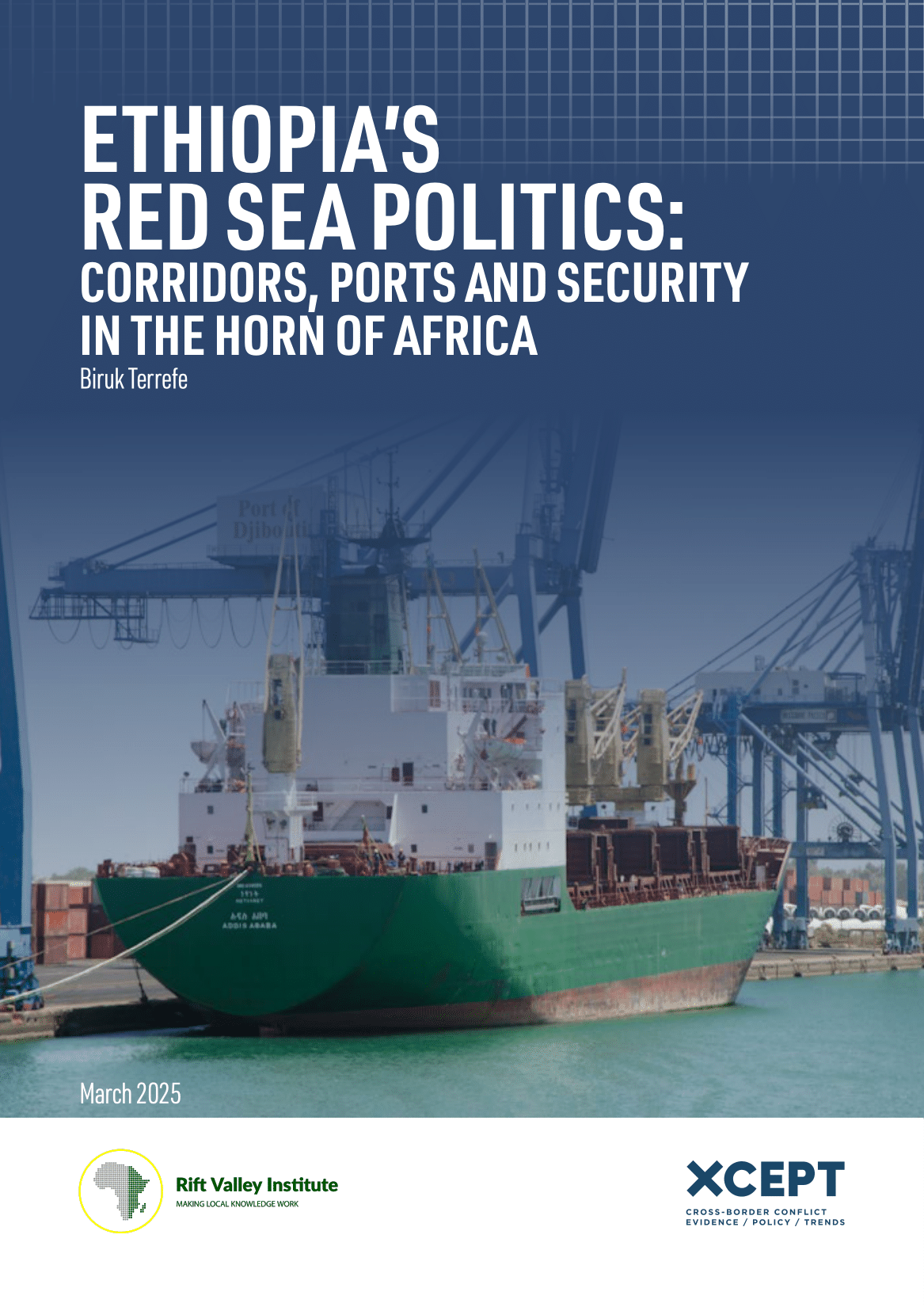
The Horn of Africa is a region marked by complex infrastructural interdependencies, where the decline and emergence of trade corridors continue to reshape the economic and political relations within and between states. This study draws on the Memorandum of…
Tax revenue collection in Somalia has, during the past decade, been hampered by—among other things—weak institutional capacity, lack of sound tax administration systems and a fragmented administrative structure that has often placed the Federal Government of Somalia (FGS) at…
በኢትዮጵያ ከተሞች የሚታዩ ውዝግቦችን ማጥናት፣ ከአዲስ አበባ ውጪ ያሉ የከተማ ማዕከላት የሚስተዋሉ ጉልህ ማኅበራዊ፣ ኢኮኖሚያዊ እና ፖለቲካዊ ለውጦች ምን ዓይነት መልክ እንዳላቸው ለመገንዘብ ይረዳል። በዚህ ረገድ በቅርቡ የተመሠረተው የሲዳማ ክልል ርዕሰ መዲና በሆነችው የቀድሞ የደቡብ ክልል ዋና ከተማ ሐዋሳ…
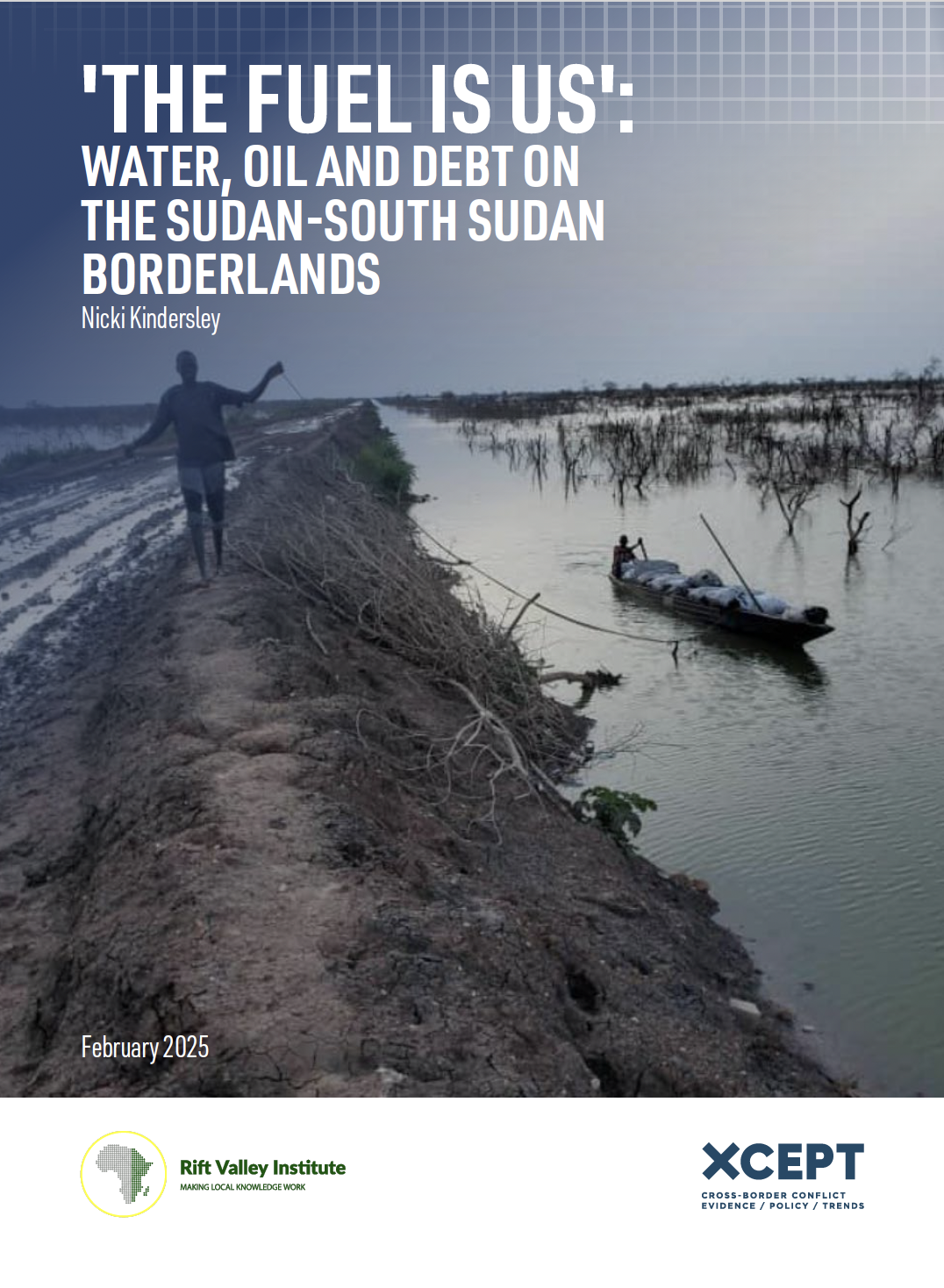
South Sudan and Sudan’s borderlands are run by a patchwork of armed authorities. Since early 2019, when opposition forces were effectively wiped out, these zones of control have remained relatively fixed, even as the war in Sudan drew close…
Studying urban contestations in Ethiopia’s secondary cities can help us understand how the urban centres outside of Addis Ababa are evolving during an ongoing period of significant socio-economic and political change. In this regard, Hawassa in Sidama region provides…
During the past decade, northern Kenya’s peripheral border counties have become key to the central state’s political and economic agenda. This synthesis report therefore uses the concept of ‘restructuring the margins’ to unpack the findings of two case study…
This report examines the effects of infrastructure development and shifting political conditions on trade and conflict at the Kenya–Ethiopia border, including on gender dynamics. In doing so, it focuses on how small-town cross-border traders in the town of Moyale,…
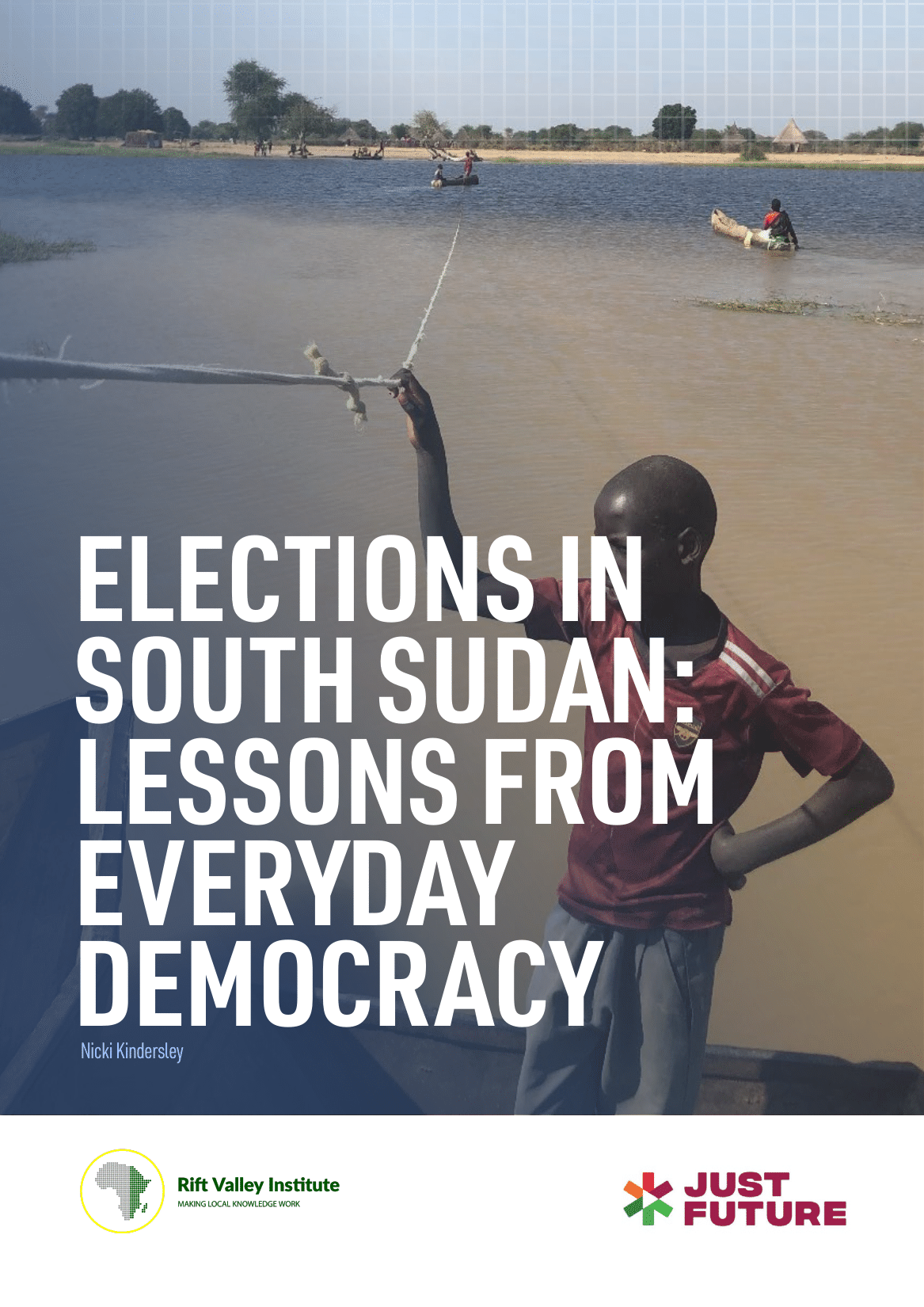
South Sudanese people are suffering under economic and climatic crises and political stasis. The last two years have involved a rapid deterioration of basic living conditions and safety for the majority. Popular engagement with national elections must be understood…
ከኢትዮጵያ ከተሞች በሕዝብ ብዛት ሁለተኛ የሆነችው ድሬ ዳዋ ከተማ፣ በምስራቁ የሀገሪቱ ክፍል የብሔረሰቦች፣ የቋንቋ እና የኃይማኖት ብዝኃነት የሚገለጥባት ማዕከል መሆኗ ይታወቃል። ነገር ግን በ2010 የተደረገውን ሀገራዊ የፖለቲካ ለውጥ ተከትሎ፣ በርካታ ጎብኚዎችን የምታስተናግደውና በሰላሟ የምትታወቀው ከተማ ለሁለት ዓመታት የብሔር እና…
Recent Publications

The Political Economy of Coffee in the Sidama–Gedeo–Guji Belt, Southern Ethiopia
September 4, 2026
This report is part of a wider research project on the political economy of coffee in Ethiopia in the context of the political transition since 2018. It focuses on the Sidama–Gedeo–Guji coffee belt in southern Ethiopia, aiming to understand the
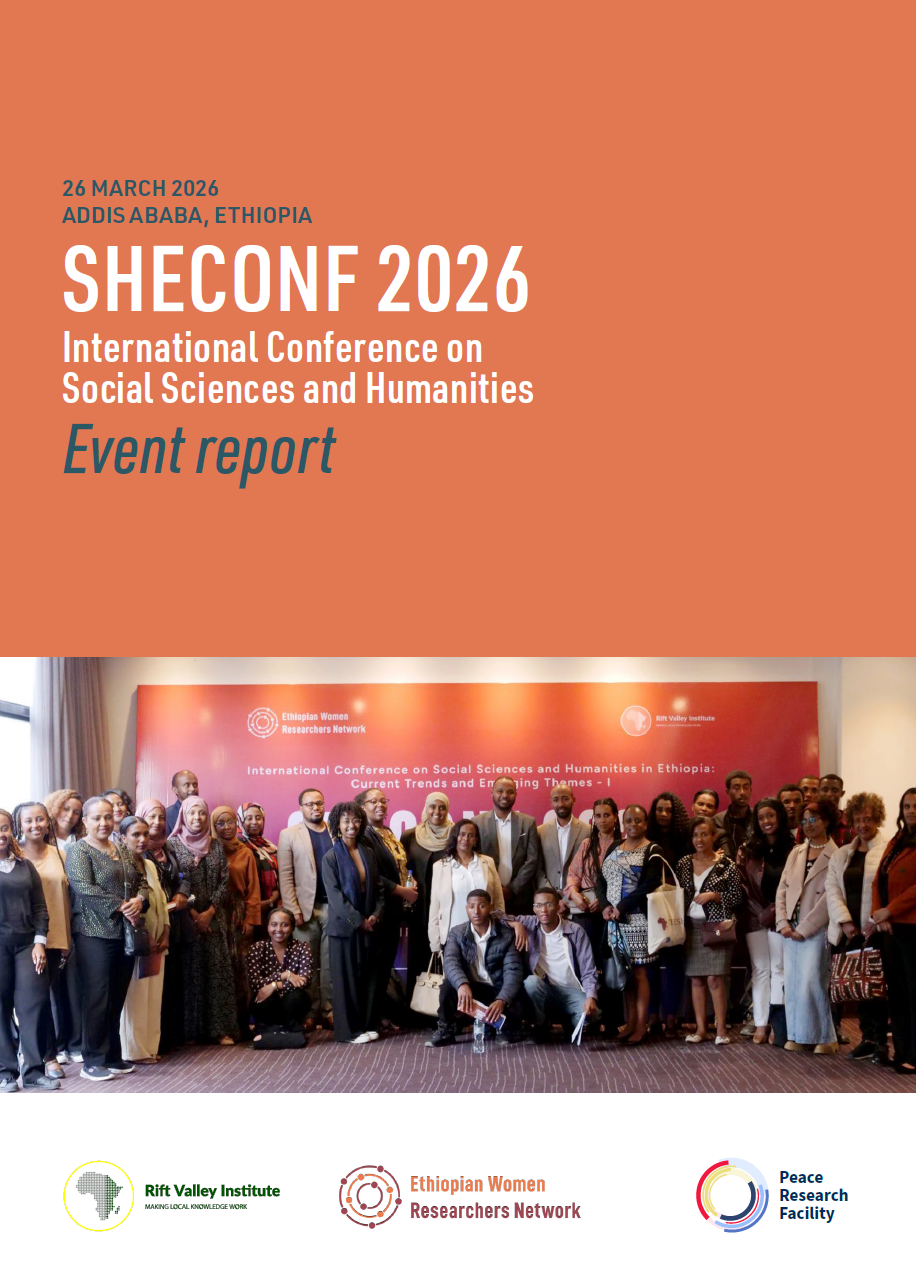
SHECONF 2026: International Conference on Social Sciences and Humanities
July 9, 2026
Event report On 26 March 2026, researchers, practitioners and academics gathered in Addis Ababa for SHECONF 2026, an International Conference on Social Sciences and Humanities in Ethiopia, the first of its kind convened by the Ethiopian Women Researchers Network (EWNET).
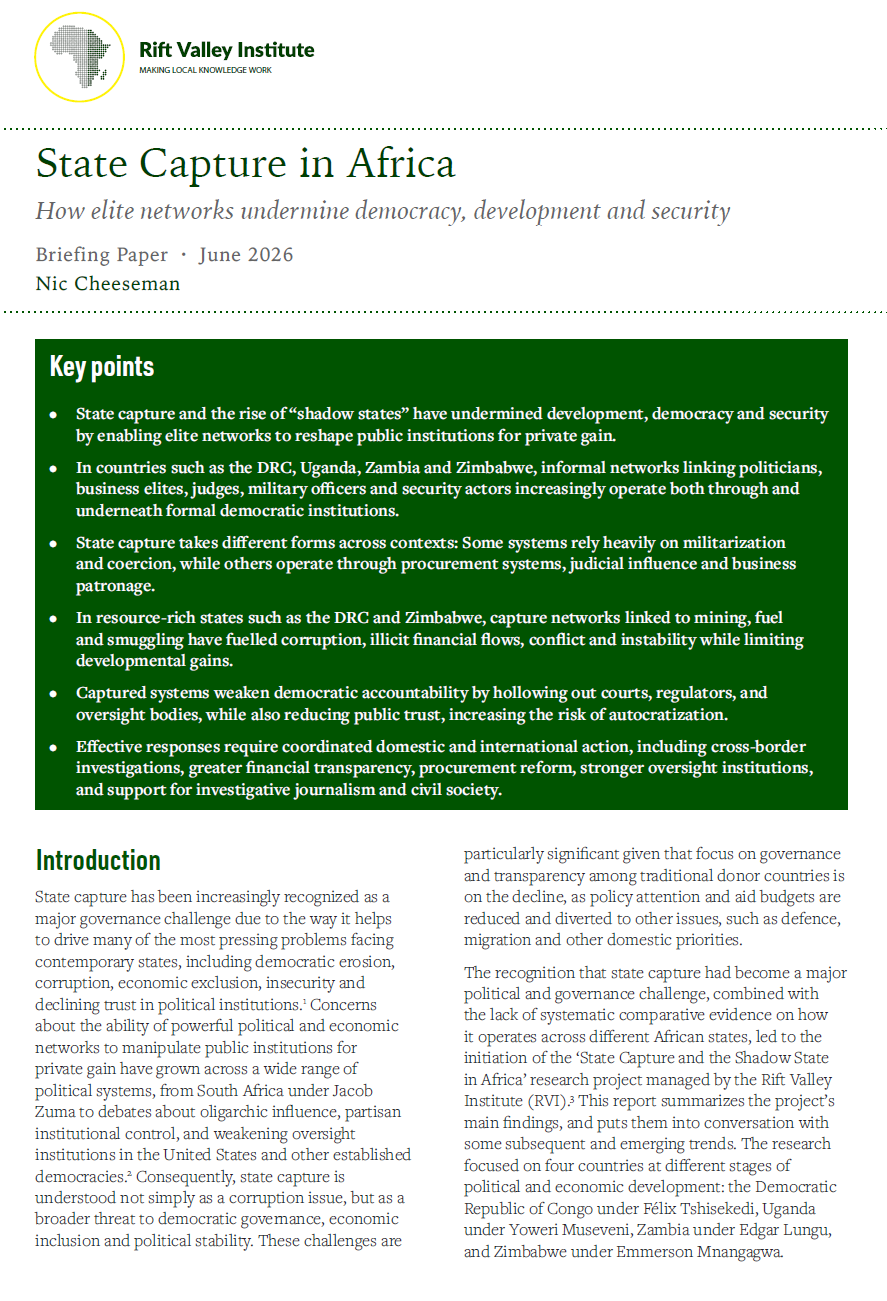
State Capture in Africa: How elite networks undermine democracy, development and security
June 24, 2026
Key points State capture has been increasingly recognized as a major governance challenge due to the way it helps to drive many of the most pressing problems facing contemporary states, including democratic erosion, corruption, economic exclusion, insecurity and declining trust