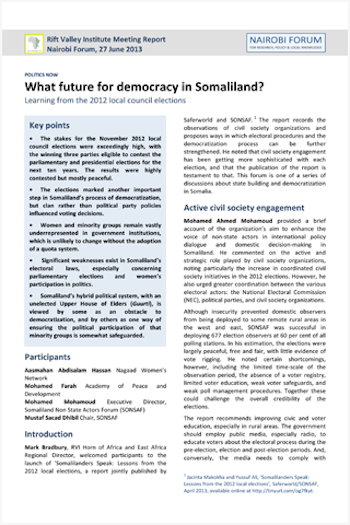
Key points The stakes for the November 2012 local council elections were exceedingly high, with the winning three parties eligible to contest the parliamentary and presidential elections for the next ten years. The results were highly contested but mostly…
RVI publishes books, research reports, research papers, briefings and meeting reports in a range of formats. Publications cover policy, research, arts, culture and local knowledge in the countries of eastern and central Africa. Research publications—books, reports and papers—are peer-reviewed. Some RVI publications are also available in French and/or Arabic.
The RVI is a signatory of the Budapest Open Access Initiative (2001); all publications are free for download in PDF format under Creative Commons licences. The views expressed in books and reports published by the RVI are those of the authors, not the Institute.
SEARCH
PUBLICATION TYPE
LANGUAGE
REGION
COUNTRY
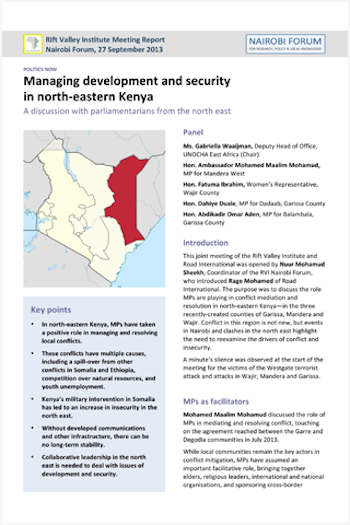
Key points In north-eastern Kenya, MPs have taken a positive role in managing and resolving local conflicts. These conflicts have multiple causes, including a spill-over from other conflicts in Somalia and Ethiopia, competition over natural resources, and youth unemployment….
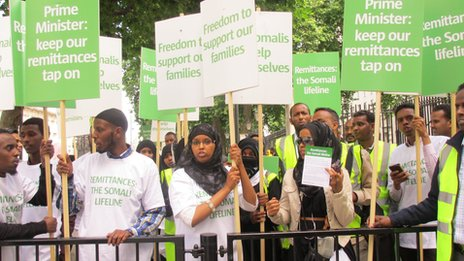
Key points Remittances from abroad are a vital lifeline for households in Somalia. 40% rely on them to meet food security needs. The majority of remittances to Somalia, Puntland and Somaliland are through licensed money transfer operators (MTOs) rather…
Key points IGAD’s engagement with Somalia has helped to sustain international interest in Somali issues. IGAD is perceived by many Somalis as representing the interests of Kenya and Ethiopia rather than Somalia. Somalis would like to see more practical…
Key points The RVI Usalama Project addresses the lack of detailed information about Congolese armed groups. The Institute has published fourteen reports and briefings on armed groups operating in the eastern DRC (including the Congolese national army, the FARDC)….
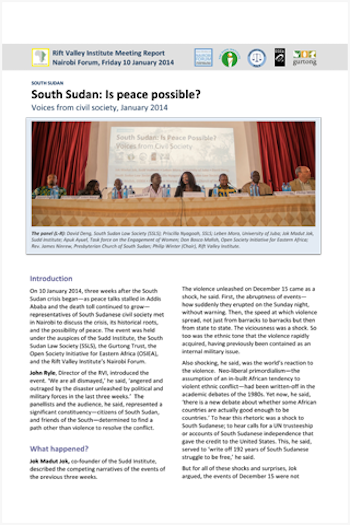
Introduction On 10 January 2014, three weeks after the South Sudan crisis began—as peace talks stalled in Addis Ababa and the death toll continued to grow—representatives of South Sudanese civil society met in Nairobi to discuss the crisis, its…
Key points Nairobi’s Eastleigh neighbourhood hosts one of the largest ethnic Somali communities outside Somalia—composed of Kenyan Somalis as well as Somali nationals whose numbers have swelled since the collapse of their state. Eastleigh has become an important centre…
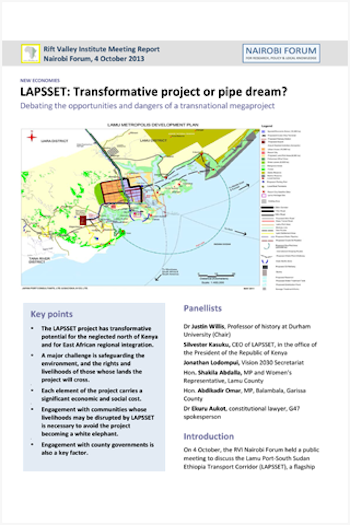
Key points The LAPSSET project has transformative potential for the neglected north of Kenya and for East African regional integration. A major challenge is safeguarding the environment, and the rights and livelihoods of those whose lands the project will…
- By Michel Thill
- Download
Points clés Le Projet Usalama de l’Institut de la Vallée du Rift (RVI) a pour mission de pallier l’absence d’informations détaillées sur les groupes armés congolais. L’Institut a publié 14 rapports et documents d’information sur les groupes armés qui opèrent…
Key points • Efforts to negotiate peace in South Sudan have been hindered by the lack of a coherent international approach such as the Inter-Congolese Dialogue eventually enjoyed. • IGAD’s assumption of a mediating rather than a facilitating role…
Recent Publications

EWNET Writes: Writing Workshop Session I
December 18, 2025
The Ethiopian Women Researchers Network (EWNET) inaugural writing workshop series aims to not only provide women researchers with uninterrupted time for their scholarly projects, but also build a supportive academic community. The first session, entitled ‘EWNET Writes: Writing Workshop Session

SSC-Khaatumo: Perspectives on the significance and implications of its formation
December 12, 2025
On 15 April 2025, during a visit to the city of Las Anod in Sool, Prime Minister Hassan Abdi Barre officially declared the federal government’s recognition of SSC-Khaatumo (SSC-K hereafter) as a federal member state, marking an important milestone in

Aid and Conflict Sensitivity in Contemporary Ethiopia
November 17, 2025
This study assesses conflict sensitivity practices among humanitarian, development and peacebuilding (HDP) actors in Ethiopia. It seeks to raise awareness and foster a deeper understanding of the evolving aid landscape in the country while analysing the challenges that affect conflict-sensitive