The Revitalised Agreement on the Resolution of Conflict in South Sudan (R-ARCSS) signed on 12 September 2018, not only allows for a new government and security arrangements, it also provides for two new commissions to decide the number of…
RVI publishes books, research reports, research papers, briefings and meeting reports in a range of formats. Publications cover policy, research, arts, culture and local knowledge in the countries of eastern and central Africa. Research publications—books, reports and papers—are peer-reviewed. Some RVI publications are also available in French and/or Arabic.
The RVI is a signatory of the Budapest Open Access Initiative (2001); all publications are free for download in PDF format under Creative Commons licences. The views expressed in books and reports published by the RVI are those of the authors, not the Institute.
SEARCH
PUBLICATION TYPE
LANGUAGE
REGION
COUNTRY
For over two decades Ethiopia’s political federation has been organized around the principle of ‘democratic centralism’. This philosophy also lies at the heart of the ruling Ethiopian Peoples’ Revolutionary Democratic Front (EPRDF) coalition, and its centralized decision-making culture. Until…
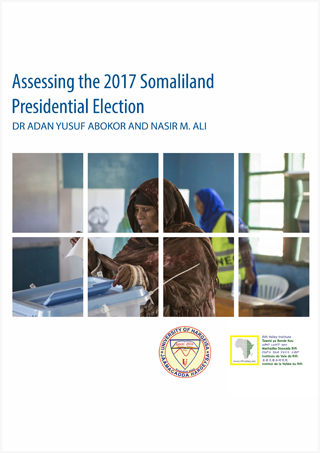
In May 2001, Somaliland’s citizens went to the polls to approve an interim constitution in a public referendum coordinated by the Government of Somaliland. The constitution called for multi-party politics and democratic elections. Since then, Somaliland has held a…
This Q&A is an explainer on the rapid political changes that have taken place in Sudan over the last month. All 4 contributors are close collaborators with the Rift Valley Institute. Questions were posed by Magnus Taylor, RVI’s Senior…
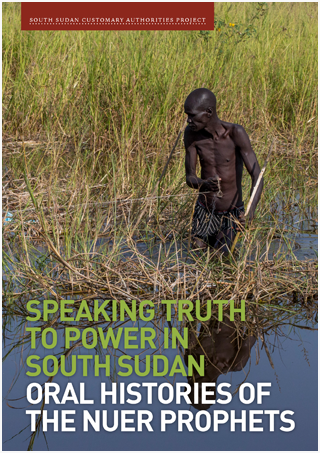
Prophets—those recognised as having been ‘seized’ by a divinity—have played an important role in the history of South Sudan, particularly that of the Nuer people. They were seen as being powerful political actors and, alongside chiefs, important intermediaries for…
South Sudan’s violent conflicts continue to plague its people. An estimated four million South Sudanese have been forcibly displaced since December 2013, and more than a million have sought refuge in Uganda where communities have largely reassembled without their…
The legacy of Somali piracy, the threat of terrorists transiting between Yemen and Somalia, and the deepening conflict in Yemen, mean international actors tend to view the Gulf of Aden through a security lens. This report outlines the local…
Key points In numerous cities in the eastern Congo, youth groups are involved in urban policing, operating in the space between state and non-state actors and formal and informal governance. While some youth policing groups are responsible for improvements…
Following the 2005 Comprehensive Peace Agreement (CPA) and the subsequent independence of South Sudan in 2011, many agro-pastoralist and pastoralist areas of the country have experienced an upsurge of livestock raiding, counter raiding and cycles of revenge killing. Eastern…
Northern Bahr el-Ghazal, like much of South Sudan, is in a protracted state of social and economic crisis, rooted in generations of armed conflict, forced resettlements, and a shift towards a cash and market economy. Since the 1980s, family…
Recent Publications

SHECONF 2026: International Conference on Social Sciences and Humanities
July 9, 2026
Event report On 26 March 2026, researchers, practitioners and academics gathered in Addis Ababa for SHECONF 2026, an International Conference on Social Sciences and Humanities in Ethiopia, the first of its kind convened by the Ethiopian Women Researchers Network (EWNET).

State Capture in Africa: How elite networks undermine democracy, development and security
June 24, 2026
Key points State capture has been increasingly recognized as a major governance challenge due to the way it helps to drive many of the most pressing problems facing contemporary states, including democratic erosion, corruption, economic exclusion, insecurity and declining trust

The New Geopolitics of Eastern Africa
June 17, 2026
On 20 May, the British Institute of Eastern Africa (BIEA), Chatham House, and the Rift Valley Institute (RVI) convened a group of experts to discuss the ‘The New Geopolitics of Eastern Africa’. The closed-door roundtable considered the ongoing transformation of