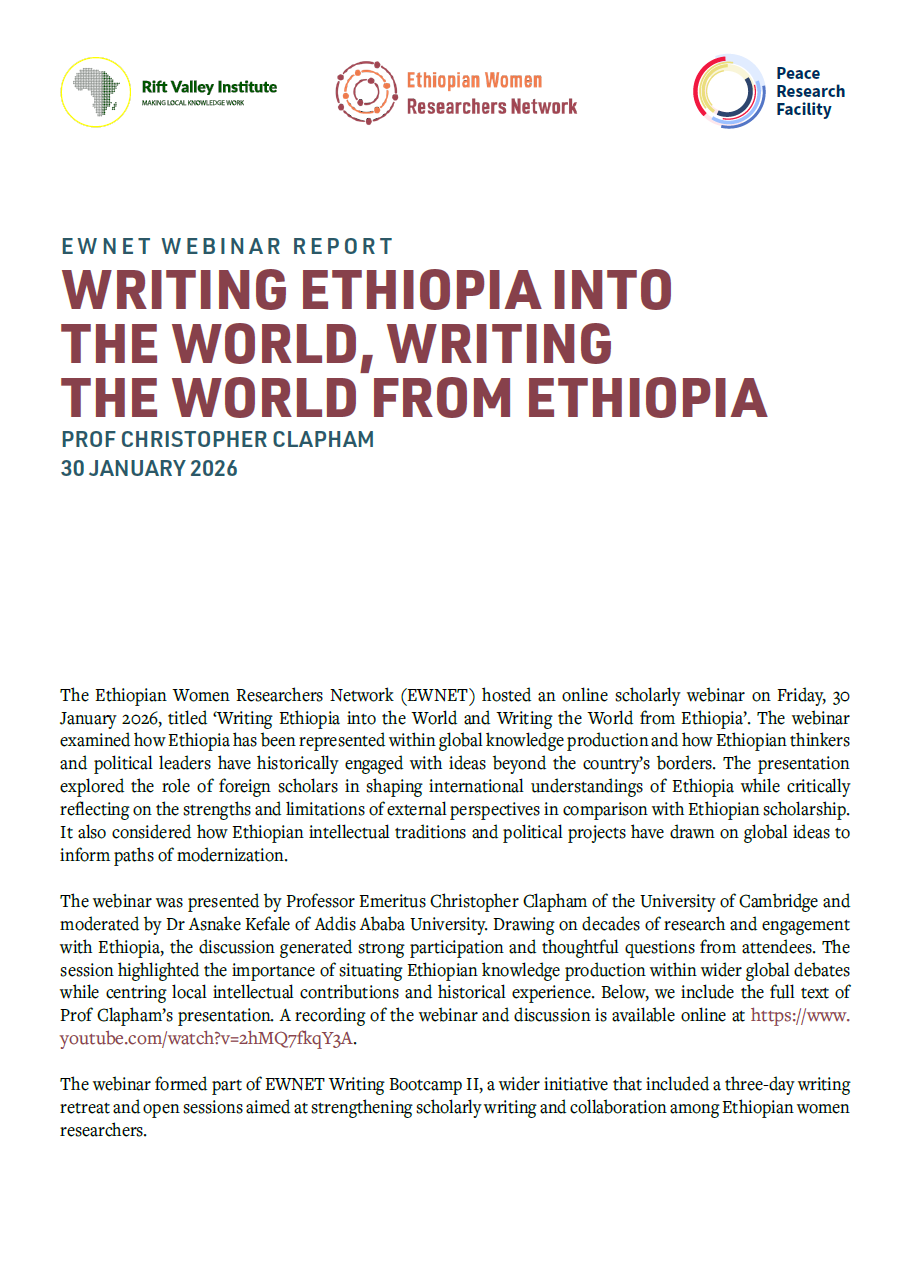
CORONATION ACCOUNT OF KING ATOROBA OF THE AZANDE KINGDOM This essay was written by Isaac Waanzi Hillary, who attended the coronation of His Majesty, King Atoroba Peni Rikito Gbudue in Yambio, the capital of Western Equatoria State, on 9…
RVI publishes books, research reports, research papers, briefings and meeting reports in a range of formats. Publications cover policy, research, arts, culture and local knowledge in the countries of eastern and central Africa. Research publications—books, reports and papers—are peer-reviewed. Some RVI publications are also available in French and/or Arabic.
The RVI is a signatory of the Budapest Open Access Initiative (2001); all publications are free for download in PDF format under Creative Commons licences. The views expressed in books and reports published by the RVI are those of the authors, not the Institute.
SEARCH
PUBLICATION TYPE
LANGUAGE
REGION
COUNTRY
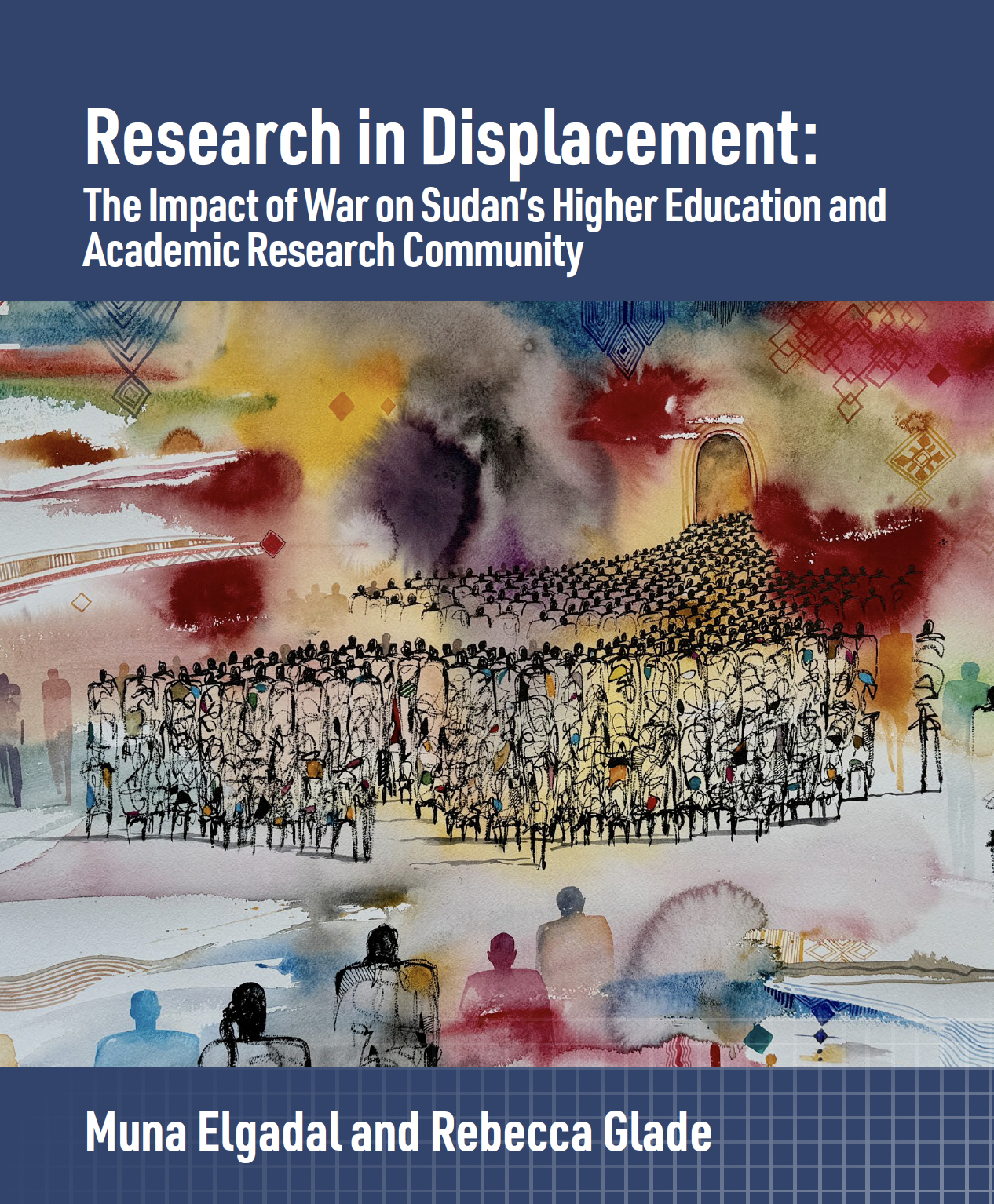
SUMMARY The outbreak of war in Sudan in April 2023 has created immeasurable suffering and damage, threatening critical institutions across the country. Amongst these is Sudanese higher education, which has faced not only the destruction of critical facilities, but…
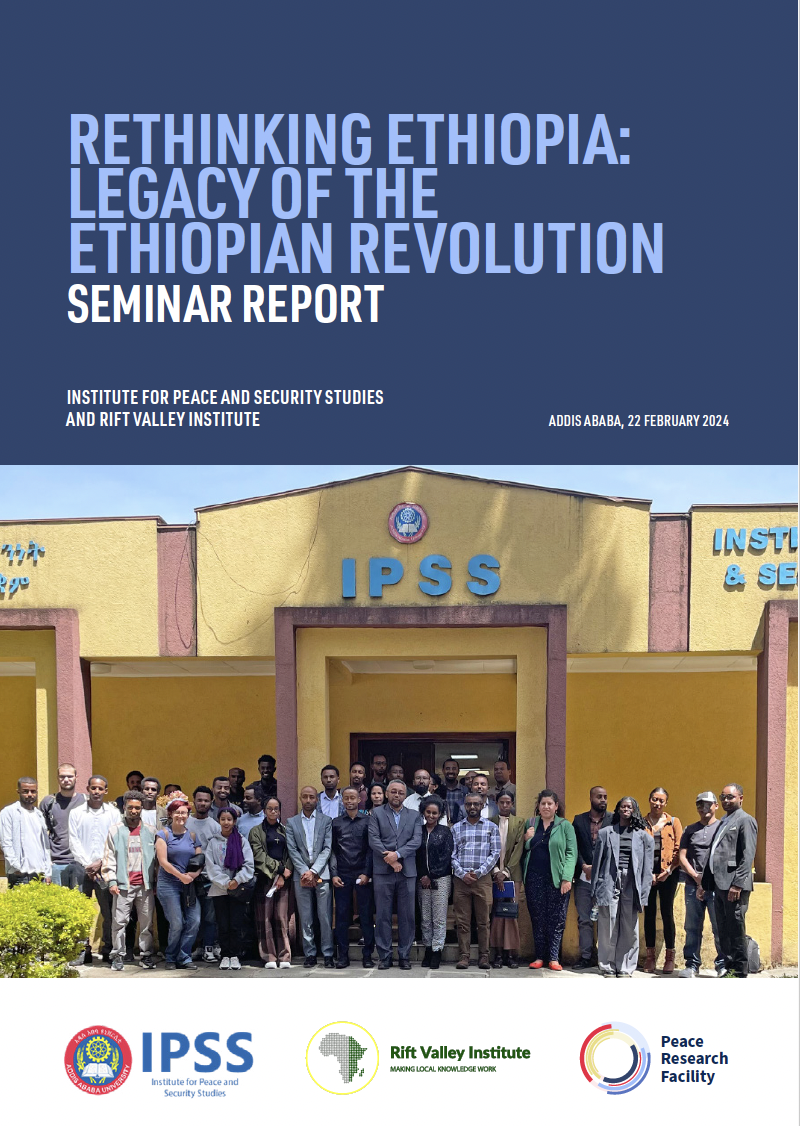
SUMMARY The Institute for Peace and Security Studies (IPSS) of Addis Ababa University and the Peace Research Facility (PRF) of the Rift Valley Institute (RVI) jointly organized a seminar on the theme ‘Rethinking Ethiopia: A Seminar on Youth Voices’,…
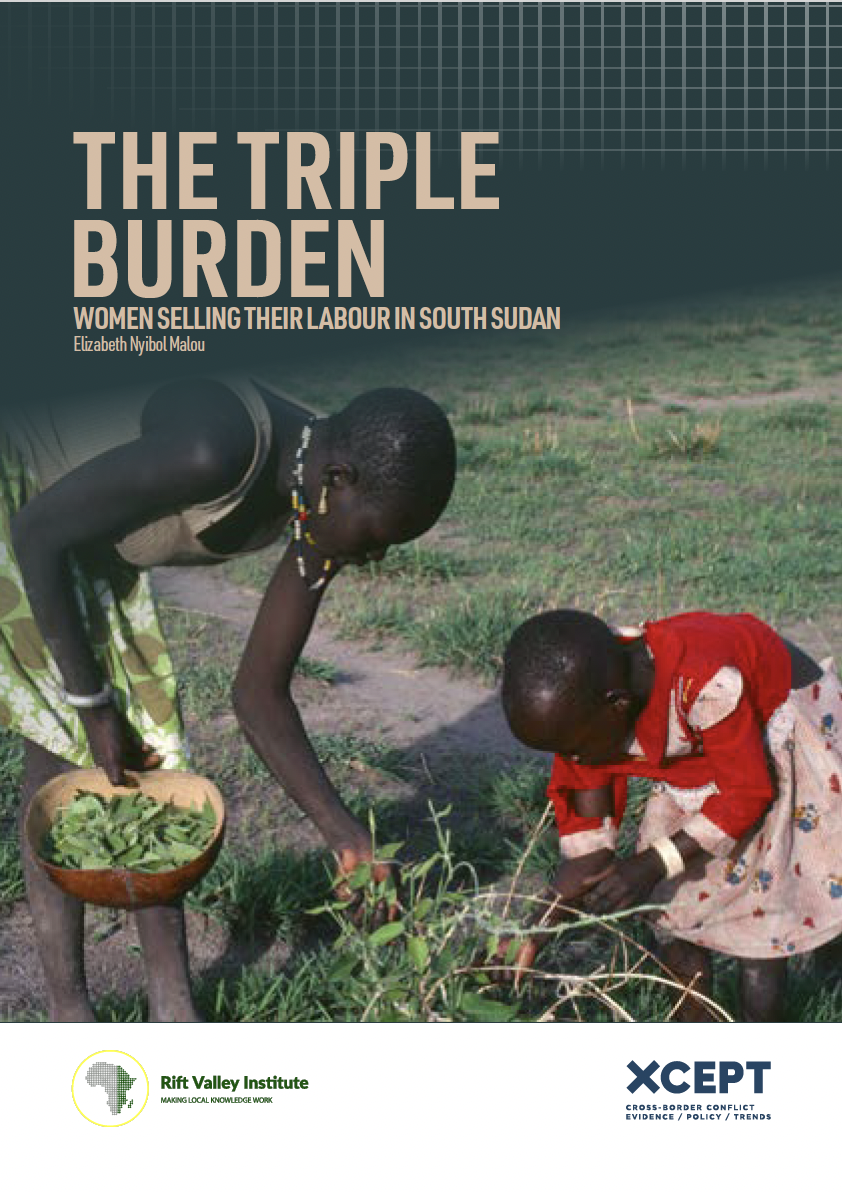
SUMMARY In rural South Sudan, markets for food, labour, and land are expanding, leading to increased workloads for women. Historically, rural women had two primary labour burdens: producing food for home consumption and providing essential life-giving labour such as…
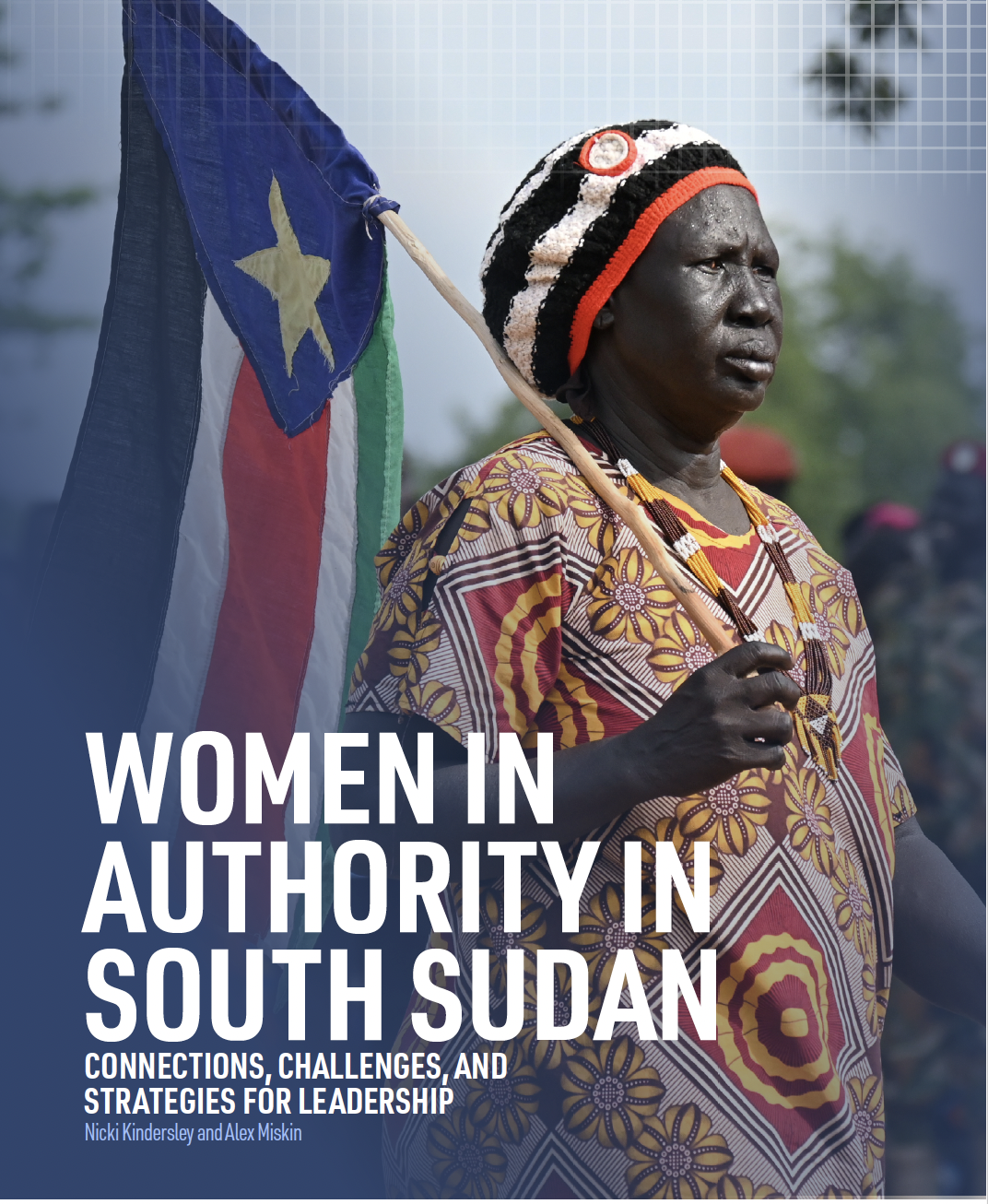
SUMMARY • Across South Sudan, women of different socio-economic backgrounds and experiences are fighting to take up positions of authority at all levels. This process is uneven, non-linear, and socially complex.• The ways in which women are organizing for…
By Terje Østebø SUMMARY In the wake of the Ethiopian People’s Revolutionary Democratic Front (EPRDF) gaining power in 1991, a religious resurgence driven by various Islamic reform movements produced a more active, visible Muslim community. Over time, the government…
Girls and women in South Sudan face numerous barriers and challenges: customary law often denies women the right to own land, girls’ access to education remains precarious and harmful traditional practices continue to place women and girls at risk…
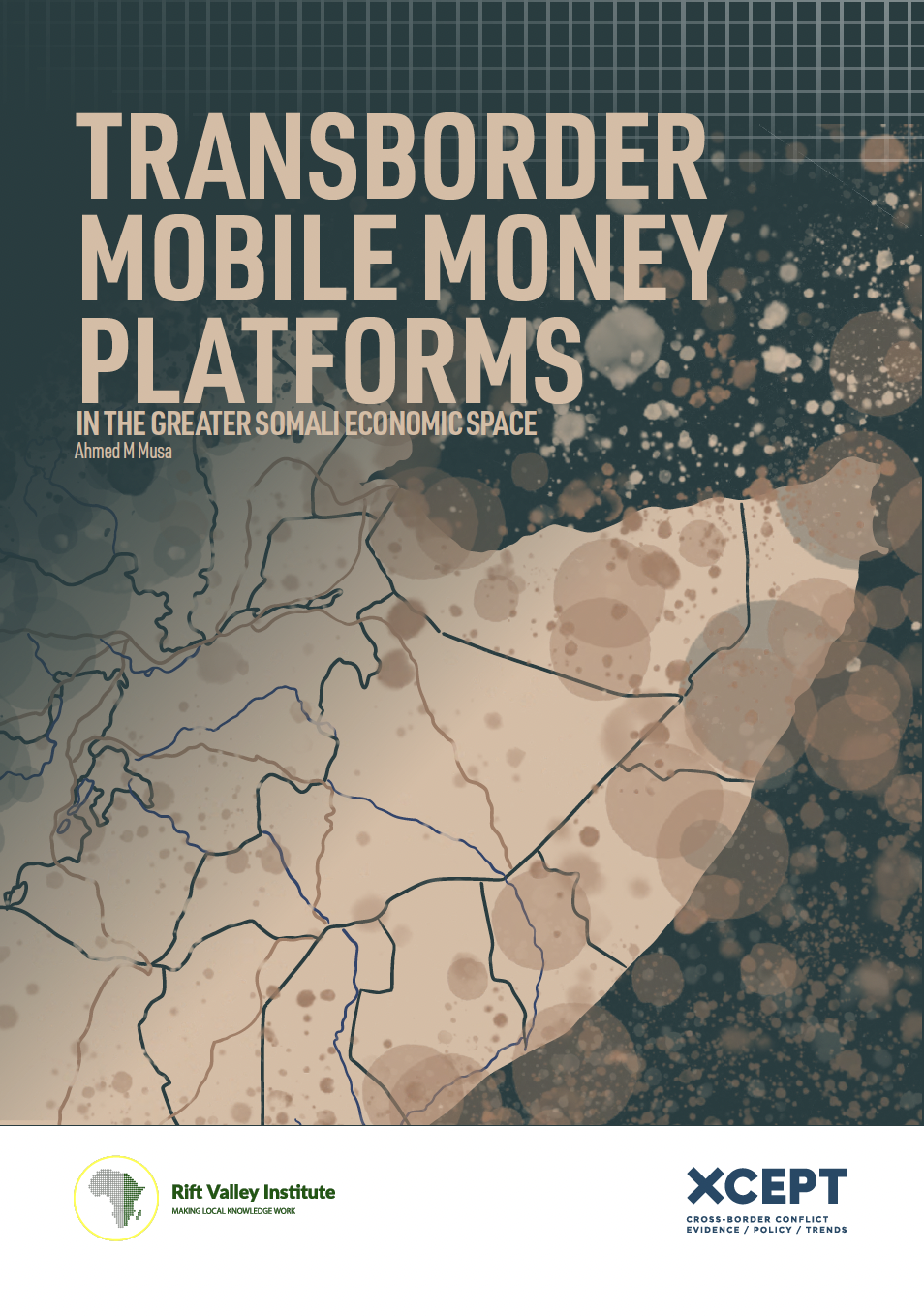
SUMMARY The informal transborder movement of goods and people have long captivated scholars, policymakers and security institutions in the East Africa region, in particular in the Horn of Africa (HoA). Special attention has been given to the transborder economic…
This research paper is part of a series of outputs from the Peace Research Facility (PRF) focusing on key issues in domestic and foreign affairs in Ethiopia. The paper is based on research by Firehiwot Sintayehu and draws on…
This research paper builds on work the Rift Valley Institute (RVI) has conducted on the Sudan–Ethiopia borderland under the XCEPT programme since 2021. This culminated in the report ‘Resistance in the Peripheries: Fragile peace and civil war in Sudan…
Recent Publications

Writing Ethiopia into the World, Writing the World from Ethiopia
October 7, 2026
The Ethiopian Women Researchers Network (EWNET) hosted an online scholarly webinar on Friday, 30 January 2026, titled ‘Writing Ethiopia into the World and Writing the World from Ethiopia’. The webinar examined how Ethiopia has been represented within global knowledge production
The Political Economy of Coffee in the Kaffa–Bench-Sheko–Sheka Belt, Southwest Ethiopia Region
October 6, 2026
This study provides a critical political economy analysis of the coffee sector in the Kaffa–Bench-Sheko–Sheka belt in Southwest Ethiopia Peoples’ Regional State, the genetic and cultural heartland of Arabica coffee (Coffea arabica). Based on 47 key respondent interviews, the study
The Political Economy of Coffee in the Jimma–Ilu Aba Bora–Buno Bedele Belt, Oromia Region
October 5, 2026
The findings of this study reveal a number of critical insights about the political economy of coffee in the Jimma–Ilu Aba Bora–Buno Bedele coffee belt. The coffee economy is shaped by a small number of influential actors, including state institutions,