Latest Developments in Ethiopia, Eritrea, Somalia, Somaliland and Djibouti By Michael Woldermarian & Ken Menkhaus This briefing was written by Micheal Woldemariam and Ken Menkhaus, the Co-Directors of Studies for the Rift Valley Institute’s Horn of Africa Field Course,…
RVI publishes books, research reports, research papers, briefings and meeting reports in a range of formats. Publications cover policy, research, arts, culture and local knowledge in the countries of eastern and central Africa. Research publications—books, reports and papers—are peer-reviewed. Some RVI publications are also available in French and/or Arabic.
The RVI is a signatory of the Budapest Open Access Initiative (2001); all publications are free for download in PDF format under Creative Commons licences. The views expressed in books and reports published by the RVI are those of the authors, not the Institute.
SEARCH
PUBLICATION TYPE
LANGUAGE
REGION
COUNTRY
Introduction Galmudug state in Somalia was, until recently, seen as a region of conflict and fragmentation, shaped by the legacy of violence passed down from the Somali civil war. Due to the constant conflict between clan-based political groupings, it…
SUMMARY • Dire Dawa, Ethiopia’s second largest city, is a multi-ethnic and multi-religious economic hub in the country’s eastern region, sitting on the contested boundary between the Oromia and Somali regions. Despite an overarching sense that the city’s historical…
SUMMARY • Gondar city is known for centuries of peaceful coexistence between its Muslim and Orthodox Christian community members. These inter-religious relations have, however, deteriorated over recent decades, erupting into view in the April 2022 attack on Muslim mourners…
SUMMARY • Despite political change at the national level, resource extraction in the two Guji zones (Guji and West Guji) of the Oromia Region continues to exclude local communities. This is particularly so in the case of MIDROC –…
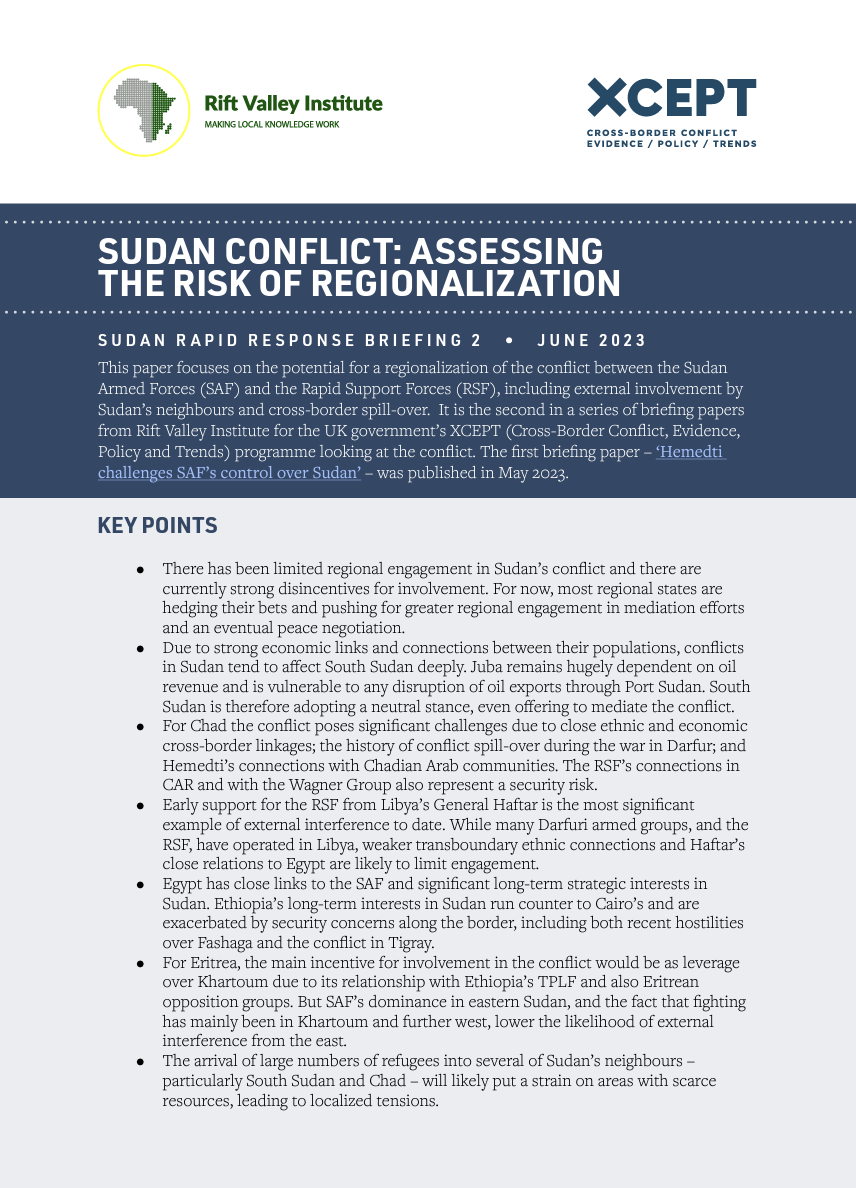
This paper focuses on the potential for a regionalization of the conflict between the Sudan Armed Forces (SAF) and the Rapid Support Forces (RSF), including external involvement by Sudan’s neighbours and cross-border spill-over. It is the second in a…
INTRODUCTION Social science knowledge production in Ethiopia, as elsewhere in Africa, has Eurocentric roots. This is because Ethiopian Studies was born outside of Ethiopia, with the first generation of scholars consisting mainly of academics from Western countries or Ethiopians…
HISTORY, POLITICS AND INTER-RELIGIOUS RELATIONS INTRODUCTION Religious affiliation is almost universal in Ethiopia, which means that religions amass significant political capital but may also act as potential catalysts for conflict. After five decades of ostensibly secular politics—first under a…
Overview Amid the major changes to Somalia’s political landscape seen over the past two decades, an abiding feature has been the reliance on clan-based power-sharing models, including the ‘4.5’ formula. Despite the Somali Provisional Constitution containing no reference to…
This paper focuses on the origins and the political and military objectives of the two main internal actors – the Sudanese Armed Forces (SAF) and the Rapid Support Forces (RSF) — in Sudan’s ongoing conflict. It is the first…
Recent Publications

SHECONF 2026: International Conference on Social Sciences and Humanities
July 9, 2026
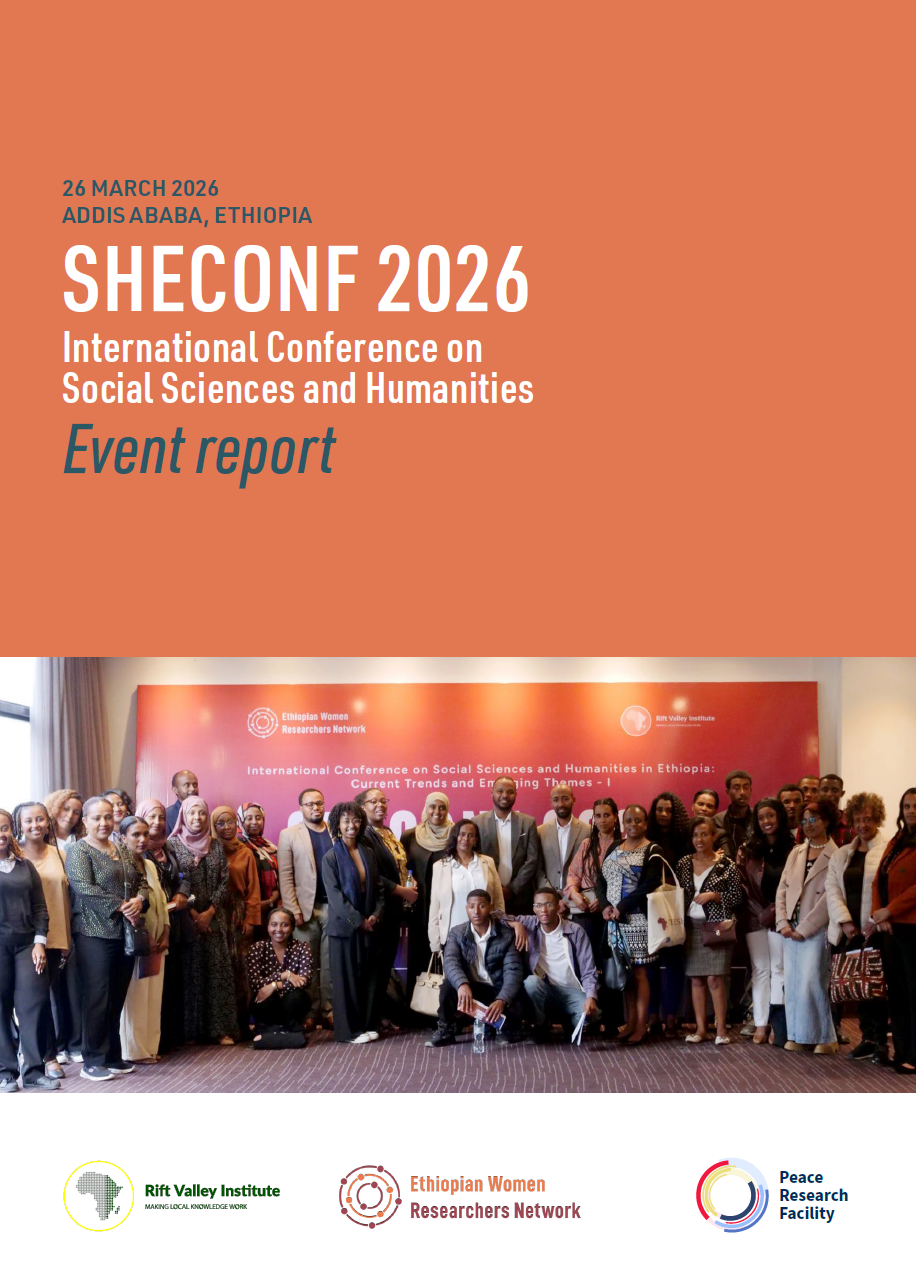
Event report On 26 March 2026, researchers, practitioners and academics gathered in Addis Ababa for SHECONF 2026, an International Conference on Social Sciences and Humanities in Ethiopia, the first of its kind convened by the Ethiopian Women Researchers Network (EWNET).
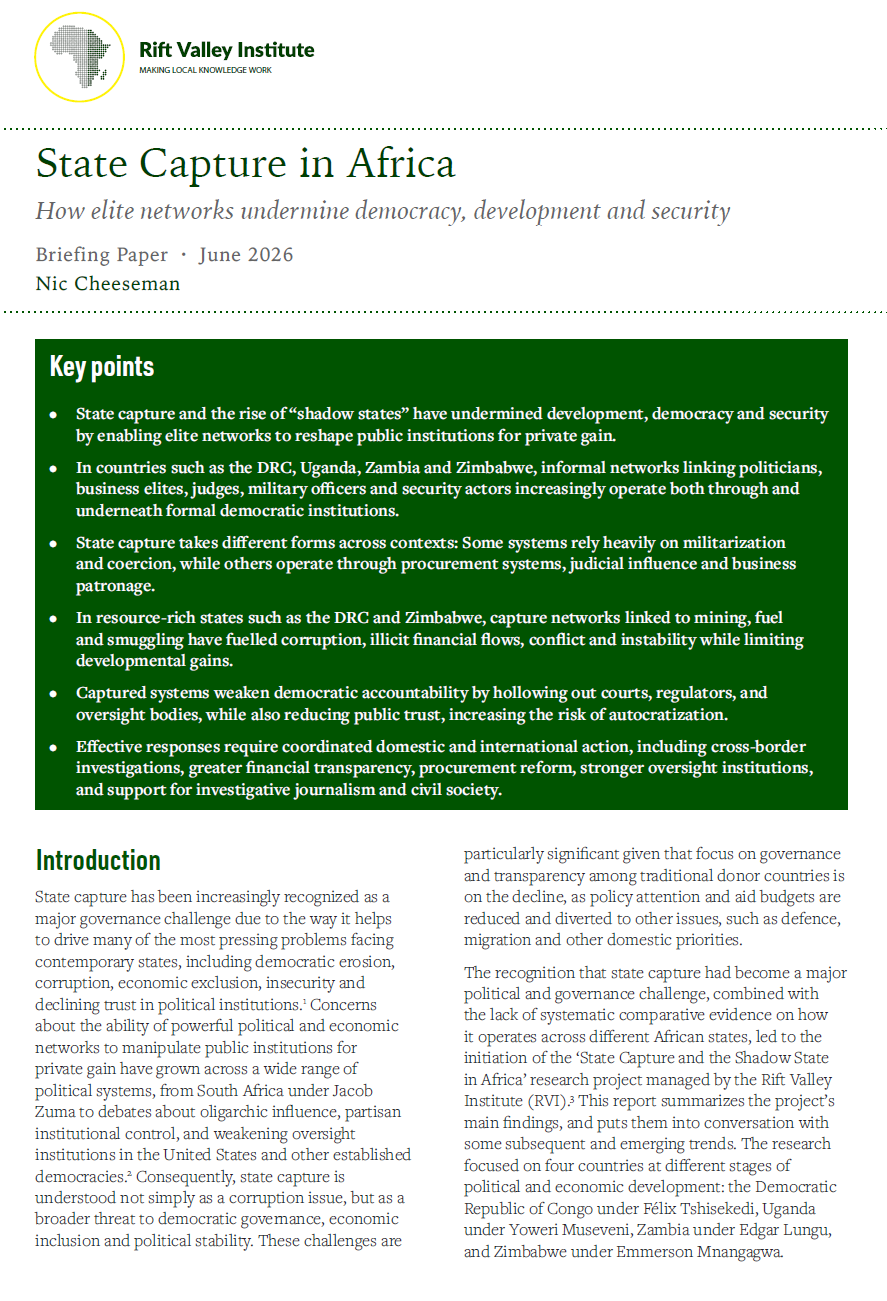
State Capture in Africa: How elite networks undermine democracy, development and security
June 24, 2026
Key points State capture has been increasingly recognized as a major governance challenge due to the way it helps to drive many of the most pressing problems facing contemporary states, including democratic erosion, corruption, economic exclusion, insecurity and declining trust

The New Geopolitics of Eastern Africa
June 17, 2026
On 20 May, the British Institute of Eastern Africa (BIEA), Chatham House, and the Rift Valley Institute (RVI) convened a group of experts to discuss the ‘The New Geopolitics of Eastern Africa’. The closed-door roundtable considered the ongoing transformation of