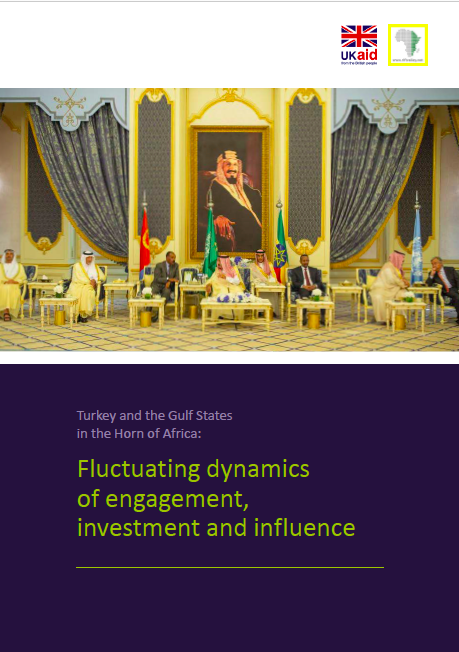
Since around 2015, the importance of the Gulf states, particularly Saudi Arabia, the United Arab Emirates (UAE) and Qatar, in the affairs of countries in the Horn of Africa has been growing. At the same time, Turkey, which…
RVI publishes books, research reports, research papers, briefings and meeting reports in a range of formats. Publications cover policy, research, arts, culture and local knowledge in the countries of eastern and central Africa. Research publications—books, reports and papers—are peer-reviewed. Some RVI publications are also available in French and/or Arabic.
The RVI is a signatory of the Budapest Open Access Initiative (2001); all publications are free for download in PDF format under Creative Commons licences. The views expressed in books and reports published by the RVI are those of the authors, not the Institute.
SEARCH
PUBLICATION TYPE
LANGUAGE
REGION
COUNTRY
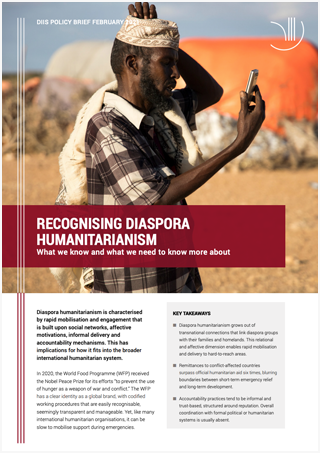
This briefing is an output of the Diaspora Humanitarianism in Complex Crises (D-Hum) project, a partnership between the Danish Institute for International Studies, Institute for Development Studies, University of Nairobi, Rako Research and Communication Centre, and the Rift Valley Institute. Key…
On 17 September, the leaders of the Federal Government of Somalia (FGS) and all five Federal Member States (FMS) agreed on an indirect electoral model for the country’s upcoming polls. Building on a series of discussions in Dhusamareb in…
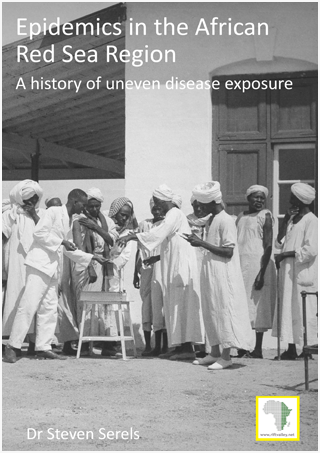
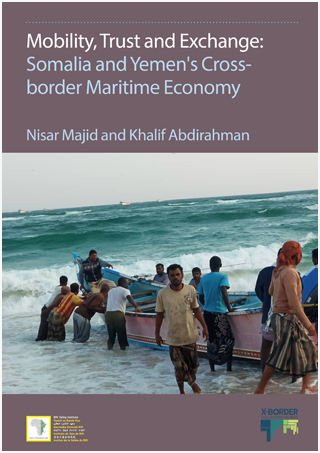
Summary The sustained movement of people, goods and ideas across the African Red Sea Region has been and continues to be so intense that it binds together communities throughout the region in a unified multifaceted socio-economic system that transcends…
The vote of no confidence on 25 July in the Prime Minister has led to renewed political uncertainty in Somalia; the constitution gives the President thirty days from this date to appoint the next Prime Minister, who will in…
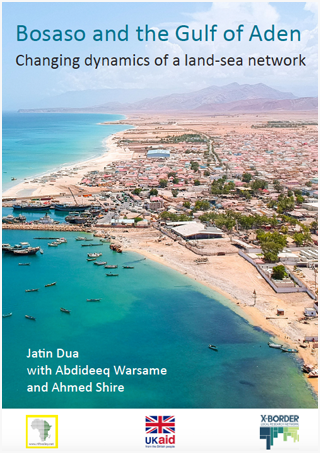
Bosaso and the Gulf of Aden: Changing dynamics of a land-sea network is the second report in a series looking at the relationship between modern-day Puntland, a semi-autonomous region of north-east Somalia, Yemen and the wider Gulf region. It…
Despite progress in some significant areas, Somalia’s politics continue to be shaped by stark differences between key political players. This is most evident in the ongoing disagreement around one-person-onevote (OPOV) elections, the framework for which is timetabled to be…
The number of Coronavirus (COVID-19) infections and related deaths is rapidly increasing in Somalia. However, at present it is the secondary, primarily economic, effects of the pandemic that are being most keenly felt. The impact on the khat trade…
The importance of remittances to the household economy across Somalia is well-recognized. What is less well understood is the relationship between remittances and the relative vulnerability of certain communities, particularly to drought and food insecurity. This briefing outlines the…
The legacy of Somali piracy, the threat of terrorists transiting between Yemen and Somalia, and the deepening conflict in Yemen, mean international actors tend to view the Gulf of Aden through a security lens. This report outlines the local…
Recent Publications

SHECONF 2026: International Conference on Social Sciences and Humanities
July 9, 2026
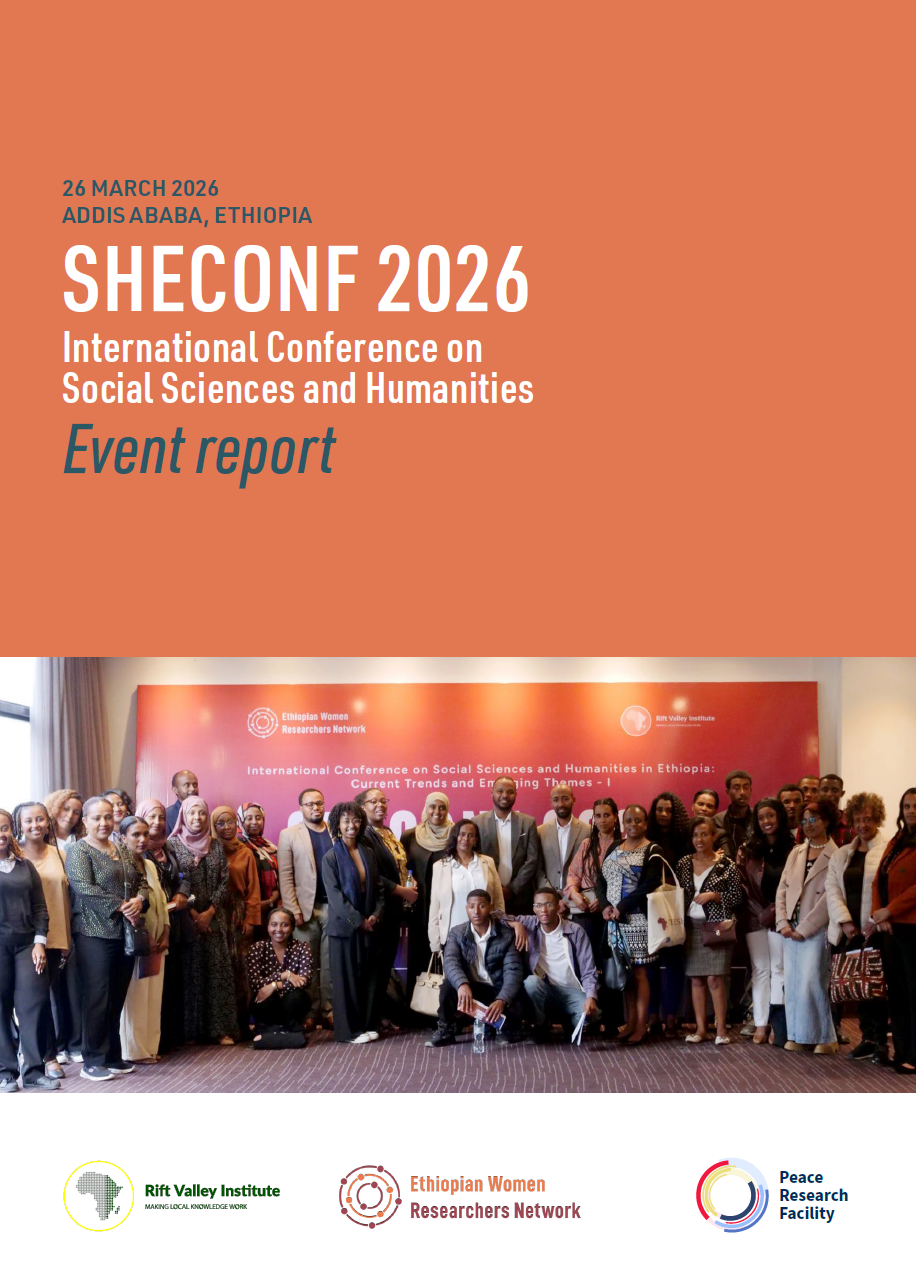
Event report On 26 March 2026, researchers, practitioners and academics gathered in Addis Ababa for SHECONF 2026, an International Conference on Social Sciences and Humanities in Ethiopia, the first of its kind convened by the Ethiopian Women Researchers Network (EWNET).
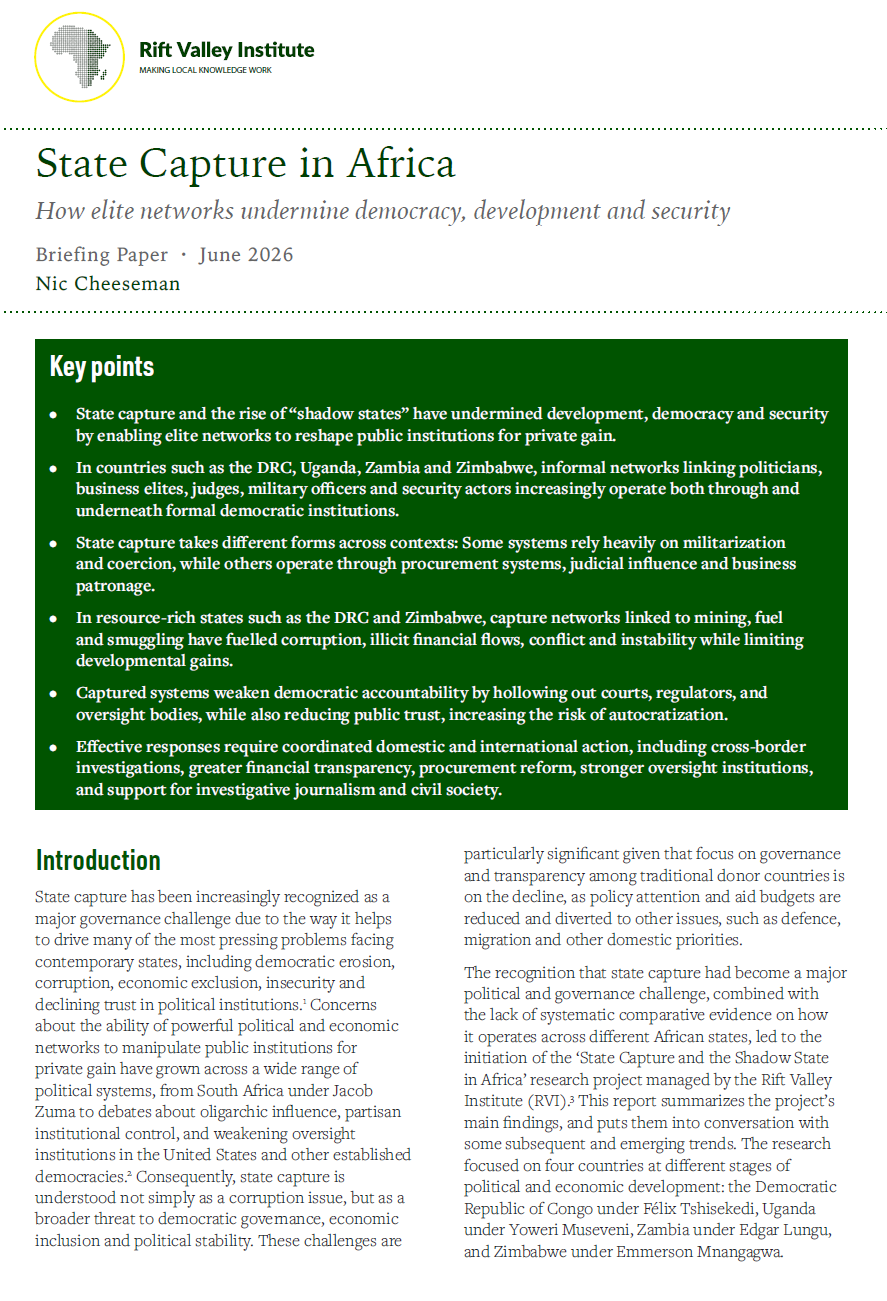
State Capture in Africa: How elite networks undermine democracy, development and security
June 24, 2026
Key points State capture has been increasingly recognized as a major governance challenge due to the way it helps to drive many of the most pressing problems facing contemporary states, including democratic erosion, corruption, economic exclusion, insecurity and declining trust

The New Geopolitics of Eastern Africa
June 17, 2026
On 20 May, the British Institute of Eastern Africa (BIEA), Chatham House, and the Rift Valley Institute (RVI) convened a group of experts to discuss the ‘The New Geopolitics of Eastern Africa’. The closed-door roundtable considered the ongoing transformation of