An all-inclusive Community Conference held in Garowe from May-August 1998 established Puntland State of Somalia. A guiding three-year Provisional Charter, endorsed in the Community Conference, sanctioned the formation of basic governance functions divided into the executive, legislative and judiciary…
RVI publishes books, research reports, research papers, briefings and meeting reports in a range of formats. Publications cover policy, research, arts, culture and local knowledge in the countries of eastern and central Africa. Research publications—books, reports and papers—are peer-reviewed. Some RVI publications are also available in French and/or Arabic.
The RVI is a signatory of the Budapest Open Access Initiative (2001); all publications are free for download in PDF format under Creative Commons licences. The views expressed in books and reports published by the RVI are those of the authors, not the Institute.
SEARCH
PUBLICATION TYPE
LANGUAGE
REGION
COUNTRY
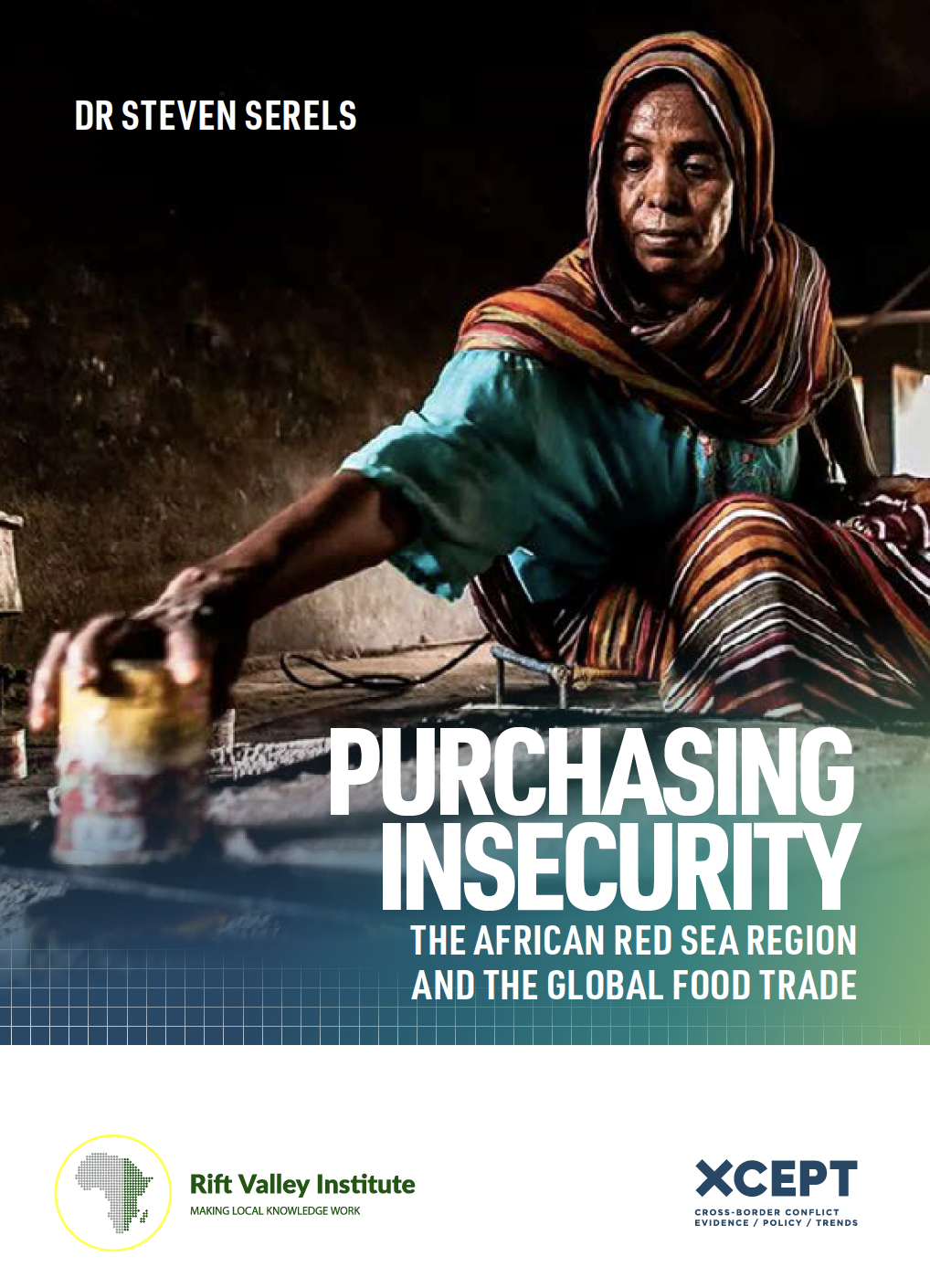
The African Red Sea Region does not produce enough food to feed its own population. Sudan, Eritrea, Ethiopia, Djibouti and Somaliland (Somalia) are each reliant on imports to make up for domestic production shortfalls. This presents unresolved challenges to…
The unresolved status of Mogadishu is one of the key outstanding issues in Somalia’s political settlement. Since 2012, Somalia has made progress in clarifying its federal model through the establishment of Federal Member States (FMS) and efforts – albeit…
Somalia first formally adopted a federal model in 2004 with the establishment of the Transitional Federal Charter. Since then, it has been deepened and clarified with the adoption of the Provisional Federal Constitution in 2012 and the subsequent formation…
Somalia formally adopted a federal system in 2004 with the establishment of the Transitional Federal Government. This model became more established in 2012 with the ratification of the Provisional Federal Constitution (PFC), which clarified many critical areas of Somalia’s…
Religious actors play an important role in Somalia’s political landscape. Since the collapse of the Somali state in 1991, they have also demonstrated strong staying power when many non-religious actors have come and departed all too quickly. For many…
Over the past decade, there have been several important gains made with Somalia’s state-building process, notably the establishment of a Federal Government following the endorsement of the Provisional Constitution in 2012. This was followed by the formation of Federal…
Tobankii sano ee la soo dhaafay, horumarro la taaban karo ayaa laga sameeyay xaaladda siyaasadda Soomaaliya, oo ay kamid tahay dhismihii Dowladda Federaalka Soomaaliya ee sanadkii 2012 kadib markii la ansixiyay Dastuurka Federaalka Kumeelgaarka ah. Dowladaha xubnaha ka ah…
Over the past decade, significant progress has been made in Somalia’s post-conflict trajectory, including the formation of the Federal Government of Somalia (FGS) in 2012 following the endorsement of the Provisional Federal Constitution. Federal Member States (FMSs) were formed…
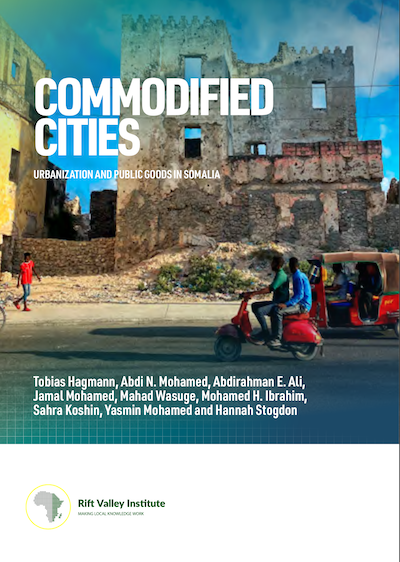
Urbanization in the Somali territories is transforming Somali society in multiple and profound ways, with the growth of urban centres and networks paralleled by new patterns of accumulation, investment, redistribution, inclusion and exclusion. While the perilous fragility of Somalia’s urban…
Recent Publications

SHECONF 2026: International Conference on Social Sciences and Humanities
July 9, 2026
Event report On 26 March 2026, researchers, practitioners and academics gathered in Addis Ababa for SHECONF 2026, an International Conference on Social Sciences and Humanities in Ethiopia, the first of its kind convened by the Ethiopian Women Researchers Network (EWNET).

State Capture in Africa: How elite networks undermine democracy, development and security
June 24, 2026
Key points State capture has been increasingly recognized as a major governance challenge due to the way it helps to drive many of the most pressing problems facing contemporary states, including democratic erosion, corruption, economic exclusion, insecurity and declining trust

The New Geopolitics of Eastern Africa
June 17, 2026
On 20 May, the British Institute of Eastern Africa (BIEA), Chatham House, and the Rift Valley Institute (RVI) convened a group of experts to discuss the ‘The New Geopolitics of Eastern Africa’. The closed-door roundtable considered the ongoing transformation of