This policy brief seeks to analyse the progress and challenges of Puntland’s democratisation process and, in so doing, help Somali and international stakeholders maintain momentum towards credible and peaceful elections. The policy brief provides an overview of TPEC III…
RVI publishes books, research reports, research papers, briefings and meeting reports in a range of formats. Publications cover policy, research, arts, culture and local knowledge in the countries of eastern and central Africa. Research publications—books, reports and papers—are peer-reviewed. Some RVI publications are also available in French and/or Arabic.
The RVI is a signatory of the Budapest Open Access Initiative (2001); all publications are free for download in PDF format under Creative Commons licences. The views expressed in books and reports published by the RVI are those of the authors, not the Institute.
SEARCH
PUBLICATION TYPE
LANGUAGE
REGION
COUNTRY
- By Mustafe M. Abdi
- Download
This blog is the third in a series published by the Rift Valley Institute to help understand the causes of the drought-related crisis in the Somali regions of the Horn of Africa. It is a product of the UK government’s XCEPT…
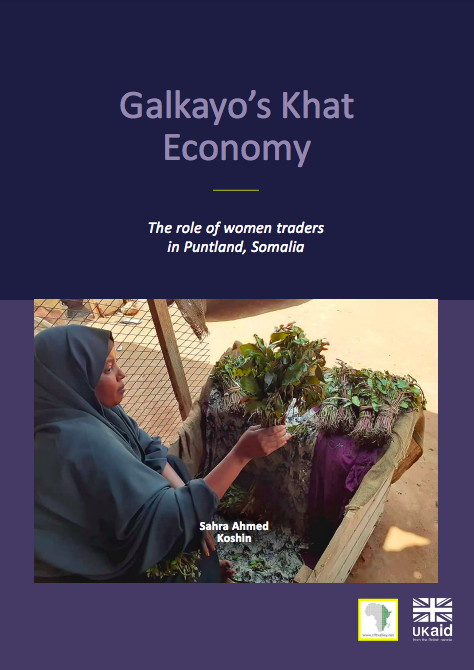
Following Somalia’s economic recovery from the civil conflicts of the 1990s and 2000s, the khat trade has become a prominent source of tax revenue, particularly in Galkayo, an important regional hub for commerce between southern/central Somalia and the Port…
The global Somali diaspora numbers two million people that live outside the Somali regions of the Horn of Africa. The strong links that diaspora populations maintain with the Somali regions—engaging multifariously in the spheres of development, politics, and economy—exert a…
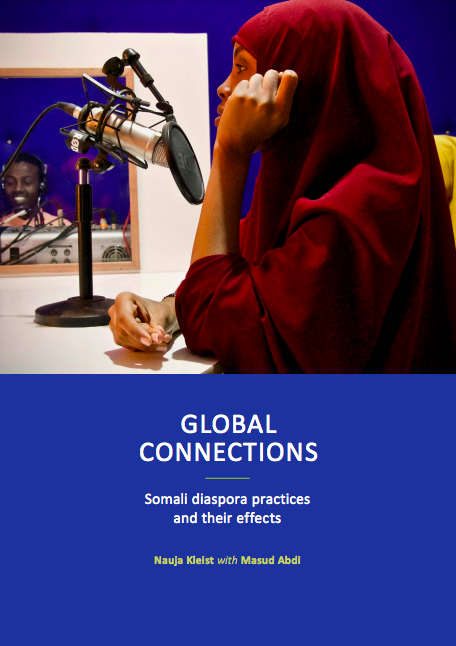
With an estimated two million people of Somali descent living outside Somalia—the ‘Somali diaspora’—an understanding of migration and transnational practices is crucial for grasping Somali society. Mobility and mobile livelihoods have been important aspects of Somali life for centuries….
This briefing paper–part of a larger report–was commissioned by Somalia Stability Fund (SSF) with the aim of conducting a comprehensive literature review on land conflict in Somalia. The report was motivated by two factors: first is the desire to…
Cross-border trade is crucial for ongoing state building in the Somali inhabited Horn of Africa. This is significantly enabled by revenue collection at border crossings, which forms a crucial part of states’ finances in this region. Cross-border trade is…
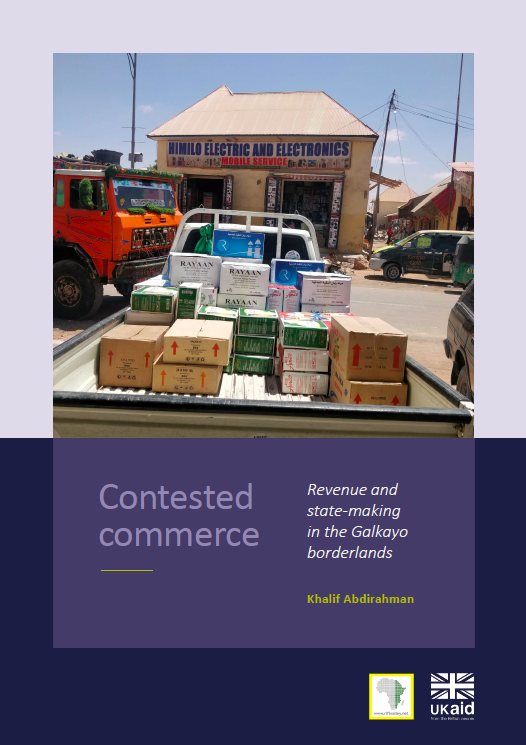
Situated between Somalia’s Federal Member States of Puntland and Galmudug, the city of Galkayo forms an administrative and social boundary within the broader Bosaso trade corridor, which encompasses Puntland, Galmudug and Hirshabelle. Located at the edge of Puntland but…
Lasanod is located on the border between the Republic of Somaliland and Somalia’s federal state of Puntland. Now under the administrative control of Somaliland, the city is contested— sometimes violently— between the two polities, which are both products of…
Since around 2015, the importance of the Gulf states, particularly Saudi Arabia, the United Arab Emirates (UAE) and Qatar, in the affairs of countries in the Horn of Africa has been growing. At the same time, Turkey, which made…
Recent Publications

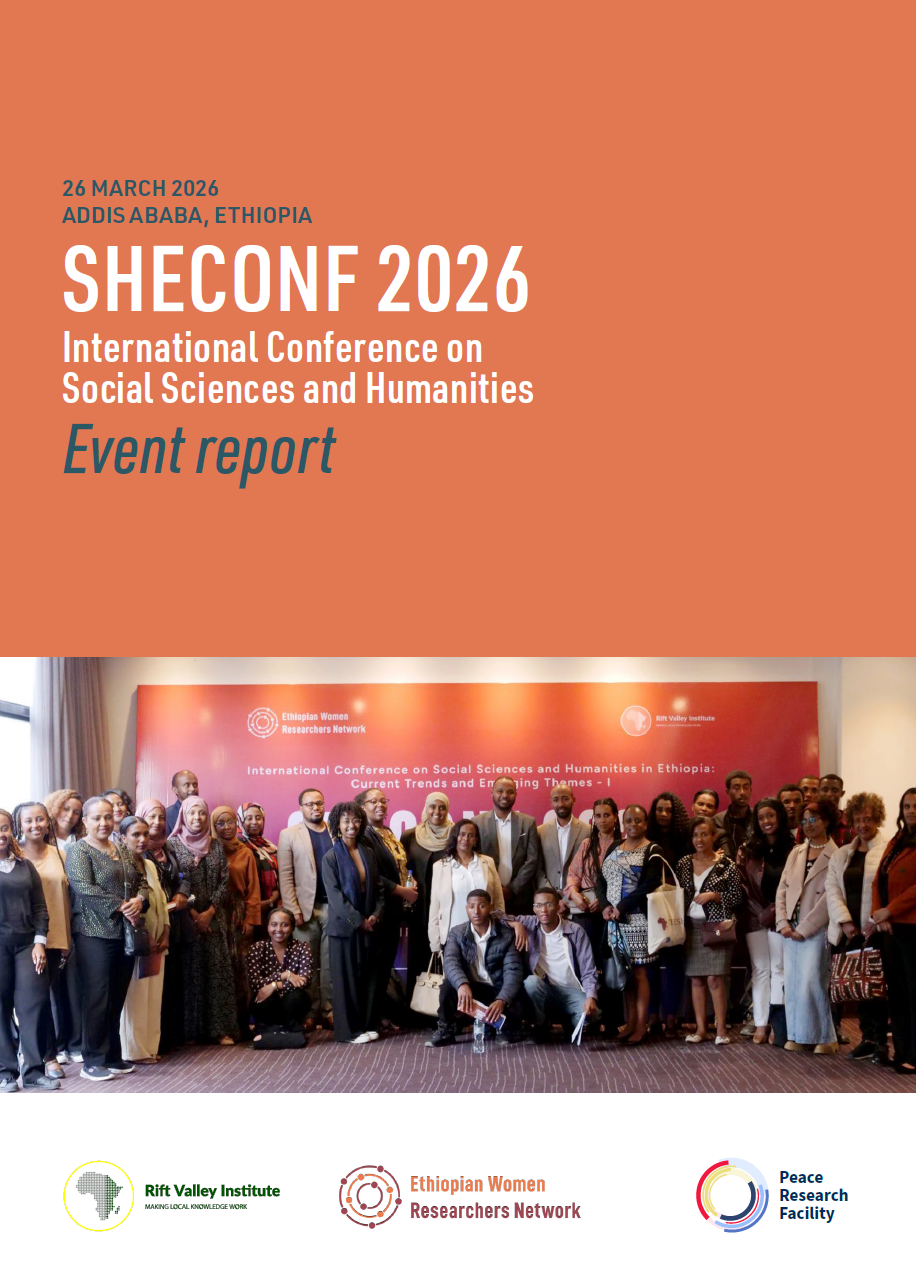
SHECONF 2026: International Conference on Social Sciences and Humanities
July 9, 2026
Event report On 26 March 2026, researchers, practitioners and academics gathered in Addis Ababa for SHECONF 2026, an International Conference on Social Sciences and Humanities in Ethiopia, the first of its kind convened by the Ethiopian Women Researchers Network (EWNET).
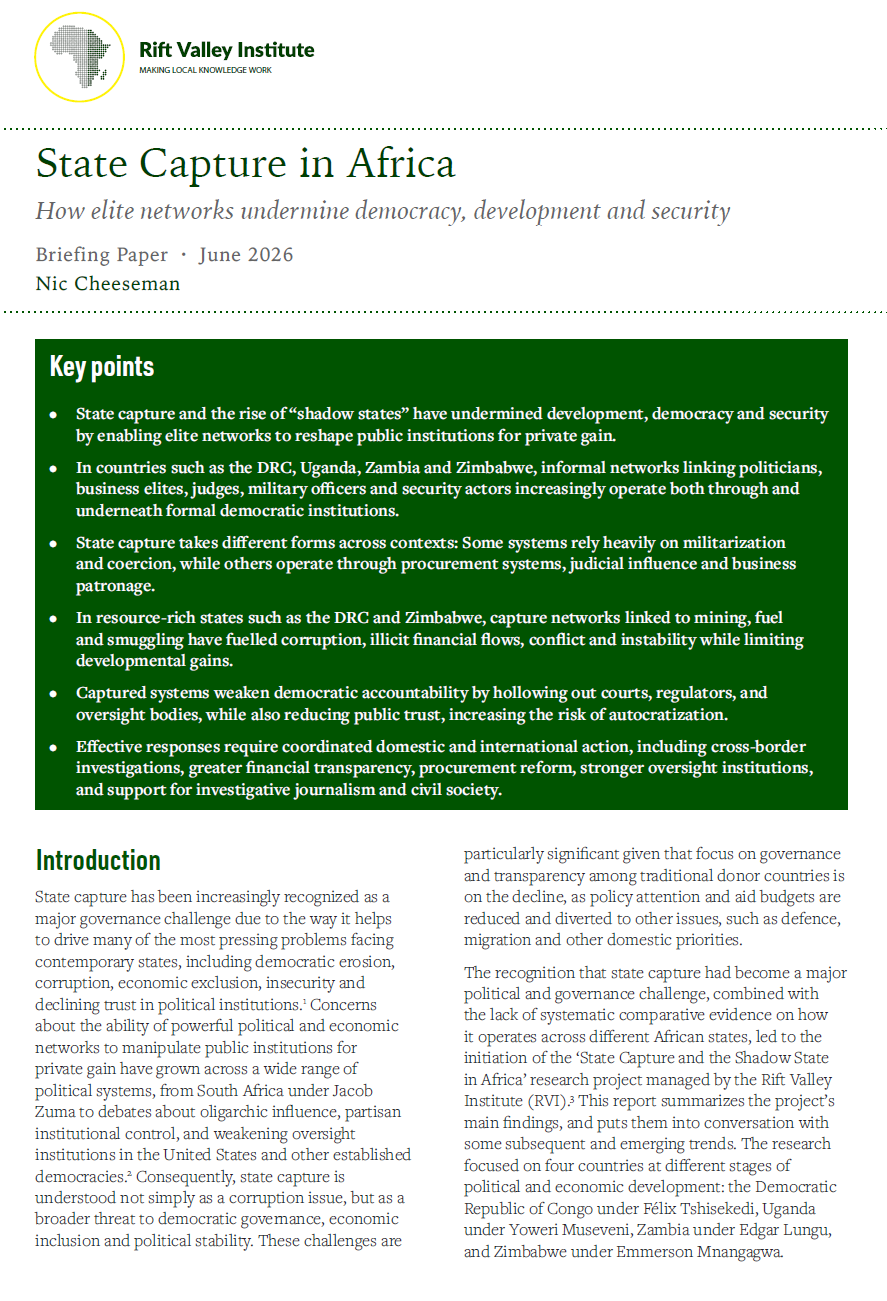
State Capture in Africa: How elite networks undermine democracy, development and security
June 24, 2026
Key points State capture has been increasingly recognized as a major governance challenge due to the way it helps to drive many of the most pressing problems facing contemporary states, including democratic erosion, corruption, economic exclusion, insecurity and declining trust

The New Geopolitics of Eastern Africa
June 17, 2026
On 20 May, the British Institute of Eastern Africa (BIEA), Chatham House, and the Rift Valley Institute (RVI) convened a group of experts to discuss the ‘The New Geopolitics of Eastern Africa’. The closed-door roundtable considered the ongoing transformation of