On 20 May, the British Institute of Eastern Africa (BIEA), Chatham House, and the Rift Valley Institute (RVI) convened a group of experts to discuss the ‘The New Geopolitics of Eastern Africa’. The closed-door roundtable considered the ongoing transformation…
RVI publishes books, research reports, research papers, briefings and meeting reports in a range of formats. Publications cover policy, research, arts, culture and local knowledge in the countries of eastern and central Africa. Research publications—books, reports and papers—are peer-reviewed. Some RVI publications are also available in French and/or Arabic.
The RVI is a signatory of the Budapest Open Access Initiative (2001); all publications are free for download in PDF format under Creative Commons licences. The views expressed in books and reports published by the RVI are those of the authors, not the Institute.
SEARCH
PUBLICATION TYPE
LANGUAGE
REGION
COUNTRY
The 2025 Year in Review provides an overview of the Rift Valley Institute’s work over the past year across eastern and central Africa. The report highlights RVI’s research and publication outputs, education and training activities, and public forums and…
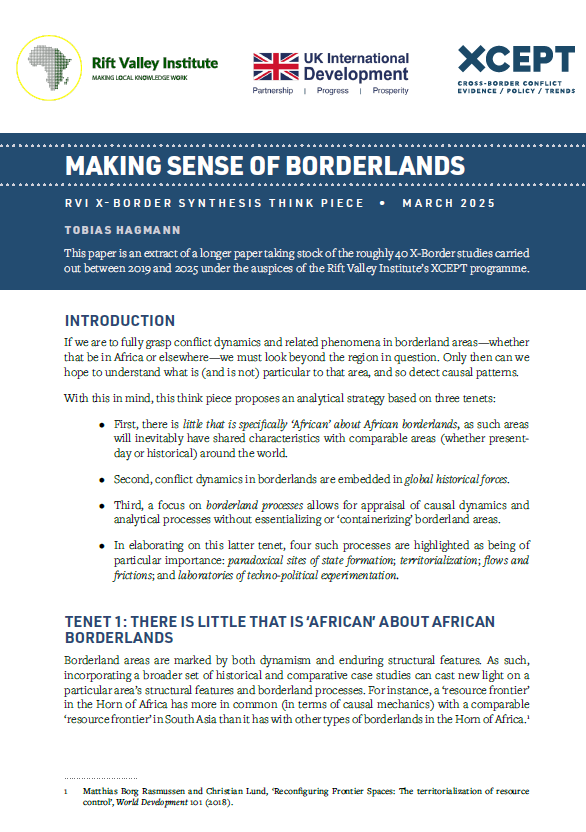
Do the ways in which policymakers and national governments view borderlands reflect how the communities living there experience them? Building on this, can a better understanding of the characteristics of borderlands help in promoting development, improving governance and making…
This think piece is an extract of a longer paper taking stock of the roughly 40 X-Border studies carried out between 2019 and 2025 under the auspices of the Rift Valley Institute’s XCEPT programme. If we are to fully…
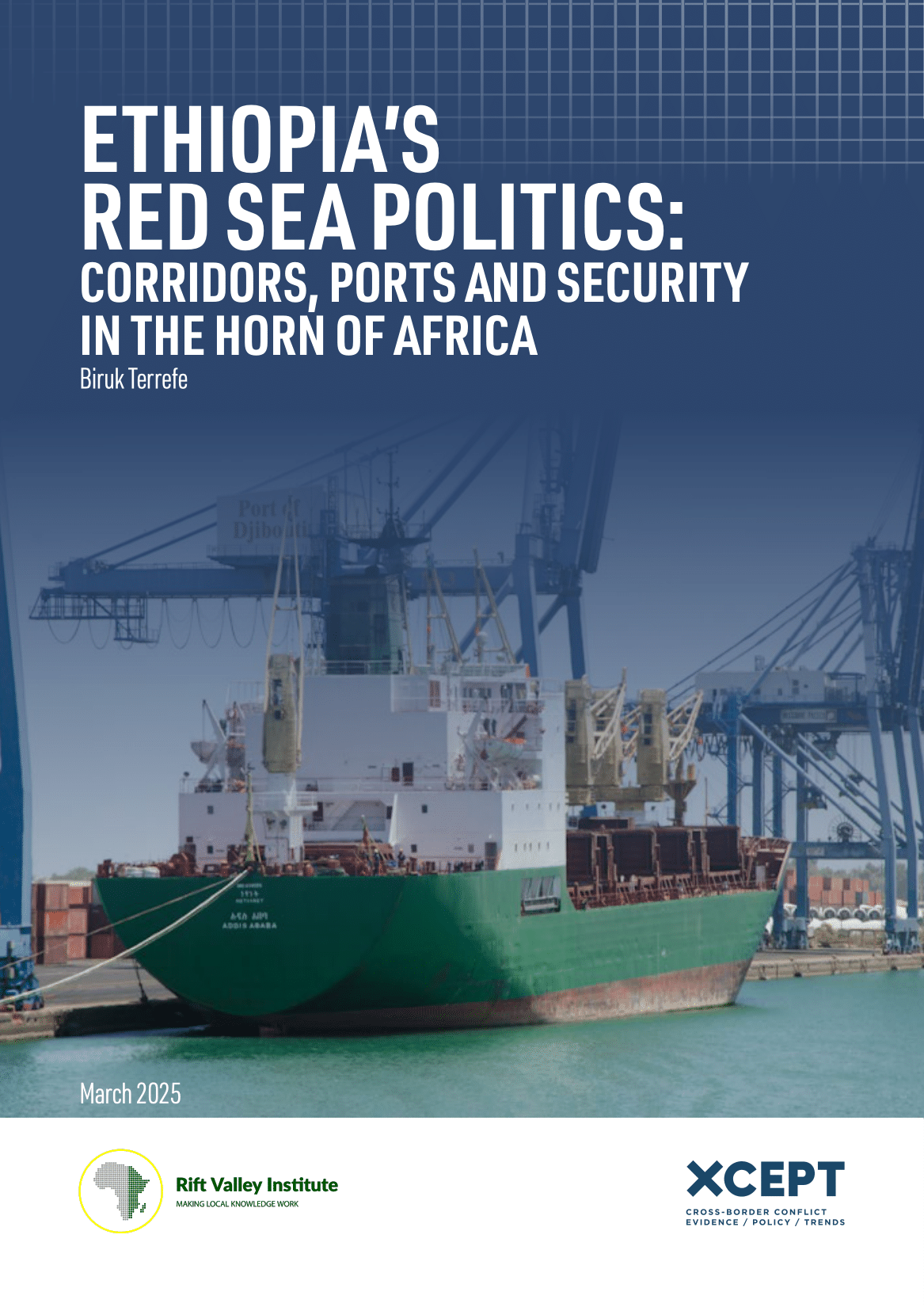
The Horn of Africa is a region marked by complex infrastructural interdependencies, where the decline and emergence of trade corridors continue to reshape the economic and political relations within and between states. This study draws on the Memorandum of…
This research paper builds on work the Rift Valley Institute (RVI) has conducted on the Sudan–Ethiopia borderland under the XCEPT programme since 2021. This culminated in the report ‘Resistance in the Peripheries: Fragile peace and civil war in Sudan…
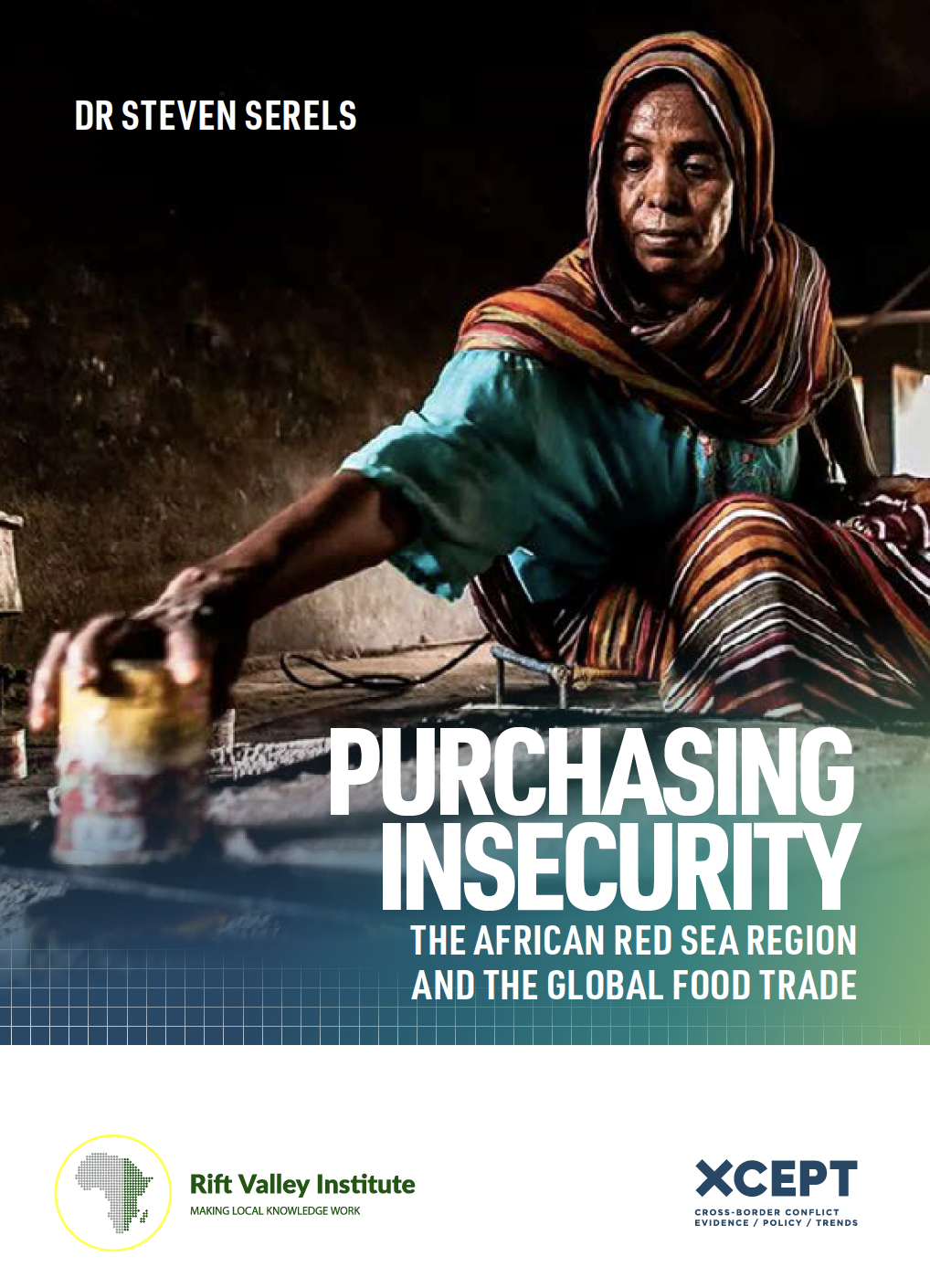
The African Red Sea Region does not produce enough food to feed its own population. Sudan, Eritrea, Ethiopia, Djibouti and Somaliland (Somalia) are each reliant on imports to make up for domestic production shortfalls. This presents unresolved challenges to…
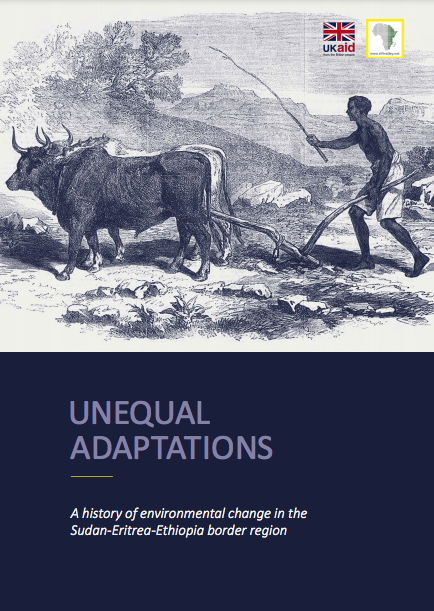
The Sudan-Eritrea-Ethiopia border region has long been a place of deep interconnection. Historically, collaboration across ethno-linguistic and religious divides allowed communities to develop life-sustaining complementary strategies for utilizing the region’s natural resources. These traditional patterns of human-environment interaction both…
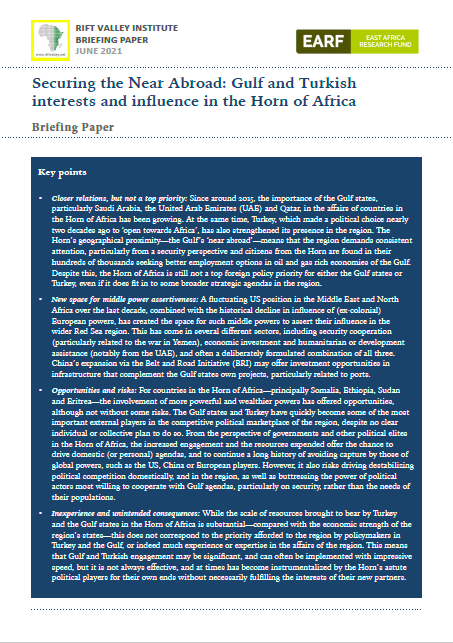
Since around 2015, the importance of the Gulf states, particularly Saudi Arabia, the United Arab Emirates (UAE) and Qatar, in the affairs of countries in the Horn of Africa has been growing. At the same time, Turkey, which made…
Since around 2015, the importance of the Gulf states, particularly Saudi Arabia, the United Arab Emirates (UAE) and Qatar, in the affairs of countries in the Horn of Africa has been growing. At the same time, Turkey, which…
Recent Publications

The Political Economy of Coffee in the Jimma–Ilu Aba Bora–Buno Bedele Belt, Oromia Region
October 5, 2026
The findings of this study reveal a number of critical insights about the political economy of coffee in the Jimma–Ilu Aba Bora–Buno Bedele coffee belt. The coffee economy is shaped by a small number of influential actors, including state institutions,

Beyond the Beans: The Political Economy of Coffee in Ethiopia
September 29, 2026
A synthesis of three case studies in the Sidama–Gedeo–Guji, Kaffa–Bench-Sheko–Sheka and Jimma–Buno Bedele–Ilu Aba Bora belts SUMMARY The Ethiopia Peace Research Facility This report was written for the Ethiopia Peace Research Facility as part of its Knowledge for Peace series

The Political Economy of Coffee in the Sidama–Gedeo–Guji Belt, Southern Ethiopia
September 4, 2026
This report is part of a wider research project on the political economy of coffee in Ethiopia in the context of the political transition since 2018. It focuses on the Sidama–Gedeo–Guji coffee belt in southern Ethiopia, aiming to understand the