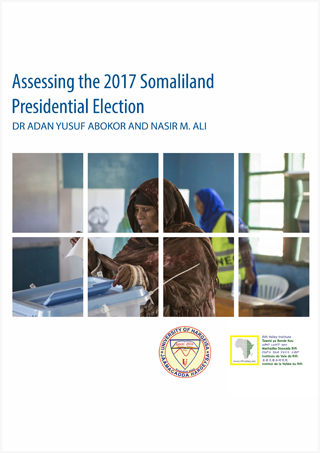
In May 2001, Somaliland’s citizens went to the polls to approve an interim constitution in a public referendum coordinated by the Government of Somaliland. The constitution called for multi-party politics and democratic elections. Since then, Somaliland has held a…
RVI publishes books, research reports, research papers, briefings and meeting reports in a range of formats. Publications cover policy, research, arts, culture and local knowledge in the countries of eastern and central Africa. Research publications—books, reports and papers—are peer-reviewed. Some RVI publications are also available in French and/or Arabic.
The RVI is a signatory of the Budapest Open Access Initiative (2001); all publications are free for download in PDF format under Creative Commons licences. The views expressed in books and reports published by the RVI are those of the authors, not the Institute.
SEARCH
PUBLICATION TYPE
LANGUAGE
REGION
COUNTRY
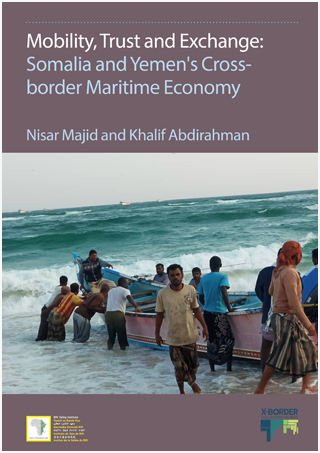
The legacy of Somali piracy, the threat of terrorists transiting between Yemen and Somalia, and the deepening conflict in Yemen, mean international actors tend to view the Gulf of Aden through a security lens. This report outlines the local…
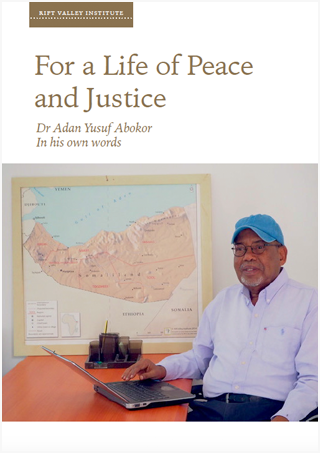
I applaud and respect Dr. Adan, my friend and colleague for twenty years, for his sense of justice and firm determination to contribute to peace and human rights in Somaliland. I especially admire Adan’s steadfast support for gender justice…
Key Points International investment in Somaliland’s strategically located Berbera port may turn it into a new logistical gateway to East Africa and boost economic development in the self-declared republic. Berbera port has played a key role in the formation…
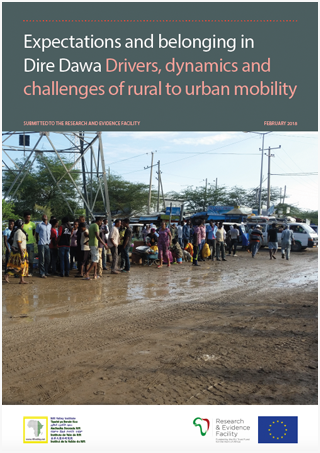
The Rift Valley Institute’s Rural to urban mobility project aims to better understand the dynamics of rural to urban migration and the ways in which this phenomenon impacts the social and infrastructural fabric of cities in East Africa. It is conducted…
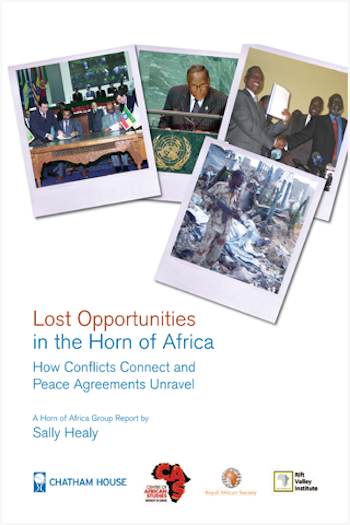
A comparative study of three regional peace agreements: the 2005 Comprehensive Peace Agreement in Sudan, Somalia’s Mbgathi peace process, from 2002 – 2004, and the 2000 Ethiopia-Eritrea Algiers Agreement. It examines the background and the historical context of the…
The African Union Mission in Somalia (AMISOM) is in a period of transition. After a year of military successes it needs a new mandate to support the new Federal Government of Somalia, which has identified provision of security across…
Key points The concept of a hybrid political order is useful in understanding post-conflict state formation, in the Horn of Africa and elsewhere. For policy-makers supporting the re-establishment of government institutions in Somalia, the example of Somaliland is instructive….
Key points The Kenyan government’s hardening stance towards the return of Somali refugees and its recent directive to send all urban refugees to camps are a reaction to changing conditions in Kenya, in particular a series of security incidents…
Key points Meles was instrumental in the political and developmental changes Ethiopia has undergone in the last two decades. The ruling EPRDF was boosted by the out-pouring of national grief on Meles’ death and Hailemariam Desalegn succeeded him as…
Recent Publications

Commodification and Conflict in the Horn of Africa Borderlands
April 1, 2026
This report synthesizes findings from the Rift Valley Institute’s X-Border Local Research Network (2019–2025). In the surveyed studies, 25 leading local and international area specialists conducted extensive qualitative fieldwork across borderlands in South Sudan, Sudan, Ethiopia, Kenya and the Somali

Peace and Instability: Tigray since the Pretoria Agreement
March 26, 2026
CONFLICT TRENDS ANALYSIS / MARCH 2026 Summary THE ETHIOPIA PEACE RESEARCH FACILITY This conflict trends analysis was produced by the Ethiopia Peace Research Facility (PRF). The PRF is an independent facility combining timely analysis on peace and conflict from Ethiopian

Political Economy of Cash and Markets in Sudan
February 27, 2026
The research provides a snapshot of the war in Sudan in the period from February to April 2025. However, the war is dynamic, with political alliances and territorial control changing. The April 2023 conflict between the Sudan Armed Forces (SAF)