Online and social media connectivity has increased rapidly across cities in the Horn of Africa, particularly amongst younger generations. Taking the post-conflict city of Hargeisa—capital of the de facto independent Republic of Somaliland—as its starting point, this report focuses…
RVI publishes books, research reports, research papers, briefings and meeting reports in a range of formats. Publications cover policy, research, arts, culture and local knowledge in the countries of eastern and central Africa. Research publications—books, reports and papers—are peer-reviewed. Some RVI publications are also available in French and/or Arabic.
The RVI is a signatory of the Budapest Open Access Initiative (2001); all publications are free for download in PDF format under Creative Commons licences. The views expressed in books and reports published by the RVI are those of the authors, not the Institute.
SEARCH
PUBLICATION TYPE
LANGUAGE
REGION
COUNTRY
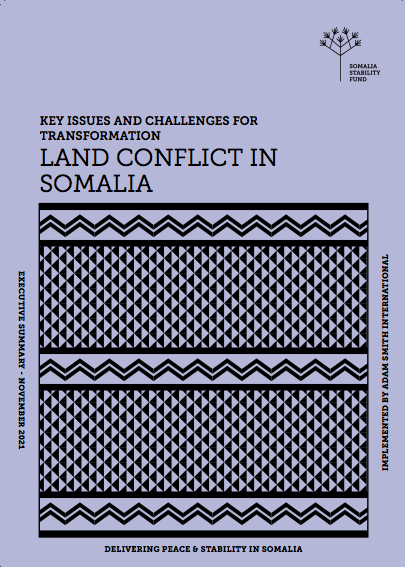
This briefing paper–part of a larger report–was commissioned by Somalia Stability Fund (SSF) with the aim of conducting a comprehensive literature review on land conflict in Somalia. The report was motivated by two factors: first is the desire to…
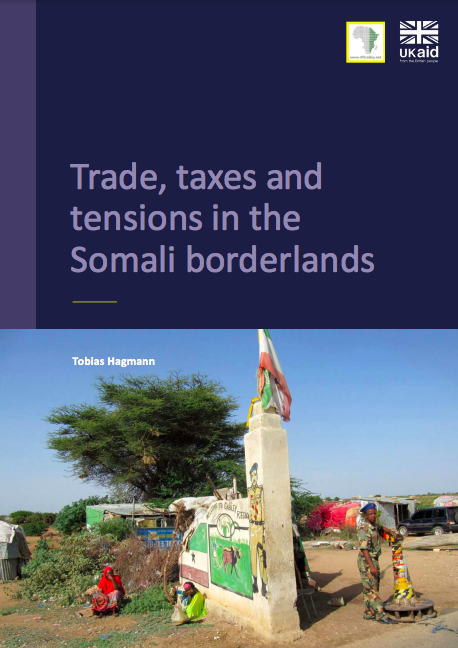
Cross-border trade is crucial for ongoing state building in the Somali inhabited Horn of Africa. This is significantly enabled by revenue collection at border crossings, which forms a crucial part of states’ finances in this region. Cross-border trade is…
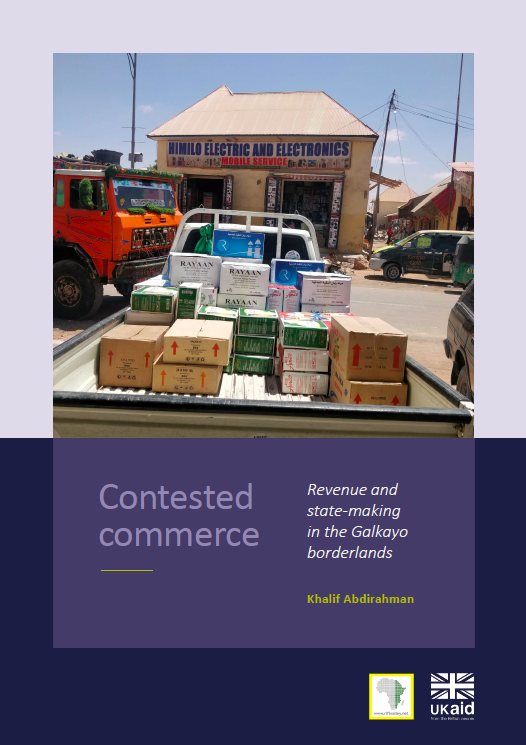
Situated between Somalia’s Federal Member States of Puntland and Galmudug, the city of Galkayo forms an administrative and social boundary within the broader Bosaso trade corridor, which encompasses Puntland, Galmudug and Hirshabelle. Located at the edge of Puntland but…
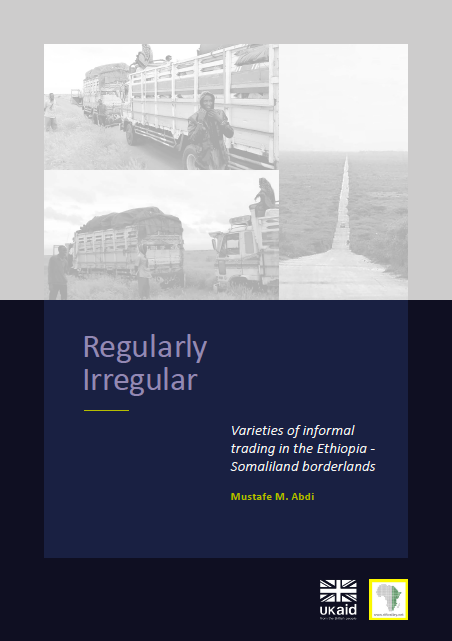
In Somaliland and Ethiopia’s Somali Regional State, small-scale informal trading far exceeds formal trade. However, most recent writing on trade in this region has disproportionately focused on formal trade thus neglecting a key area of economic activity. In contrast,…
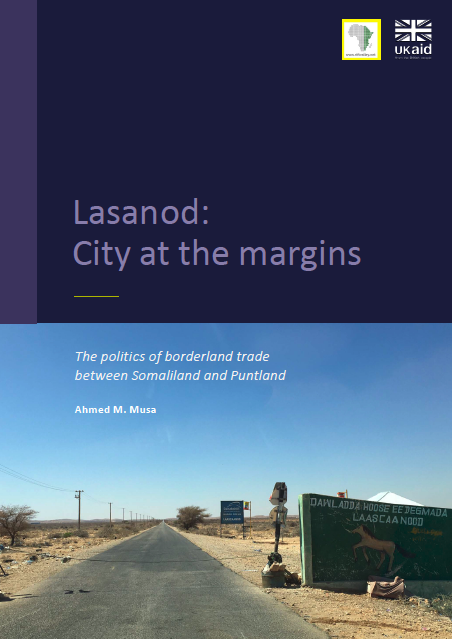
Lasanod is located on the border between the Republic of Somaliland and Somalia’s federal state of Puntland. Now under the administrative control of Somaliland, the city is contested— sometimes violently— between the two polities, which are both products of…
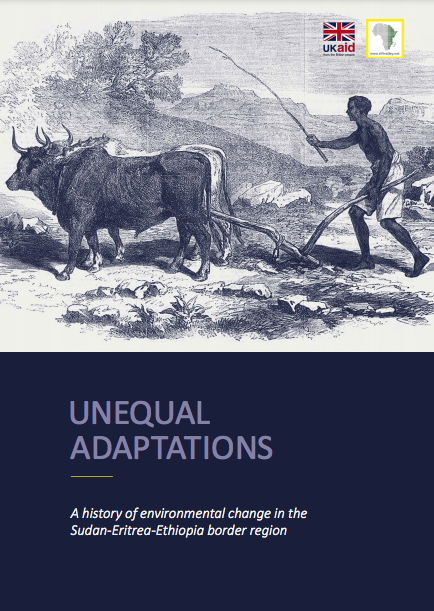
The Sudan-Eritrea-Ethiopia border region has long been a place of deep interconnection. Historically, collaboration across ethno-linguistic and religious divides allowed communities to develop life-sustaining complementary strategies for utilizing the region’s natural resources. These traditional patterns of human-environment interaction both…
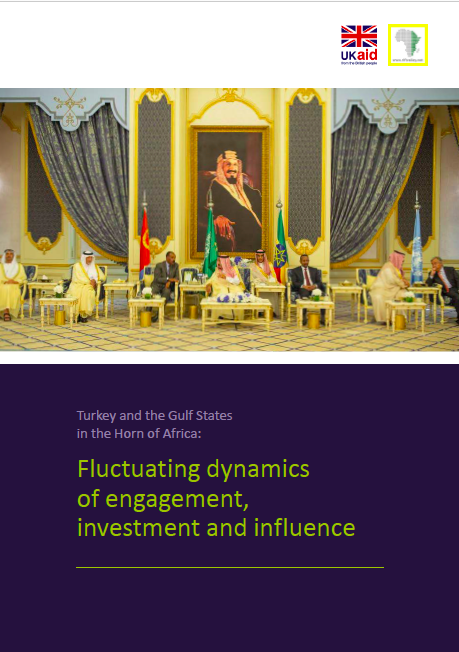
Since around 2015, the importance of the Gulf states, particularly Saudi Arabia, the United Arab Emirates (UAE) and Qatar, in the affairs of countries in the Horn of Africa has been growing. At the same time, Turkey, which made…
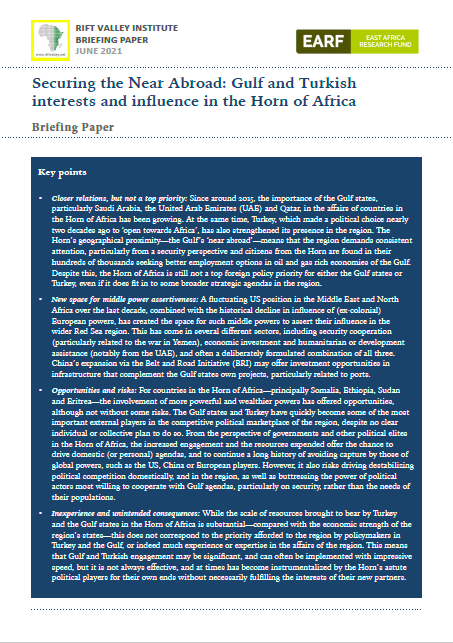
Since around 2015, the importance of the Gulf states, particularly Saudi Arabia, the United Arab Emirates (UAE) and Qatar, in the affairs of countries in the Horn of Africa has been growing. At the same time, Turkey, which…
In the Horn of Africa there is a dynamic interplay between land and sea that has shaped political, economic and social relationships. Historical and contemporary instances of piracy in the Western Indian Ocean, at different times, precipitated a securitization of…
Recent Publications

Writing Ethiopia into the World, Writing the World from Ethiopia
October 7, 2026
The Ethiopian Women Researchers Network (EWNET) hosted an online scholarly webinar on Friday, 30 January 2026, titled ‘Writing Ethiopia into the World and Writing the World from Ethiopia’. The webinar examined how Ethiopia has been represented within global knowledge production
The Political Economy of Coffee in the Kaffa–Bench-Sheko–Sheka Belt, Southwest Ethiopia Region
October 6, 2026
This study provides a critical political economy analysis of the coffee sector in the Kaffa–Bench-Sheko–Sheka belt in Southwest Ethiopia Peoples’ Regional State, the genetic and cultural heartland of Arabica coffee (Coffea arabica). Based on 47 key respondent interviews, the study
The Political Economy of Coffee in the Jimma–Ilu Aba Bora–Buno Bedele Belt, Oromia Region
October 5, 2026
The findings of this study reveal a number of critical insights about the political economy of coffee in the Jimma–Ilu Aba Bora–Buno Bedele coffee belt. The coffee economy is shaped by a small number of influential actors, including state institutions,