SUMMARY • This report studies the role of religion in recent inter-communal conflicts in Ethiopia outside of Addis Ababa. While not entirely neglecting disputes and perceptions in the capital, it seeks to paint a fuller and more versatile picture…
RVI publishes books, research reports, research papers, briefings and meeting reports in a range of formats. Publications cover policy, research, arts, culture and local knowledge in the countries of eastern and central Africa. Research publications—books, reports and papers—are peer-reviewed. Some RVI publications are also available in French and/or Arabic.
The RVI is a signatory of the Budapest Open Access Initiative (2001); all publications are free for download in PDF format under Creative Commons licences. The views expressed in books and reports published by the RVI are those of the authors, not the Institute.
SEARCH
PUBLICATION TYPE
LANGUAGE
REGION
COUNTRY
SUMMARY • Since the Prosperity Party (PP) came to power in Ethiopia in 2018, expectations have grown that its government will revitalize Ethiopia’s sugar industry through the privatization of eight sugar factories, including plantations of several thousand hectares in…
- Download
Ethiopia’s transition under Prime Minister Abiy Ahmed is the latest attempt to build a stable political settlement – an agreement over how power will be distributed and wielded – between key actors. In its efforts to do this, Abiy’s…
SUMMARY • Ethiopia’s Afar region, especially around Lake Afdera, is the country’s main source of salt, accounting for 80 per cent of the national market. The salt sector in the region has been dominated by non-Afar investors from neighbouring…
SUMMARY • Ethiopia’s Somali Regional State (SRS) is rich in natural resources, including oil and natural gas reserves in the Ogaden Basin which covers an area of approximately 350,000 sq km comprising much of the SRS. If managed properly…
SUMMARY • In June 2018 and July 2019 violent clashes erupted in Hawassa, an important commercial hub in southern Ethiopian and the capital of the Southern Nations, Nationalities and Peoples’ Region. While the first attack appeared relatively spontaneous, the…
SUMMARY • Dire Dawa, Ethiopia’s second largest city, is a multi-ethnic and multi-religious economic hub in the country’s eastern region, sitting on the contested boundary between the Oromia and Somali regions. Despite an overarching sense that the city’s historical…
SUMMARY • Despite political change at the national level, resource extraction in the two Guji zones (Guji and West Guji) of the Oromia Region continues to exclude local communities. This is particularly so in the case of MIDROC –…
INTRODUCTION Social science knowledge production in Ethiopia, as elsewhere in Africa, has Eurocentric roots. This is because Ethiopian Studies was born outside of Ethiopia, with the first generation of scholars consisting mainly of academics from Western countries or Ethiopians…
HISTORY, POLITICS AND INTER-RELIGIOUS RELATIONS INTRODUCTION Religious affiliation is almost universal in Ethiopia, which means that religions amass significant political capital but may also act as potential catalysts for conflict. After five decades of ostensibly secular politics—first under a…
Recent Publications

SHECONF 2026: International Conference on Social Sciences and Humanities
July 9, 2026
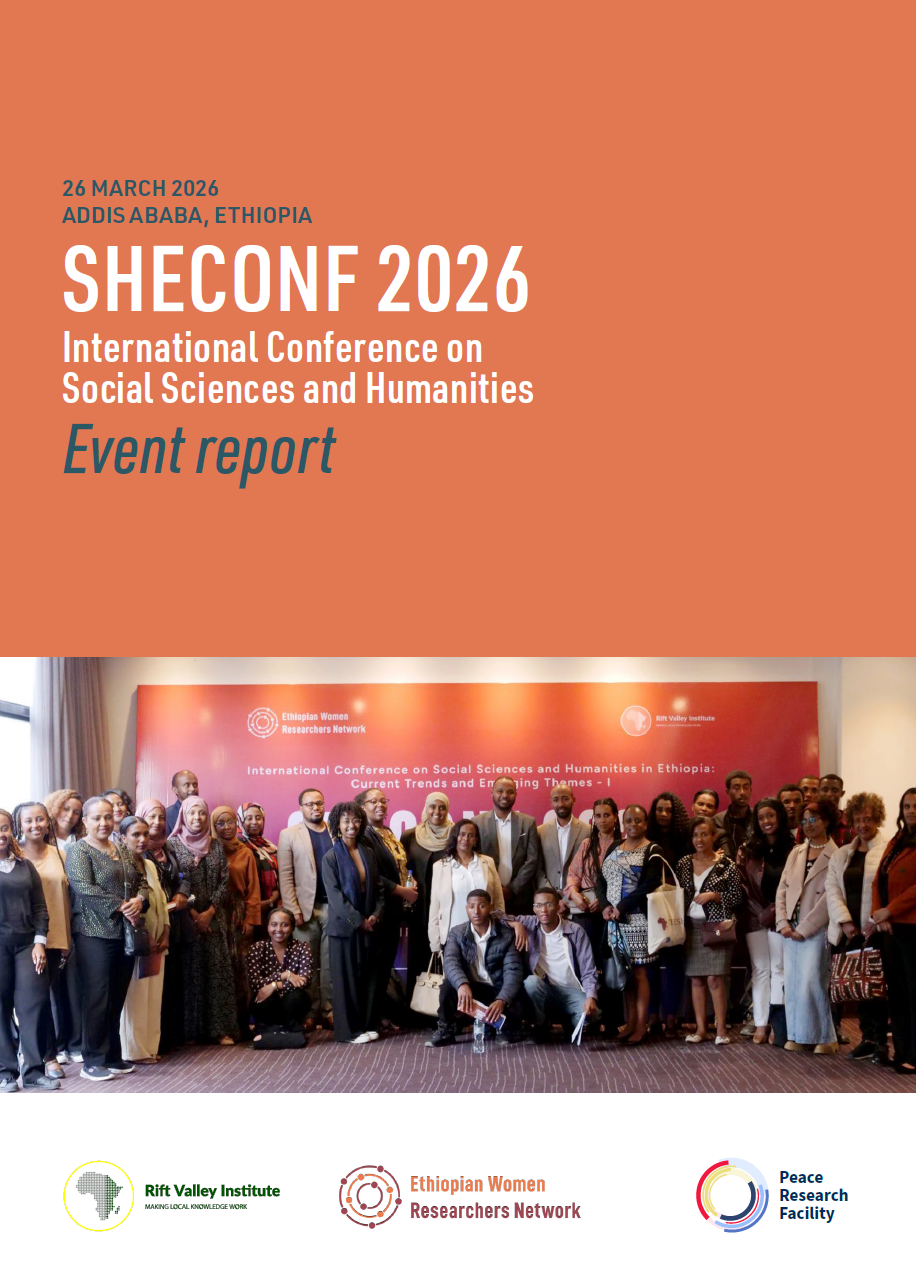
Event report On 26 March 2026, researchers, practitioners and academics gathered in Addis Ababa for SHECONF 2026, an International Conference on Social Sciences and Humanities in Ethiopia, the first of its kind convened by the Ethiopian Women Researchers Network (EWNET).
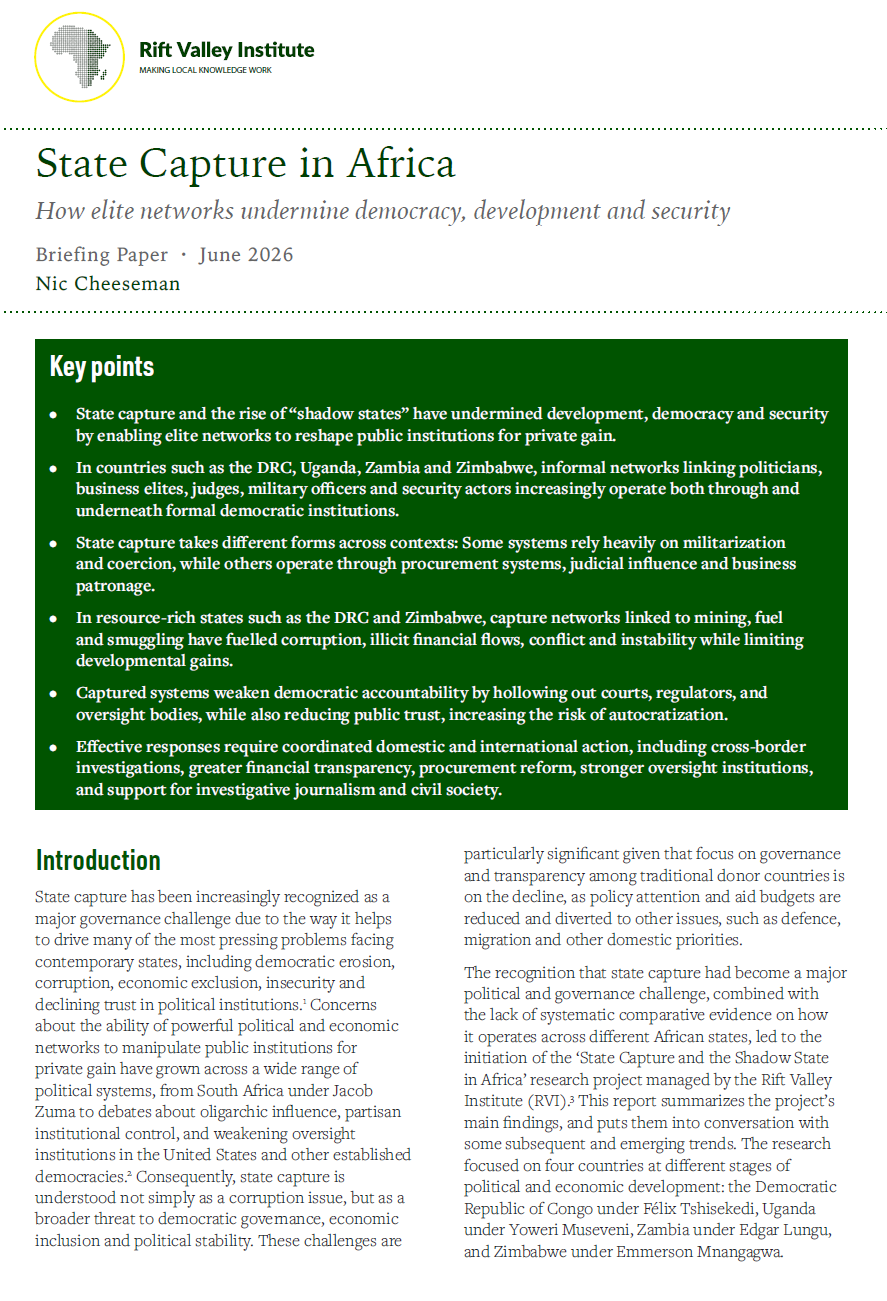
State Capture in Africa: How elite networks undermine democracy, development and security
June 24, 2026
Key points State capture has been increasingly recognized as a major governance challenge due to the way it helps to drive many of the most pressing problems facing contemporary states, including democratic erosion, corruption, economic exclusion, insecurity and declining trust

The New Geopolitics of Eastern Africa
June 17, 2026
On 20 May, the British Institute of Eastern Africa (BIEA), Chatham House, and the Rift Valley Institute (RVI) convened a group of experts to discuss the ‘The New Geopolitics of Eastern Africa’. The closed-door roundtable considered the ongoing transformation of