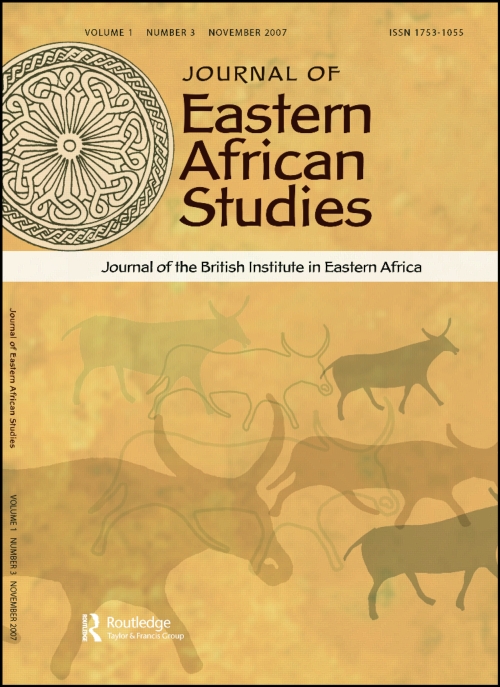
Research from a Rift Valley Institute project features in the latest issue of the Journal of Eastern African Studies—Volume 20, Issue 2 (May 2026)—as part of a special collection on ‘Religion and Politics in Post-EPRDF Ethiopia’.
This collection—guest edited by Jörg Haustein and Terje Østebø—sets out with the premise that a national or Addis Ababa-centric frame is not sufficient to understand the role of religion in Ethiopian community formation, conflict, and peace. In addition to offering a country-wide overview on Ethiopia’s religions under PM Abiy Ahmed since 2018, it seeks a localized, quotidian perspective in studying the multi-layered dimensions of religion and conflict in three Ethiopian towns that have seen inter-communal clashes in recent years: Gondar, Mota and Shashemene. These urban spaces, located in different regions of the country, are compact mirrors of Ethiopia’s religious, ethnic and socio-political diversity, often in contrast with their surrounding countryside.
Drawing on original fieldwork—including research by the authors on ‘Religious polarization in Ethiopia’ through RVI’s Peace Research Facility (PRF)—the collection provides a deep understanding of the role of religion in urban conflict in Ethiopia by recording local conflict narratives, studying the interplay of religion, ethnicity and politics in conflict analysis, and elucidating the role of religious leaders and institutions in conflict genesis and resolution.
Yihenew Alemu Tesfaye and Fasika Gedif conducted the ethnographic fieldwork in Gondar. They expressed enthusiasm about sharing this work through a range of outlets, including RVI publications and reputable journals such as the Journal of Eastern African Studies. Yihenew noted that ‘publishing in these forums helps bring locally grounded understandings of conflict to international audiences and academic communities. It also creates space for more informed discussion among Ethiopians, including evidence-based engagement on social media, and may help inspire locally rooted solutions to these challenges.’
Since 2018, Ethiopia has seen severe instances of communal clashes across the country. While relatively contained and dwarfed by the Tigray War and ongoing insurgencies, they are important indicators for the post-2018 weakening of the central state. The local erosion of civil conviviality, policing and post-conflict adjudication that was evident in all of these conflict sites has added to the wide-spread perception of a country in violent decline, and in many cases amplified religious and ethnic fault lines on the national level. Many of the clashes even predated the onset of the Tigray War and thus were early signals of the limits of Abiy’s rhetoric and governance. The prominent role of religion in many of these conflicts effectively counteracted Abiy’s invocations of religious unity and divine prosperity and challenges the contemporary tendency of understanding conflict in Ethiopia primarily in ethnic terms.
Professor Haustein, who was the lead researcher on the PRF’s religious polarization project, emphasized the importance of international collaboration in drawing the world’s attention to Ethiopia’s current challenges. ‘I am particularly pleased,’ he added, ‘that this special issue has allowed us to translate our findings from the policy world to wider scholarly debates. This will help sustain attention to the pioneering research of our Ethiopian collaborators by connecting it with current scholarship of religion and conflict in Africa and beyond.’
Brook Abdu, the research manager for the PRF, noted that ‘the research project on religious contestations in Ethiopia was a landmark contribution to the study of conflicts and religion in the country. These publications in JEAS are a testament to the quality and the high level of scholarly as well as policy relevance of the research—underscoring RVI’s primary aim of making local knowledge work.’
Read the full collection:
Introduction: religion and politics in post-EPRDF Ethiopia
Jörg Haustein, Terje Østebø, Abduletif Kedir Idris & Diego Maria Malara
Ownership, nativism, and conflict: the case of the 2020 violence in Shashemene
Terje Østebø & Yihenew Alemu Tesfaye
Weaponising suspicion: allegations of ‘extremism’ as driver of religious conflict in Mota
Jörg Haustein, Yihenew Alemu Tesfaye & Fasika Gedif
Reframing religious conflict in Gondar: land, public visibility, and the politics of difference
Yihenew Alemu Tesfaye, Fasika Gedif & Jörg Haustein
The Ethiopia Peace Research Facility
‘Religious polarization in Ethiopia’ was a key thematic focus for the PRF’s Knowledge for Peace (K4P) research project between 2022 and 2024. The Peace Research Facility is an independent facility combining timely analysis on peace and conflict from Ethiopian experts with support for conflict sensitive programming in the country. It is managed by the Rift Valley Institute and funded by the UK government.