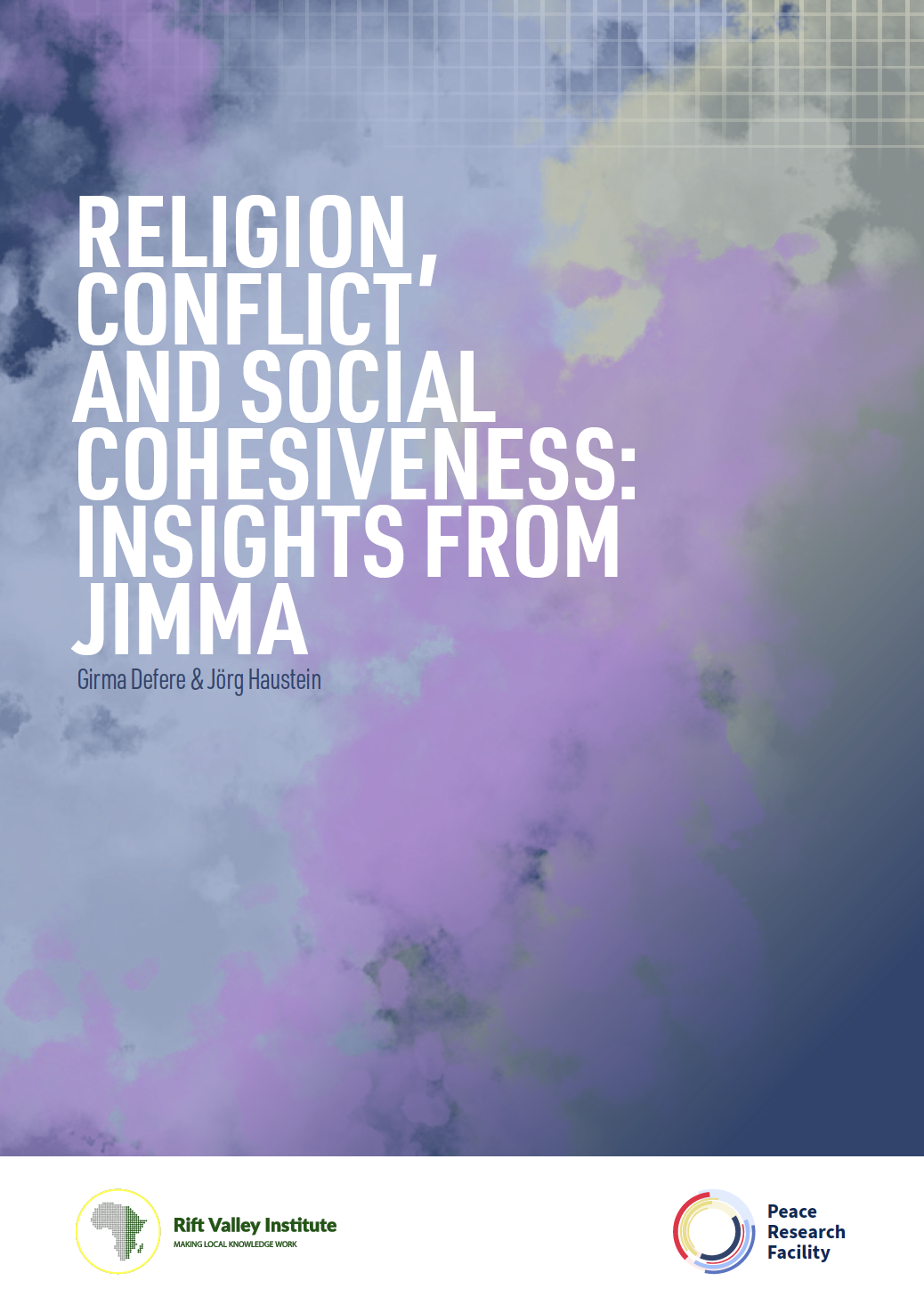
SUMMARY • Despite its predominantly Muslim surrounding area, Jimma is one of the most heterogeneous cities in Ethiopia’s Oromia region. Unlike other Ethiopian cities and towns, Jimma has not seen any major inter-religious or -ethnic clashes since the fall…
RVI publishes books, research reports, research papers, briefings and meeting reports in a range of formats. Publications cover policy, research, arts, culture and local knowledge in the countries of eastern and central Africa. Research publications—books, reports and papers—are peer-reviewed. Some RVI publications are also available in French and/or Arabic.
The RVI is a signatory of the Budapest Open Access Initiative (2001); all publications are free for download in PDF format under Creative Commons licences. The views expressed in books and reports published by the RVI are those of the authors, not the Institute.
SEARCH
PUBLICATION TYPE
LANGUAGE
REGION
COUNTRY
SUMMARY • In June 2018 and July 2019 violent clashes erupted in Hawassa, an important commercial hub in southern Ethiopian and the capital of the Southern Nations, Nationalities and Peoples’ Region. While the first attack appeared relatively spontaneous, the…
SUMMARY • Dire Dawa, Ethiopia’s second largest city, is a multi-ethnic and multi-religious economic hub in the country’s eastern region, sitting on the contested boundary between the Oromia and Somali regions. Despite an overarching sense that the city’s historical…
HISTORY, POLITICS AND INTER-RELIGIOUS RELATIONS INTRODUCTION Religious affiliation is almost universal in Ethiopia, which means that religions amass significant political capital but may also act as potential catalysts for conflict. After five decades of ostensibly secular politics—first under a…
This briefing was produced by the Ethiopia Peace Research Facility (PRF). The PRF is an independent facility combining timely analysis on peace and conflict from Ethiopian experts with support for conflict sensitive programming in the country. It is managed…
This report examines the complex and shifting situation of the Ethiopian Orthodox Tewahedo Church (EOTC) in post-2018 Ethiopia, highlighting its struggle to maintain influence amid political, social and religious changes. In addition to examining both the current EOTC relationship…
Studying urban contestations in Ethiopia’s secondary cities can help us understand how the urban centres outside of Addis Ababa are evolving during an ongoing period of significant socio-economic and political change. Ethiopia’s urban centres are the location of ongoing…
By Terje Østebø SUMMARY In the wake of the Ethiopian People’s Revolutionary Democratic Front (EPRDF) gaining power in 1991, a religious resurgence driven by various Islamic reform movements produced a more active, visible Muslim community. Over time, the government…
ማጠቃለያ Find the English version of this report here….
SUMMARY • This report studies the role of religion in recent inter-communal conflicts in Ethiopia outside of Addis Ababa. While not entirely neglecting disputes and perceptions in the capital, it seeks to paint a fuller and more versatile picture…
Recent Publications

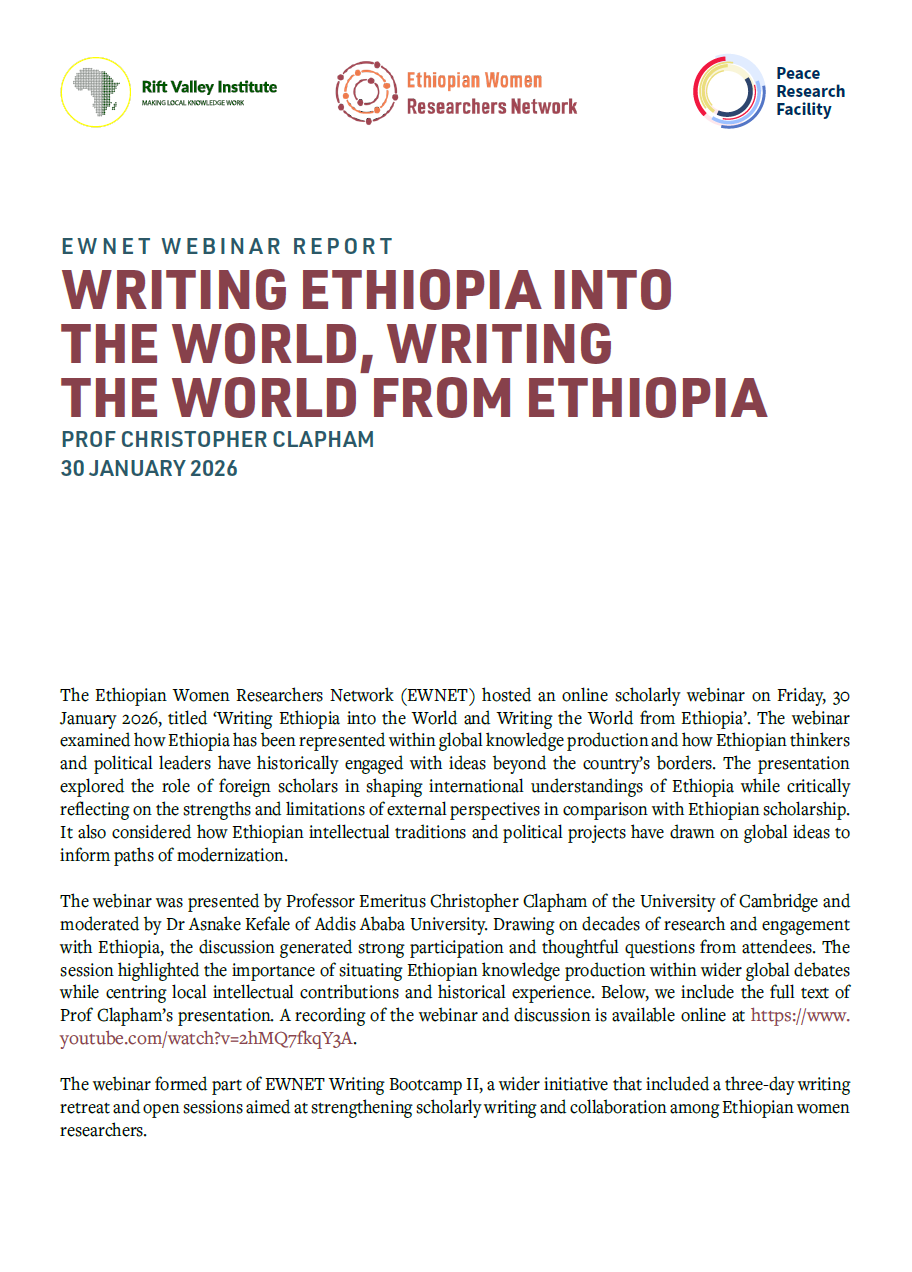
Writing Ethiopia into the World, Writing the World from Ethiopia
October 7, 2026
The Ethiopian Women Researchers Network (EWNET) hosted an online scholarly webinar on Friday, 30 January 2026, titled ‘Writing Ethiopia into the World and Writing the World from Ethiopia’. The webinar examined how Ethiopia has been represented within global knowledge production
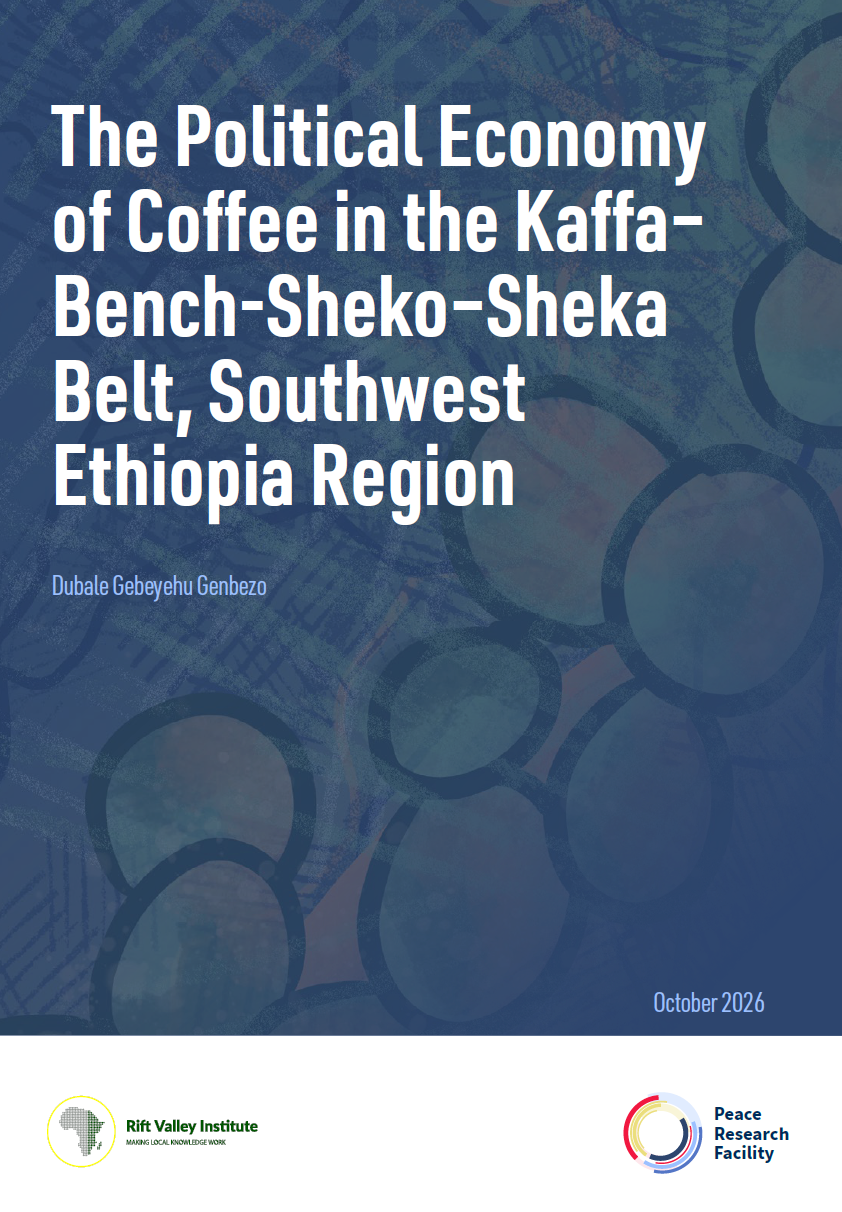
The Political Economy of Coffee in the Kaffa–Bench-Sheko–Sheka Belt, Southwest Ethiopia Region
October 6, 2026
This study provides a critical political economy analysis of the coffee sector in the Kaffa–Bench-Sheko–Sheka belt in Southwest Ethiopia Peoples’ Regional State, the genetic and cultural heartland of Arabica coffee (Coffea arabica). Based on 47 key respondent interviews, the study
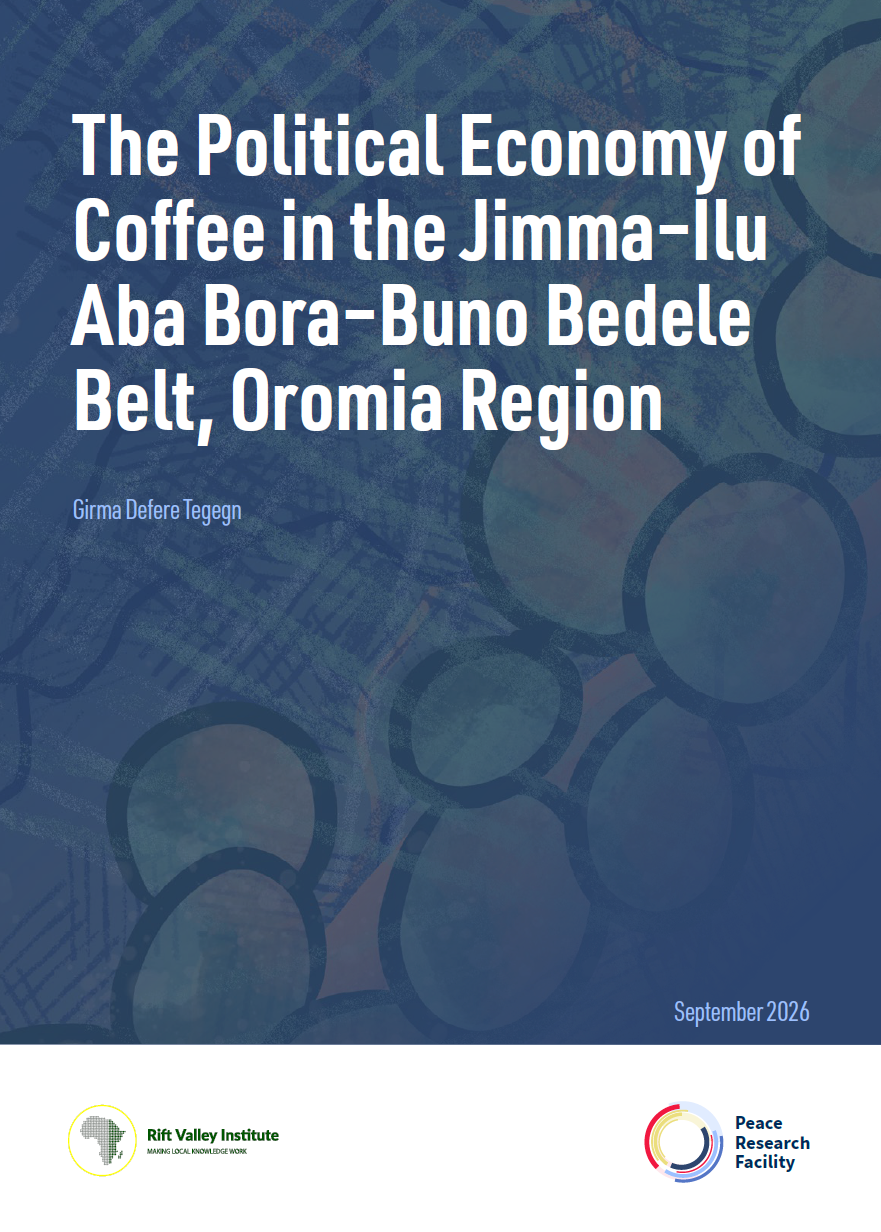
The Political Economy of Coffee in the Jimma–Ilu Aba Bora–Buno Bedele Belt, Oromia Region
October 5, 2026
The findings of this study reveal a number of critical insights about the political economy of coffee in the Jimma–Ilu Aba Bora–Buno Bedele coffee belt. The coffee economy is shaped by a small number of influential actors, including state institutions,