
Eastleigh and Beyond
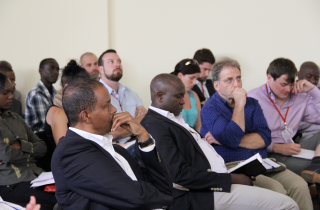
Key points Nairobi’s Eastleigh neighbourhood hosts one of the largest ethnic Somali communities outside Somalia—composed of Kenyan Somalis as well as Somali nationals whose numbers have swelled since the collapse of their state. Eastleigh has become an important centre of Somali diaspora life and a hub for a trust-based trading community that operates across East Africa […]
Continuities and Change in Somalia
The Nairobi Forum and the British Institute in Eastern Africa co-hosted the launch of a special Somalia edition of the Journal of Eastern African Studies on 19 April. The meeting, entitled ‘Continuities and change: Social, political and economic dynamics in Somalia since 1991’, examined the strengths and weaknesses of hybrid political structures, the roles of local authorities, […]
Pastoralism and Development in Africa
On 29 April 2013, the Hon. Mohamed Elmi (MP, Tarbaj) presented a paper at thce Nairobi Forum on Lessons from the Ministry of Northern Kenya, reflecting on the work of his former ministry in supporting pastoralism and development in Kenya’s arid and semi arid lands. The former minister was one of several speakers at a […]
Nuruddin Farah remembers Chinua Achebe

The life of the Nigerian writer Chinua Achebe (1930-2013) was celebrated on 6 May 2014 at Bard College, New York, where Achebe taught for many years. There were spoken tributes from Nigerian author and art historian Teju Cole, from historian Myra Armstead, and from anthropologists Yuka Suzuki and John Ryle. The Somali writer Nuruddin Farah […]
Silence is a Woman

Despite an increasing global commitment to the principle of equality, women continue to struggle for parity in political, economic and social spheres. This is most apparent in formal political office where the underrepresentation of women remains one of the most visible forms of gender inequality in the world today. In 2010, Kenya adopted a new […]
Kenya and South Sudan: What next for the peace process?
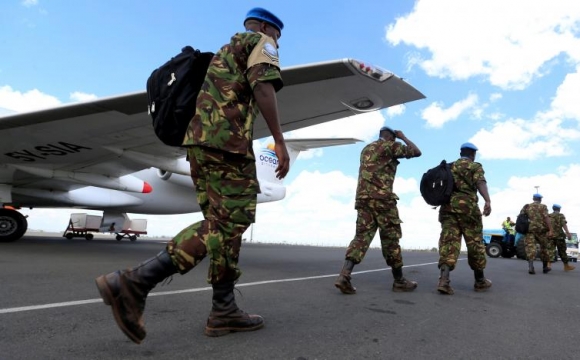
On 15 December 2013, just two-and-a-half years after South Sudan gained independence, renewed fighting broke out in the country that resulted in thousands of deaths and mass displacement. The UN peacekeeping mission UNMISS struggled to contain the fighting. Despite the Agreement on the Resolution of the Conflict in the Republic of South Sudan (ARCSS) signed […]
Coal: Energy, development and employment

The mining of Kenya’s coal deposits has started in earnest in line with Kenya’s aspiration to be a middle-income industrialized country by the year 2030. A key element in reaching this goal is the generation of energy to power industries and make electricity more widely accessible to the population in Kenya. Whilst the government is […]
The Usalama Project
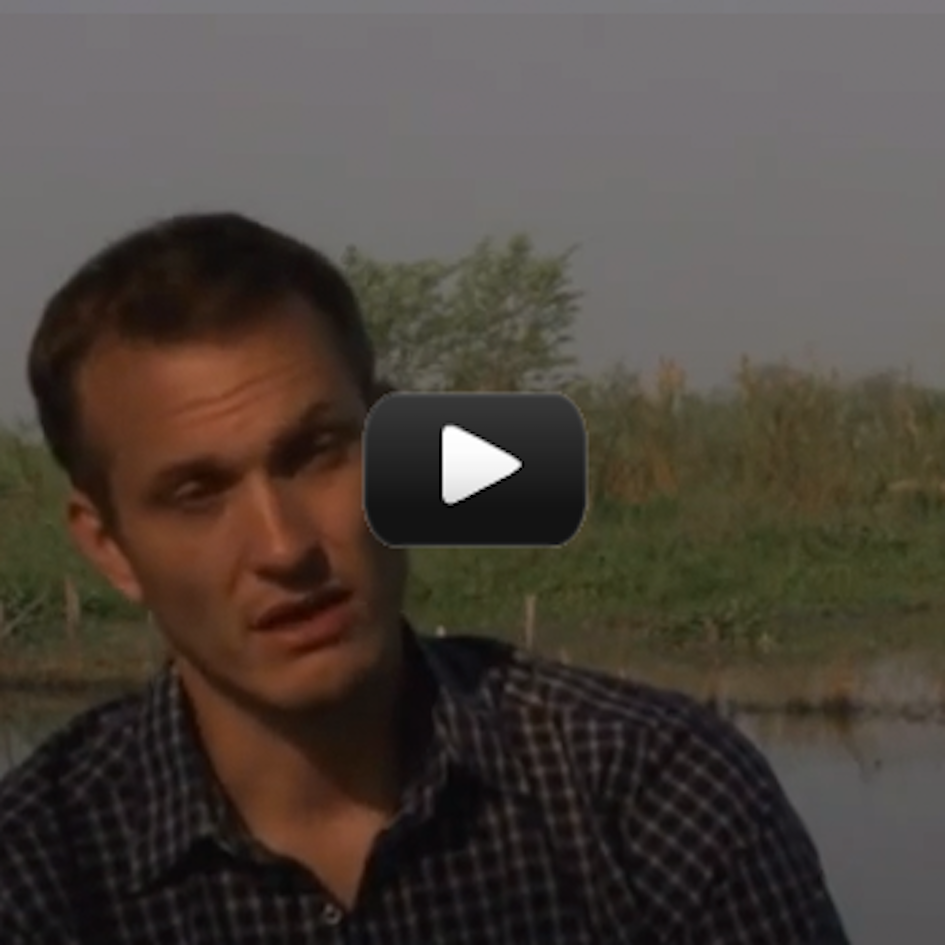
Jason Stearns, the Project Director, explains the idea behind the Usalama Project in July 2012 in Bujumbura, Burundi.
Cultural Identity: Kenya and the coast

During 2010 and 2011, a secessionist campaign led by a group calling itself the Mombasa Republican Council (MRC) dominated debates about coastal politics. As a result of local grievances, the MRC call for secession attracted a degree of public sympathy on the coast. Debates emerged that potrayed two contrasting images of Kenya: the inclusive nation […]
The Big Barrier

In Kenya, 80 per cent of the unemployed are believed to be below the age of 35. The rate of unemployment in Mombasa, Kenya’s second largest city and home to the region’s largest port, is estimated to be 44 per cent. This raises concerns of how the Kenyan coast will be able to harness its […]