This briefing was produced by the Ethiopia Peace Research Facility (PRF). The PRF is an independent facility combining timely analysis on peace and conflict from Ethiopian experts with support for conflict sensitive programming in the country. It is managed by…
RVI publishes books, research reports, research papers, briefings and meeting reports in a range of formats. Publications cover policy, research, arts, culture and local knowledge in the countries of eastern and central Africa. Research publications—books, reports and papers—are peer-reviewed. Some RVI publications are also available in French and/or Arabic.
The RVI is a signatory of the Budapest Open Access Initiative (2001); all publications are free for download in PDF format under Creative Commons licences. The views expressed in books and reports published by the RVI are those of the authors, not the Institute.
SEARCH
PUBLICATION TYPE
LANGUAGE
REGION
COUNTRY
BACKGROUND For the past two months, disputes between political associations and the government of Puntland overshadowed the resumption of the local elections. Puntland has nine registered political associations that have competed during the recent early local elections. The rift…
This conflict trend report was produced by the Ethiopia Peace Research Facility (PRF). The PRF is an independent facility combining timely analysis on peace and conflict from Ethiopian experts with support for conflict sensitive programming in the country. It…
This briefing was produced by the Ethiopia Peace Research Facility (PRF). The PRF is an independent facility combining timely analysis on peace and conflict from Ethiopian experts with support for conflict sensitive programming in the country. It is managed…
INTRODUCTION According to the Puntland voter registration law (2021), to hold credible and transparent elections, voters must be registered to vote in a process managed by the Transitional Puntland Election Commission (TPEC). The registration process is one of the…
Dulmar: Siyaasadda aan xasilooneyn ee Hirshabelle Hirshabeelle waxaa ka jiray xasilooni darro siyaasadeed tan iyo markii si deg deg ah loo dhisay bishii Oktoobar 2016, iyadoo la isku daray labada gobol ee Hiiraan iyo Shabeellaha Dhexe. Intii ay hawsha…
Overview: Hirshabelle’s volatile political settlement Hirshabelle has been the site of continued political instability since its hasty formation as a Federal Member State (FMS) in October 2016, combining the two regions of Hiiraan and Middle Shabelle. Throughout the process,…
This briefing was produced by the Ethiopia Peace Research Facility (PRF). The PRF is an independent facility combining timely analysis on peace and conflict from Ethiopian experts with support for conflict sensitive programming in the country. It is managed…
OVERVIEW Since 2012, when the internationally recognized Federal Government of Somalia (FGS) replaced the Transitional Federal Government (TFG), Somalia has sought to expand its process for selecting its leaders towards more democratic forms. So far, progress towards universal suffrage…
An all-inclusive Community Conference held in Garowe from May-August 1998 established Puntland State of Somalia. A guiding three-year Provisional Charter, endorsed in the Community Conference, sanctioned the formation of basic governance functions divided into the executive, legislative and judiciary…
Recent Publications

Writing Ethiopia into the World, Writing the World from Ethiopia
October 7, 2026
The Ethiopian Women Researchers Network (EWNET) hosted an online scholarly webinar on Friday, 30 January 2026, titled ‘Writing Ethiopia into the World and Writing the World from Ethiopia’. The webinar examined how Ethiopia has been represented within global knowledge production
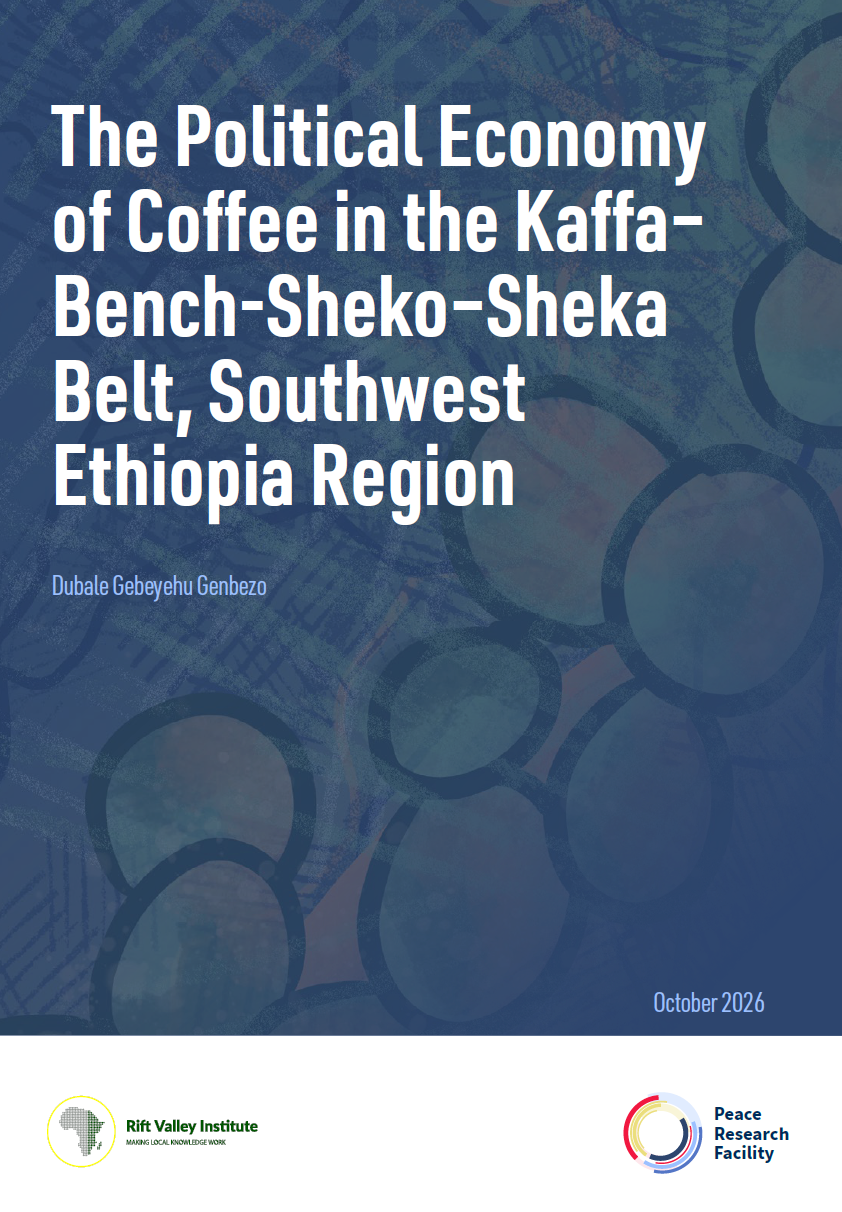
The Political Economy of Coffee in the Kaffa–Bench-Sheko–Sheka Belt, Southwest Ethiopia Region
October 6, 2026
This study provides a critical political economy analysis of the coffee sector in the Kaffa–Bench-Sheko–Sheka belt in Southwest Ethiopia Peoples’ Regional State, the genetic and cultural heartland of Arabica coffee (Coffea arabica). Based on 47 key respondent interviews, the study
The Political Economy of Coffee in the Jimma–Ilu Aba Bora–Buno Bedele Belt, Oromia Region
October 5, 2026
The findings of this study reveal a number of critical insights about the political economy of coffee in the Jimma–Ilu Aba Bora–Buno Bedele coffee belt. The coffee economy is shaped by a small number of influential actors, including state institutions,