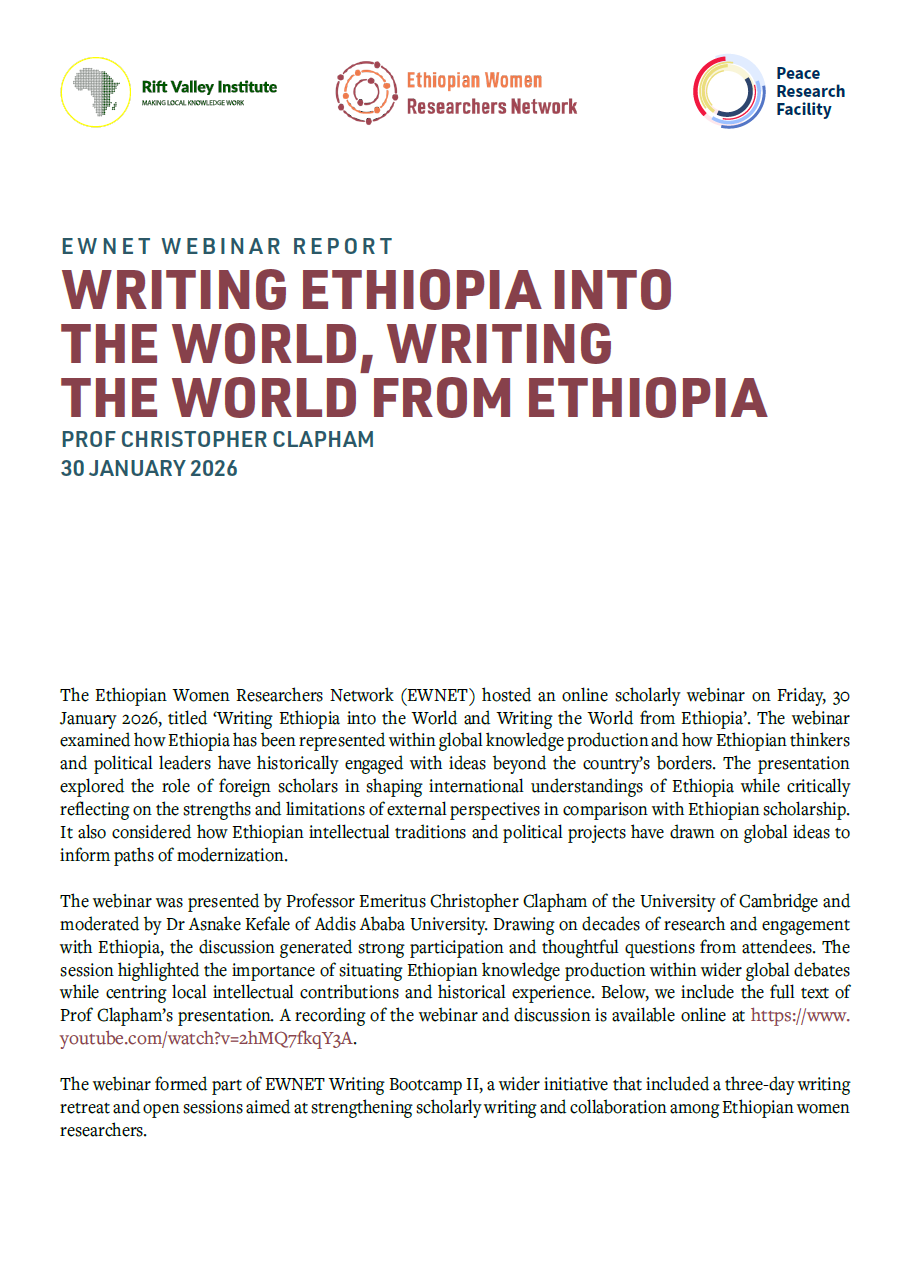
جاء تصميم العملية الانتقالية في السودان لتؤدي إلى – وتتقدم من خلال – انتخابات قومية تثبت نجاح ومصداقية الانتقال السياسي. لكن هذا الأمر ينطوي على مخاطر كبيرة. فقد تتعرض العملية الانتخابية، وخاصة نتائجها، للتشكيك والطعن من قبل أصحاب…
RVI publishes books, research reports, research papers, briefings and meeting reports in a range of formats. Publications cover policy, research, arts, culture and local knowledge in the countries of eastern and central Africa. Research publications—books, reports and papers—are peer-reviewed. Some RVI publications are also available in French and/or Arabic.
The RVI is a signatory of the Budapest Open Access Initiative (2001); all publications are free for download in PDF format under Creative Commons licences. The views expressed in books and reports published by the RVI are those of the authors, not the Institute.
SEARCH
PUBLICATION TYPE
LANGUAGE
REGION
COUNTRY
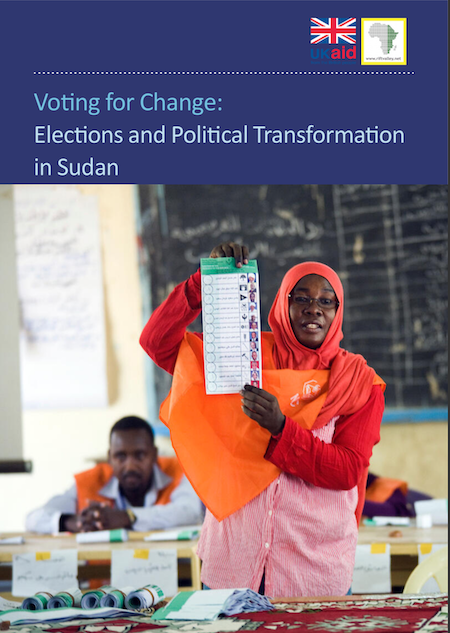
Sudan’s political transition, which began following the ousting of Omar al-Bashir in 2019, is designed to lead up to—and be advanced by—national elections. Those polls will be crucial to the success and credibility of political transition, but they carry…
- By Raga Makawi, Justin Willis
- Download
In the first episode of the Sudan Elections podcast series ‘Voting for Change’, host Raga Makawi talks to Justin Willis- Professor of Modern History at Durham University – about election models adopted in Sudan’s modern history, key…
This briefing is part of RVI’s Sudan Elections Project, a short-term study on the history of elections in the country. The project examines the different factors that have shaped the course and consequences of elections in Sudan, while drawing…
بعد وصوله إلى السلطة من خلال انقلاب عسكري في عام ١٩٨٩، حكم الرئيس عمر البشير السودان لمدة ٣٠ عامًا حتى تمت الإطاحة به في عام ٢٠١٩ بعد انتفاضة شعبية. بينما يُشار إلى البشير غالبًا على أنه ديكتاتور ومستبد، فقد…
بعد الإطاحة بالرئيس عمر البشير في أبريل ٢٠١٩، بدأ السودان عملية الانتقال إلى الديمقراطية. يشمل ذلك إنشاء مؤسسات تشريعية وقضائية جديدة تتوج بإجراء انتخابات (مبدئيًا من المقرر إجراؤها في أواخر عام ٢٠٢٢). من بين التحديات الرئيسية التي يجب معالجتها…
This briefing is part of RVI’s Sudan Elections Project, a short-term study on the history of elections in the country. The project examines the different factors that have shaped the course and consequences of elections in Sudan, while drawing…
Recent Publications

Writing Ethiopia into the World, Writing the World from Ethiopia
October 7, 2026
The Ethiopian Women Researchers Network (EWNET) hosted an online scholarly webinar on Friday, 30 January 2026, titled ‘Writing Ethiopia into the World and Writing the World from Ethiopia’. The webinar examined how Ethiopia has been represented within global knowledge production
The Political Economy of Coffee in the Kaffa–Bench-Sheko–Sheka Belt, Southwest Ethiopia Region
October 6, 2026
This study provides a critical political economy analysis of the coffee sector in the Kaffa–Bench-Sheko–Sheka belt in Southwest Ethiopia Peoples’ Regional State, the genetic and cultural heartland of Arabica coffee (Coffea arabica). Based on 47 key respondent interviews, the study
The Political Economy of Coffee in the Jimma–Ilu Aba Bora–Buno Bedele Belt, Oromia Region
October 5, 2026
The findings of this study reveal a number of critical insights about the political economy of coffee in the Jimma–Ilu Aba Bora–Buno Bedele coffee belt. The coffee economy is shaped by a small number of influential actors, including state institutions,