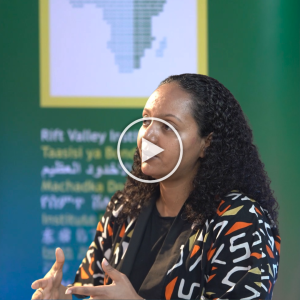
In this EWNET podcast episode 7, Samiha Abdulmelik, a peacebuilding and gender practitioner with over 20 years of experience speaks to Dalaya Ashenafi. Samiha shares how her childhood, inspired by her father’s feminism and early exposure to global crises, led her to work in conflict zones like Sudan, Somalia, Nigeria, and Iraq. She reflects on the 25-year evolution of the Women, Peace and Security agenda from focusing on participation to addressing financing, institutional change, and deep-seated patriarchy. She discusses practical strategies for engaging male-dominated security sectors, the importance of localizing action plans, and taking sectoral approaches to change. Samiha finds inspiration in Sudanese women-led emergency rooms and everyday grassroots women.
በዚህ ፖድካስት ክፍል 7፣ሳሚሃ አብዱልመሊክ ከዳላያ አሸናፊ ጋር ቆይታ አድርጋለች ሳሚሃ ከ20 ዓመታት በላይ የሥራ ልምድ ያላት የሰላም ግንባታ እና የሥርዓተፆታ ባለሙያ ስትሆን በ25 ዓመታት ውስጥ የሴቶች፣ ሰላም እና ደህንነት አጀንዳ ከተሳትፎ ትኩረት ወደ ፋይናንስ፣ ተቋማዊ ለውጥ እና ጥልቅ የሆነ የወንዶች በላይነት ሥርዓት የመታገል አቅጣጫ እንደተለወጠ ታጋራናለች።
Find out more about EWNET here.
Biographies
Dalaya Ashenafi
Dalaya Ashenafi is an Ethiopian political economist and strategist whose work critically engages with structural inequality, state power, and emancipatory development alternatives. She is currently a research fellow at the Tricontinental Research Institute of Social Science and the deputy principal of the Ethiopian Women Researchers Network (EWNET). With 15+ years of experience, her analysis challenges neoliberal orthodoxy, exposing how capital accumulation reproduces marginalization in the Global South.
As a 2022 Asia Global Fellow, she investigated state-owned enterprises through a lens of socialist industrialization. Her publications on urban dispossession, political settlements, and late industrialization center class struggle, collective agency, and anti-imperialist frameworks. Dalaya’s recent publications critically examine political economy and state transformation in contemporary Ethiopia. Her July 2025 article in Tricontinental, “Sovereignty or Surrender: Confronting Africa’s Comprador Class,” analyses elite power struggle on national economic policies. She also led the 2025 Rift Valley Institute study “The Politicization of Public Events in Addis Ababa” and has forthcoming chapters on urban politics and political settlements. Her ongoing work includes co-editing the book “Post-2018 Ethiopian Political Economy: Changes and Continuities” for IDEAs (2025-27), co-leading research on urban renewal in Addis Ababa, and authoring a study on Ethiopia’s national dialogue.
Working closely with state and non-state actors, she advocates for transformative policies that prioritize redistributive justice over market-led growth. Rooted in Ethiopia developmental thinking, yet globally connected, Dalaya’s scholarship advances a radical vision of development that rejects technocratic fixes in favor of structural transformation and pan-African solidarity.
Semiha Abdulmelik
Semiha Abdulmelik is an independent consultant with over two decades of experience in peacebuilding, governance, security sector reform, and gender equality. She has worked across some of the most complex conflict-affected regions, including Sudan, Somalia, Nigeria, Iraq, and South Sudan, as well as at the African Union Commission.
Her career spans advisory roles with UNDP in Iraq and Somalia, where she led Women, Peace and Security (WPS) programmes and provided technical guidance on gender-responsive security sector reform. At UN Women Nigeria, she developed state action plans, established networks of women mediators, and supported security institutions on gender mainstreaming. Earlier, as a Senior Political Affairs Officer at the African Union, she provided political analysis for peace support operations in Somalia and the Lake Chad Basin, served as gender focal point, and supported AMISOM transition processes.
Semiha also served as Gender Policy Officer in the Office of the AU Special Envoy on Women, Peace and Security, where she produced the first continental report on WPS implementation and drafted a results framework for Member States. Her policy work includes engagements with ECOWAS, Oxfam International, CARE International, and the Parliamentary Centre in Sudan.
She holds an MA in Human Rights Practice from the University of Gothenburg (with Distinction) and a BA & BComm from Monash University (also with Distinction). Semiha was a Peace and Security Fellow at the African Leadership Centre/King’s College London (2014–2015) and served on the Tana Forum Technical Committee (2019–2021). Her publications include works on transitional justice, the Ebola epidemic, China’s role in African peace and security, and the WPS agenda in Africa.