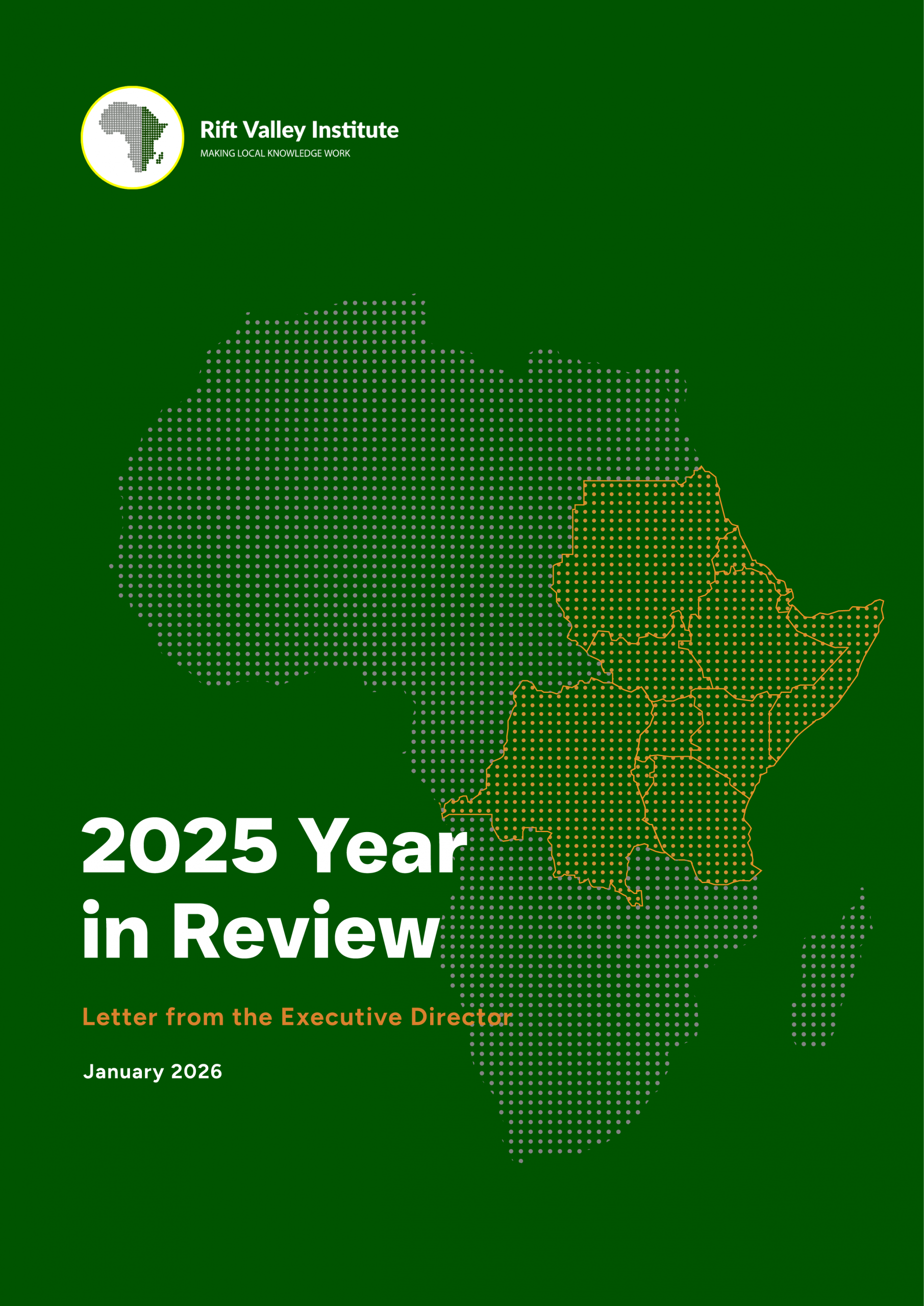
The 2025 Year in Review provides an overview of the Rift Valley Institute’s work over the past year across eastern and central Africa. The report highlights RVI’s research and publication outputs, education and training activities, and public forums and…
RVI publishes books, research reports, research papers, briefings and meeting reports in a range of formats. Publications cover policy, research, arts, culture and local knowledge in the countries of eastern and central Africa. Research publications—books, reports and papers—are peer-reviewed. Some RVI publications are also available in French and/or Arabic.
The RVI is a signatory of the Budapest Open Access Initiative (2001); all publications are free for download in PDF format under Creative Commons licences. The views expressed in books and reports published by the RVI are those of the authors, not the Institute.
SEARCH
PUBLICATION TYPE
LANGUAGE
REGION
COUNTRY
The Ethiopian Women Researchers Network (EWNET) inaugural writing workshop series aims to not only provide women researchers with uninterrupted time for their scholarly projects, but also build a supportive academic community. The first session, entitled ‘EWNET Writes: Writing Workshop…
On 15 April 2025, during a visit to the city of Las Anod in Sool, Prime Minister Hassan Abdi Barre officially declared the federal government’s recognition of SSC-Khaatumo (SSC-K hereafter) as a federal member state, marking an important milestone…
This study assesses conflict sensitivity practices among humanitarian, development and peacebuilding (HDP) actors in Ethiopia. It seeks to raise awareness and foster a deeper understanding of the evolving aid landscape in the country while analysing the challenges that affect…
Ethiopia’s borderland communities (BLCs) have historically influenced the country’s relations with its neighbours. These peripheral regions often serve as hubs for cross-border trade, repositories of natural resources and, at times, flashpoints of conflict. Surrounded by six neighbouring countries –…
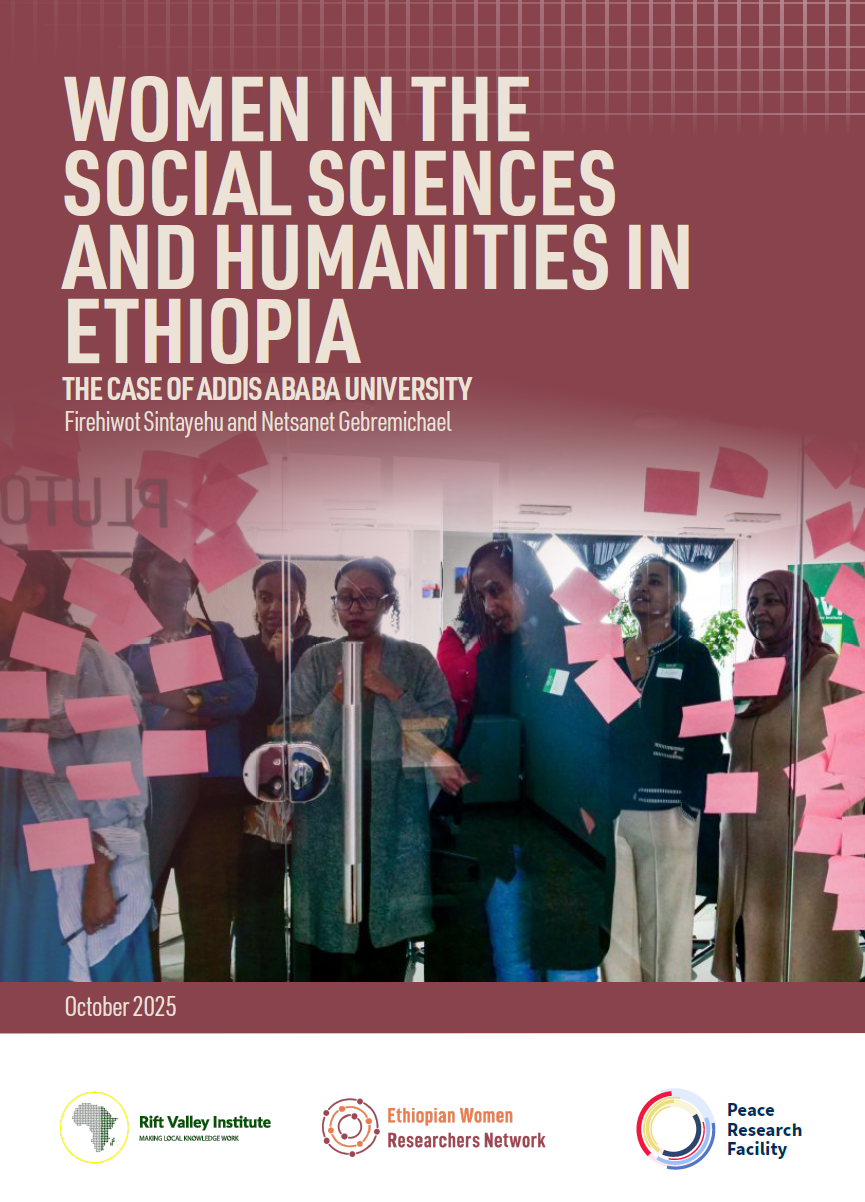
This preliminary assessment is part of the launch exercise of the Ethiopian Women Researchers’ Network (EWNET). Focusing on Addis Ababa University as a pioneering higher institution in the country, the study looks into the status of women within these…
The second Ethiopian Women Researchers Network (EWNET) seminar was delivered by Desalegn Amsalu, Anteneh Tesfaye, Yasmin Bushra and Helen Zeru on 3 July 2025 at Addis Ababa University’s Alle School of Fine Arts & Design. EWNET SEMINAR SERIES REPORT…
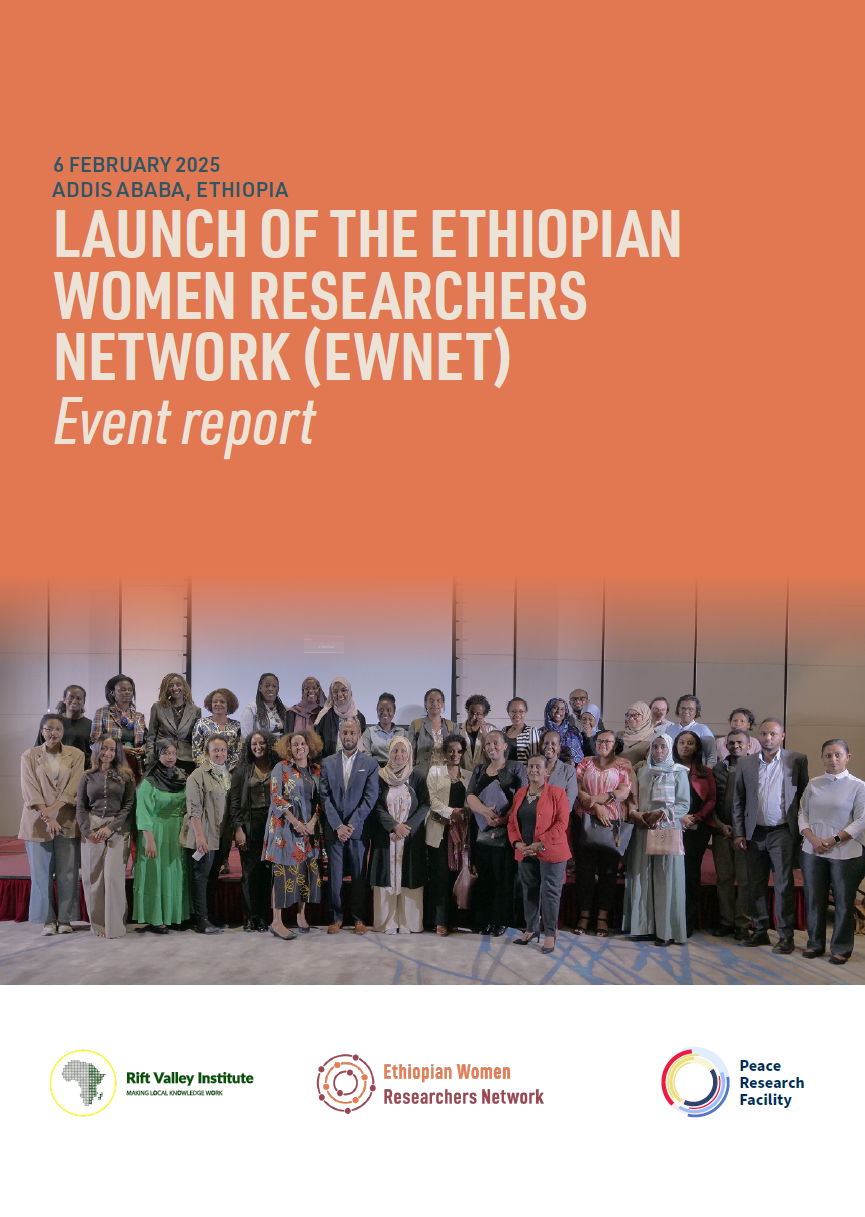
This report details the launch event for the Ethiopian Women Researchers Network (EWNET). The event took place on 6 February 2025 from 9.00 a.m.–2.30 p.m. at the Skylight Hotel in Addis Ababa. It was organized by the Peace Research…
EWNET SEMINAR SERIES REPORT The inaugural Ethiopian Women Researchers Network (EWNET) Seminar was delivered by Dr Serawit B. Debele on 15 April 2025 at Addis Ababa University’s Institute for Peace and Security Studies’ (IPSS) New Meeting Hall. Entitled ‘We…
በኦሮሚያ እና በሶማሊ ክልል ድንበር አካባቢ የሚገኙ አከራካሪ ቦታዎች ላይ አስተዳደራዊ ቁጥጥርን ለማጠናከር በሚደረገው ፉክክር የሚነሱ ግጭቶች የተዳፈኑ ቢመስሉም ጨርሰው አልጠፉም። ይህ በምስራቅ አፍሪካ ረጅሙ የሀገር ውስጥ የክልሎች ወሰን ሲሆን፥ አካባቢው ከ2009–2011 ግጭት እና የአገር ውስጥ መፈናቀልን ያስከተለም ነበር።…
Recent Publications

Writing Ethiopia into the World, Writing the World from Ethiopia
October 7, 2026
The Ethiopian Women Researchers Network (EWNET) hosted an online scholarly webinar on Friday, 30 January 2026, titled ‘Writing Ethiopia into the World and Writing the World from Ethiopia’. The webinar examined how Ethiopia has been represented within global knowledge production
The Political Economy of Coffee in the Kaffa–Bench-Sheko–Sheka Belt, Southwest Ethiopia Region
October 6, 2026
This study provides a critical political economy analysis of the coffee sector in the Kaffa–Bench-Sheko–Sheka belt in Southwest Ethiopia Peoples’ Regional State, the genetic and cultural heartland of Arabica coffee (Coffea arabica). Based on 47 key respondent interviews, the study
The Political Economy of Coffee in the Jimma–Ilu Aba Bora–Buno Bedele Belt, Oromia Region
October 5, 2026
The findings of this study reveal a number of critical insights about the political economy of coffee in the Jimma–Ilu Aba Bora–Buno Bedele coffee belt. The coffee economy is shaped by a small number of influential actors, including state institutions,