



RVI senior researcher Aly Verjee discusses the economics of elections in Somaliland, electoral delays and drought. Early warning from Somaliland The experience of Somaliland already provides such evidence, and a warning. In collaboration with Adan Y. Abokor, Haroon A. Yusuf,…
News
SEARCH
NEWS TYPES
REGION
This article was written by RVI Fellow Aly Verjee. On 23 March, British Foreign Secretary Boris Johnson, speaking to the United Nations Security Council, declared: “There can be no real dialogue for as long as South Sudan is ravaged…
Following the historic, unprecedented decision by the Supreme Court to nullify Kenya’s presidential election, which international election observers had largely commended, the credibility of observers, and the practice of observation, was seriously damaged. In this article, RVI Fellow Aly Verjee…
Aly Verjee is a visiting expert at the United States Institute of Peace and a fellow of the Rift Valley Institute. Migration crises in Europe, the Middle East, and North Africa reconfigured global politics. So why – as the…
Recent Publications

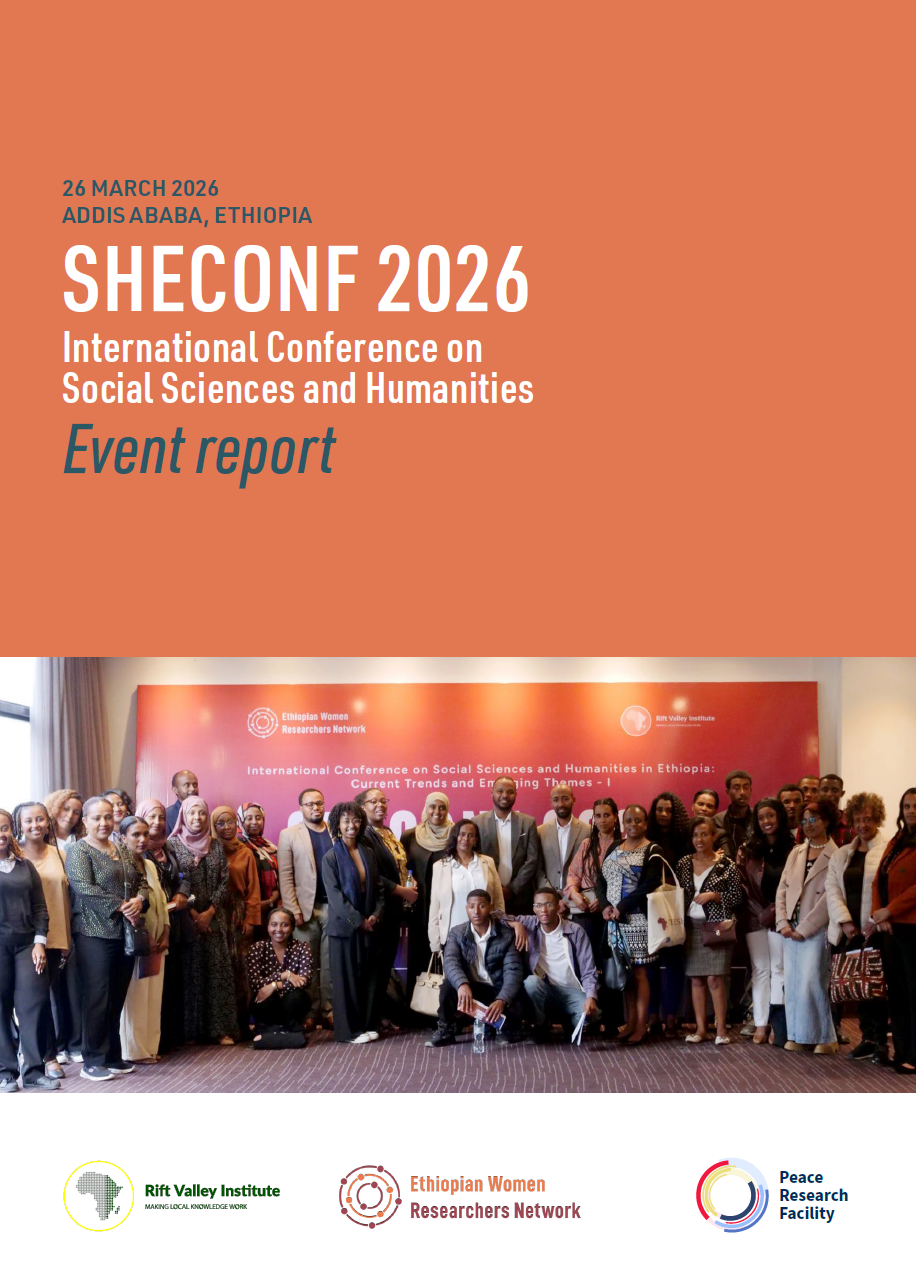
SHECONF 2026: International Conference on Social Sciences and Humanities
July 9, 2026
Event report On 26 March 2026, researchers, practitioners and academics gathered in Addis Ababa for SHECONF 2026, an International Conference on Social Sciences and Humanities in Ethiopia, the first of its kind convened by the Ethiopian Women Researchers Network (EWNET).
State Capture in Africa: How elite networks undermine democracy, development and security
June 24, 2026
Key points State capture has been increasingly recognized as a major governance challenge due to the way it helps to drive many of the most pressing problems facing contemporary states, including democratic erosion, corruption, economic exclusion, insecurity and declining trust
The New Geopolitics of Eastern Africa
June 17, 2026
On 20 May, the British Institute of Eastern Africa (BIEA), Chatham House, and the Rift Valley Institute (RVI) convened a group of experts to discuss the ‘The New Geopolitics of Eastern Africa’. The closed-door roundtable considered the ongoing transformation of