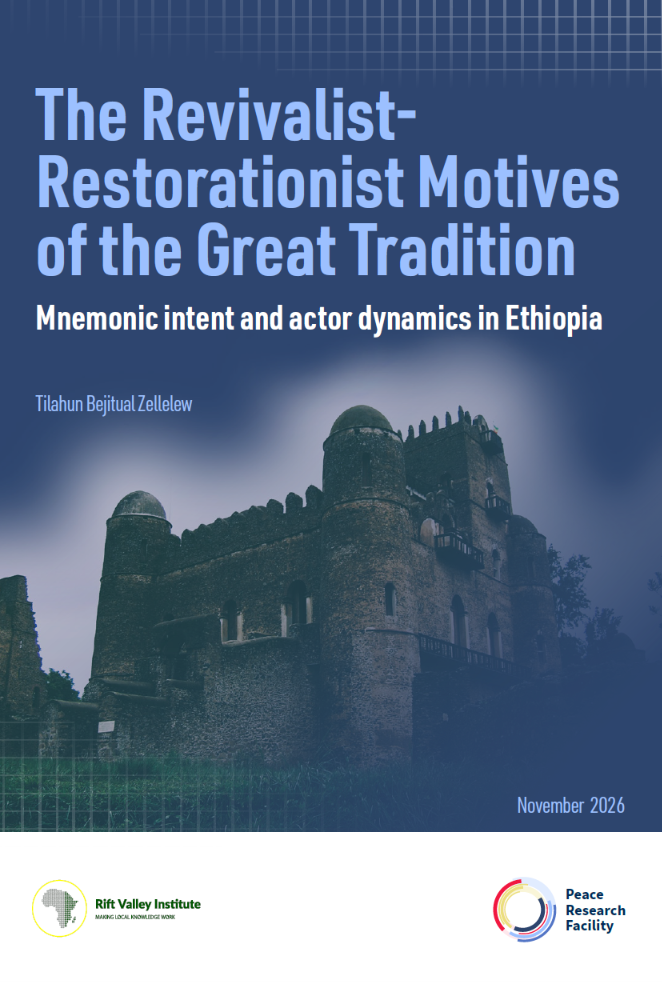
In early 2011, the scale of famine affecting the Horn of Africa was only just beginning to receive international attention, despite early warnings in the previous year. It was not until July that famine was formally declared. The famine…
RVI publishes books, research reports, research papers, briefings and meeting reports in a range of formats. Publications cover policy, research, arts, culture and local knowledge in the countries of eastern and central Africa. Research publications—books, reports and papers—are peer-reviewed. Some RVI publications are also available in French and/or Arabic.
The RVI is a signatory of the Budapest Open Access Initiative (2001); all publications are free for download in PDF format under Creative Commons licences. The views expressed in books and reports published by the RVI are those of the authors, not the Institute.
SEARCH
PUBLICATION TYPE
LANGUAGE
REGION
COUNTRY
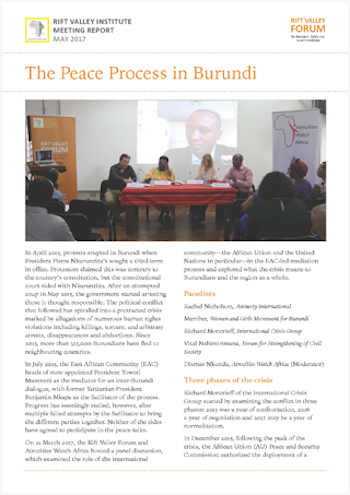
In April 2015, protests erupted in Burundi when President Pierre Nkurunziza’s sought a third term in office. Protestors claimed this was contrary to the country’s constitution, but the constitutional court sided with Nkurunziza. After an attempted coup in May…
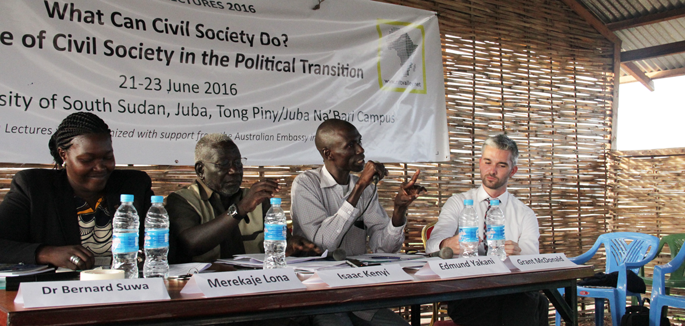
With the formation of a Transitional Government of National Unity (TGoNU) and the subsequent outbreak of violence in Juba in July 2016, the role of civil society in South Sudan is more vital than ever. Can a civil society,…
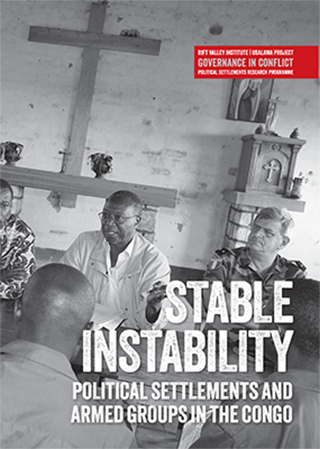
After more than two decades of ongoing violent conflict, armed groups—however fleeting their existence—have become an integral feature of the eastern Congo’s social-political order. They are not a temporary aberration in what is otherwise a normal society. They are…
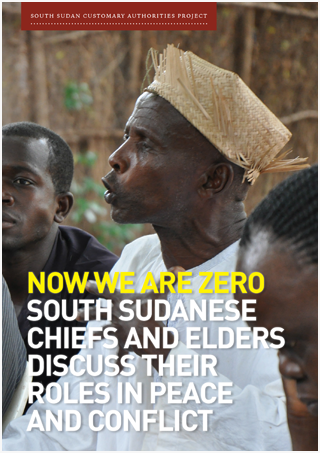
In April 2016, seventeen chiefs from different parts of South Sudan gathered in Kuron Holy Trinity Peace Village, in Eastern Equatoria, to discuss the role of customary authority in governance—past and present—and their own contribution to peacemaking and a…
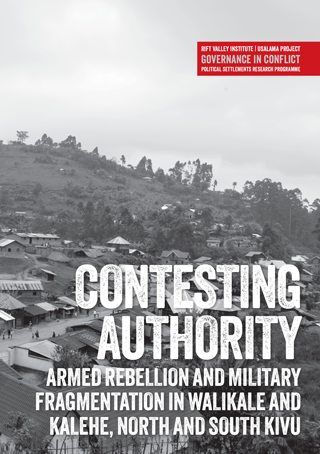
For more than 20 years, Kalehe and Walikale, two territories connecting the provinces of North and South Kivu, have been characterized by a proliferation of armed groups. The first of these groups emerged during the Masisi war in North…
- By Koen Vlassenroot, Emery Mudinga, Kasper Hoffmann
- Download
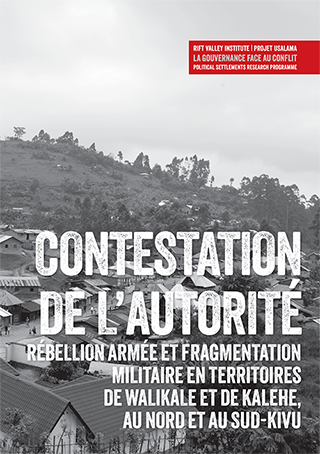
Cela fait plus de vingt ans que les territoires de Kalehe et de Walikale, où se rejoignent les provinces du Nord et du Sud-Kivu, subissent une prolifération de groupes armés. Le premier de ces groupes est apparu pendant la…
Dans l’est de la République démocratique du Congo (RDC), les litiges fonciers sont considérés à la fois comme une source majeure et un facteur important de conflit. Au fil du temps, les chercheurs et les praticiens ont identifié plusieurs…
The Rift Valley Institute’s study on the impact of war on Somali men looks into a previously under-researched set of questions: What are the enduring effects of more than two decades of war and violent conflict on Somali men…
This report is a record of a Forum event held on 5 November, before the 13 November 2017 election day. Election day itself was largely peaceful, and the international observer mission reported only minor irregularities on election day, including…
Recent Publications

The Revivalist-Restorationist Motives of the Great Tradition: Mnemonic intent and actor dynamics in Ethiopia
November 13, 2026
Tracing the genealogy and current state of revivalism and restorationism of the Great Tradition (GT) within the memory landscape in Ethiopia reveals dynamic mnemonic strategies and vocabularies that evolve across successive historical regimes and various state and non-state mnemonic agents.
Writing Ethiopia into the World, Writing the World from Ethiopia
October 7, 2026
The Ethiopian Women Researchers Network (EWNET) hosted an online scholarly webinar on Friday, 30 January 2026, titled ‘Writing Ethiopia into the World and Writing the World from Ethiopia’. The webinar examined how Ethiopia has been represented within global knowledge production
The Political Economy of Coffee in the Kaffa–Bench-Sheko–Sheka Belt, Southwest Ethiopia Region
October 6, 2026
This study provides a critical political economy analysis of the coffee sector in the Kaffa–Bench-Sheko–Sheka belt in Southwest Ethiopia Peoples’ Regional State, the genetic and cultural heartland of Arabica coffee (Coffea arabica). Based on 47 key respondent interviews, the study